Advanced search
The Point - home
DonateSubscribe
HomeWhat's NewOpinionOff the ChartsExplainersFactcheckAbout Us
The Point — home
DonateSubscribe
The Point — home
Advanced search
  • Home
  • What's New
  • Opinion
  • Off the Charts
  • Explainers
  • Factcheck
  • About Us
DonateSubscribe
Subscribe
  • Home
  • What's New
  • Opinion
  • Off the Charts
  • Explainers
  • Factcheck
  • About Us
The Point - home
Privacy PolicySitemapComplaints & CorrectionsNewsletter

The Point recognises the ancestral connections and custodianship of Traditional Owners throughout Australia. We pay respect to Aboriginal and Torres Strait Islander cultures and to Elders past and present.

©2025–2026 The Point, an initiative of The Australia Institute

OFF THE CHARTS

Despite what the Business Council may say, businesses really like investing in Victoria

Every year, the Business Council of Australia (BCA) puts out its report “Regulation Rumble”. This year’s report, as with previous reports, placed Victoria as the worst place to do business. And again, as with previous reports, it received rather unquestioning media reportage.

By Greg Jericho

Tue 3 Nov 2026 10.28 AEDT
Economy
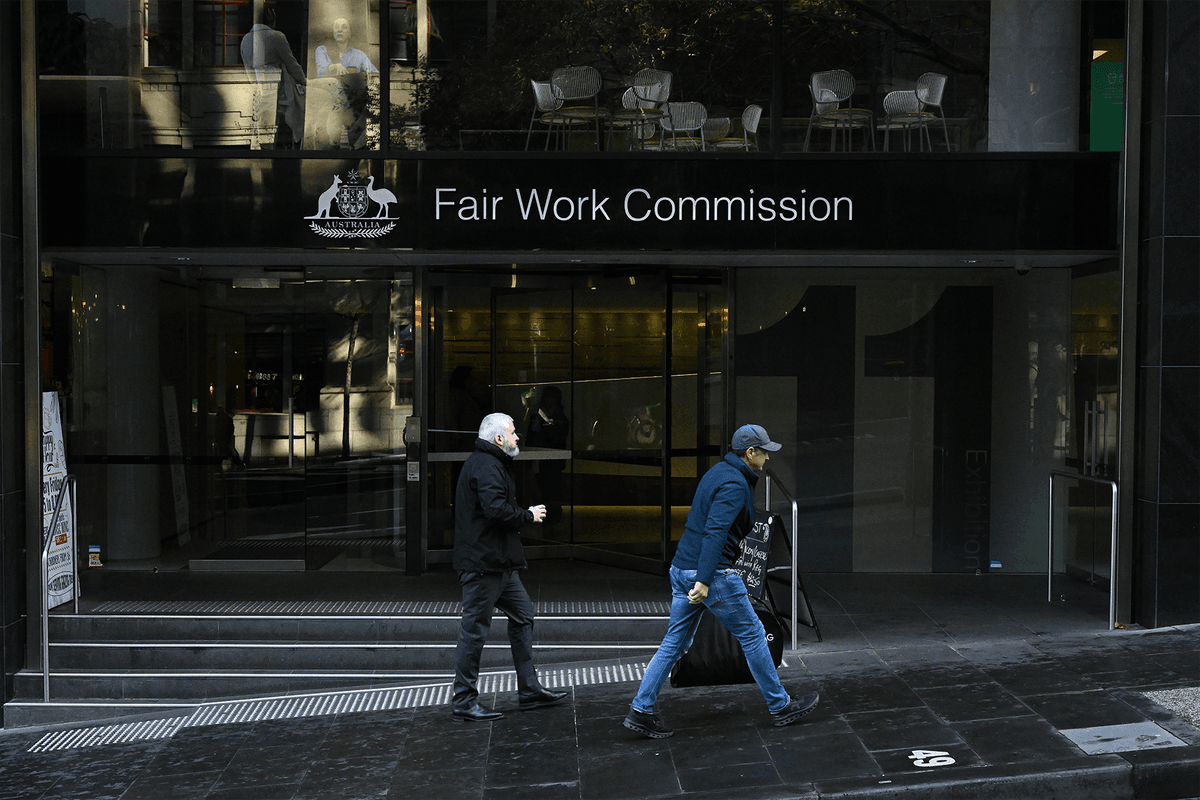
Despite what the Business Council may say, businesses really like investing in Victoria

Photo: AAP Image/James Ross

Republish this article

This article is licensed under Creative Commons — Attribution-NoDerivatives 4.0 International (CC BY-ND 4.0).

Republishing guidelines

  • You must credit the author(s) and The Point.
  • You must link back to the original article.
  • You may not edit or modify the article content.
  • Images may be subject to separate copyright and are not included in this licence.

Every year, the Business Council of Australia (BCA) puts out its report “Regulation Rumble”, which it suggests details the best states in which to do business.

This year’s report, as with previous reports, placed Victoria as the worst place to do business. And again, as with previous reports, it received rather unquestioning media reportage.

Headlines such as “Victoria ranked the worst state to do business for third year running” (the AFR), and “Victoria the worst state to do business, says Business Council” (ABC) suggest Victoria must be quite the investment pariah in Australia.

But as ever with the BCA – the report is not so much an investigation of investment, but just propaganda for lower regulations.

The report, for example, suggests that Victoria is last among the states as a place to do business because it has “uncompetitive payroll tax rates and payroll tax threshold”, “uncompetitive land tax and stamp duty rates”, and needs to improve its “level of process certainty for planning proponents including around timeframes and additional information requirements”.

At the other end of the scale, South Australia was rated as the best place to do business.

So it must be quite a shock that in the past year, business investment in Victoria grew faster than in South Australia, Queensland, Tasmania and the ACT.

It was actually just behind Western Australia:

Get our newsletter

Quality research, analysis, explainers and factchecks from experts you can trust.

And while NSW investment looks to be soaring, the main reason in the past year that Victorian investment has not kept pace with NSW is because private sector engineering construction has fallen:

All other investment is essentially keeping pace.

The investment in new non-residential buildings (i.e. factories, offices and especially recently, data centres) in Victoria has been much stronger than in NSW:

Similarly, investment in new equipment and machinery in Victoria has grown essentially in line with that in NSW over the past 5 years:

If Victoria is a terrible place to invest, then someone really needs to tell the businesses that they shouldn’t be investing at the level they do in the state!

As is always the case with the BCA, it is best to ignore the feelpinions of an organisation devoted to increasing the profits of companies, and instead look at the data.


Related Articles

OPINION

From pilot to powerhouse: expanding WA’s sustainable bond market

By Brad Hiller & Brad Pettit

Now a staple of global finance, GSS bonds offer a powerful mechanism to fund pressing environmental and social initiatives that lie outside traditional government budgets.

Environment & BiodiversityEconomy
From pilot to powerhouse: expanding WA’s sustainable bond market

OFF THE CHARTS

If the RBA forecasts continue, real wages won’t recover to 2021 levels until 2044

By Greg Jericho

Last week, when the Reserve Bank announced it had raised the cash rate to 4.85%, it also released its latest forecasts for the economy in its Statement on Monetary Policy. For those hoping for a recovery in lost living standards, the news was very grim.

Economy
If the RBA forecasts continue, real wages won’t recover to 2021 levels until 2044

OPINION

Six ways to save the Commonwealth billions, fairly and efficiently

By Matt Grudnoff & Greg Jericho

If the government wants to pursue significant spending cuts, this piece proposes six options that help achieve short term equity and long run efficiency goals. Together, they could save between $14 billion and $62 billion.

Economy
Six ways to save the Commonwealth billions, fairly and efficiently

OPINION

Who gets to decide what a 'realistic' energy transition is?

By Ray Wills & Peter Newman

There is a difference between what Australia should do and what our most influential businesses would prefer we don’t do. Our energy debate too often blurs the two by insisting on being ‘realistic’.

ClimateEconomy
Who gets to decide what a 'realistic' energy transition is?