Advanced search
The Point - home
DonateSubscribe
HomeWhat's NewOpinionOff the ChartsExplainersFactcheckAbout Us
The Point — home
DonateSubscribe
The Point — home
Advanced search
  • Home
  • What's New
  • Opinion
  • Off the Charts
  • Explainers
  • Factcheck
  • About Us
DonateSubscribe
Subscribe
  • Home
  • What's New
  • Opinion
  • Off the Charts
  • Explainers
  • Factcheck
  • About Us
The Point - home
Privacy PolicySitemapComplaints & CorrectionsNewsletter

The Point recognises the ancestral connections and custodianship of Traditional Owners throughout Australia. We pay respect to Aboriginal and Torres Strait Islander cultures and to Elders past and present.

©2025–2026 The Point, an initiative of The Australia Institute

PODCAST

Younger Australians “locked out” as intergenerational housing divide grows

Wed 7 Oct 2026 16.52 AEDT
EconomySociety & Inequality
Younger Australians “locked out” as intergenerational housing divide grows

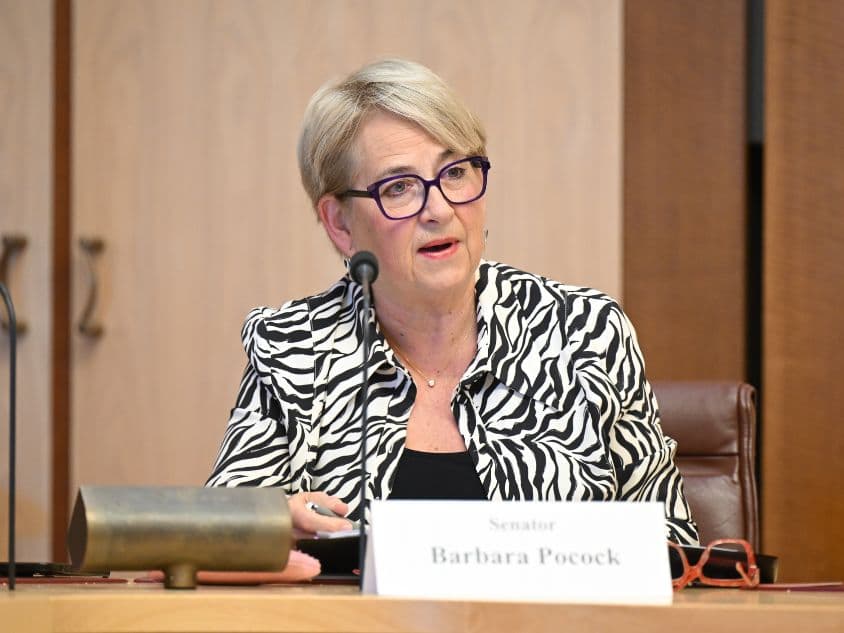
AAP Image/Lukas Coch

Listen on appleListen on spotify

Australia is a rich country, but for many younger Australians, the ability to share in that prosperity is increasingly out of reach.

On this episode of Follow the Money, Senator Barbara Pocock, Australian Greens Spokesperson for Housing & Homelessness, joins Ebony Bennett to discuss the housing crisis, its long-term impacts on the lives of younger Australians, and her proposals to turn the situation around.

This episode was recorded on Tuesday 6 October.

If you or anyone you know needs help, you can contact Lifeline on 13 11 14 or online at www.lifeline.org.au.

Guest: Barbara Pocock, Senator for South Australia and Australian Greens Spokesperson for Housing & Homelessness // @barbarapocock

Host: Ebony Bennett, Deputy Director, the Australia Institute // @ebonybennett

Show notes:

Locked out: the growing generational housing divide, Select Committee on Intergenerational Housing Inequity (September 2026)

Get our newsletter

Quality research, analysis, explainers and factchecks from experts you can trust.

Additional comments from the Chair, Senator Barbara Pocock, Select Committee on Intergenerational Housing Inequity (September 2026)

Senate Committee on Intergenerational Housing Inequity | Perth, WA, Australian Parliament House Streaming Portal on YouTube (August 2026)

Profit in home lending: April 2026 edition by Dave Richardson, the Australia Institute (April 2026)

Factcheck: Is immigration really causing Australia’s housing crisis? by Noah Schultz-Byard, The Point (September 2025)

Even Liberal voters agree, it’s time to ditch Howard era perks for property investors – polls, the Australia Institute (March 2026)

Youth mental health decline coincides with increased economic pressure: new report, the Australia Institute (August 2026)

Theme music: Pulse and Thrum; additional music by Blue Dot Sessions

We’d love to hear your feedback on this series, so send in your questions, comments or suggestions for future episodes to podcasts@australiainstitute.org.au. Subscribe to Follow the Money on Apple Podcasts, Spotify, Pocket Casts or wherever you get your favourite podcasts.

Related Articles

OPINION

It’s not the size of your NOM that matters, it’s what you do with it that counts

By Morgan Harrington

As part of the ongoing political jockeying over the Net Overseas Migration (NOM) number, the Albanese Government has backed down on a plan to reduce the number of working-holiday makers allowed to come to Australia. But has it missed a chance for Australia to improve ties with the Pacific?

Society & Inequality
It’s not the size of your NOM that matters, it’s what you do with it that counts

OPINION

Australia’s gender pay gap falls below 20% for the first time

By Gemma Killen

Australia's gender pay gap has fallen to a record low. This year, the pay gap is 19.7%, which means that for every dollar men earn, women earn just over 80 cents. Over a year, this adds up to an average difference of $27,467.

Society & InequalityEconomy
Australia’s gender pay gap falls below 20% for the first time

EXPLAINER

What is the Digital Duty of Care, and will it work?

By Skye Predavec

Under the Digital Duty of Care, online platforms would have a duty to ensure Australians have a safe online environment, where they are “protected from seriously harmful material and conduct”.

Democracy & AccountabilitySociety & Inequality
What is the Digital Duty of Care, and will it work?

OPINION

Struggling to parent in the neoliberal economy? You’re not alone.

By Belinda Eslick

Labor needs to offer more than universal childcare if it wants to increase the fertility rate and address the motherhood penalty—parents are overworked, burnt out, and want more time for what matters.

Society & Inequality
Struggling to parent in the neoliberal economy? You’re not alone.