After a NSW Parliamentary Inquiry recently found that the Pacific Australia Labour Mobility (PALM) scheme is putting people at risk of modern slavery, their lost super might seem like a minor problem, but it’d be an easy one to fix.
Mon 14 Sep 2026 10.32 AEST
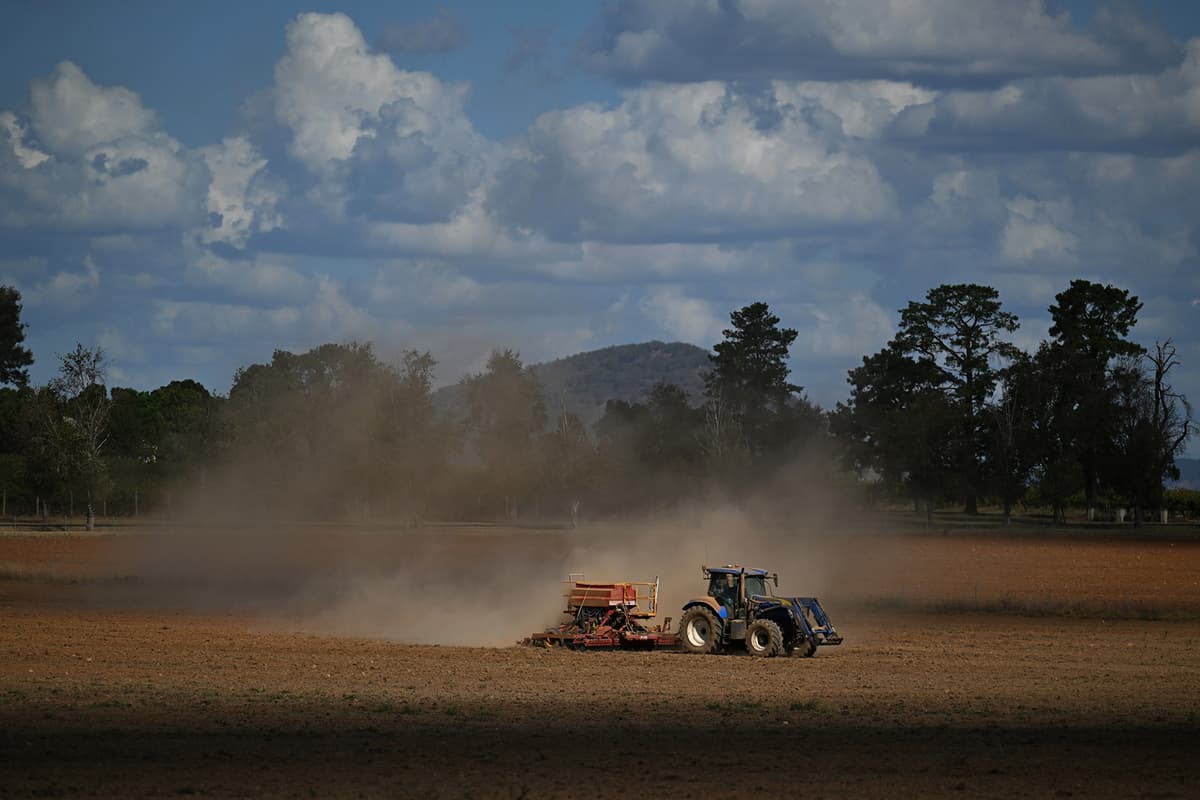
Photo: AAP Image/Dean Lewins


On a work trip to Fiji, a colleague of mine didn’t make it as far as the hotel before she was hearing about the PALM scheme.
The driver of the hotel transport van – let’s call him Mark – had worked in Victoria, in an abattoir. He was employed as part of the Pacific Australia Labour Mobility (PALM) scheme, which allows people from nine Pacific Island nations and Timor-Leste to work in Australia on a temporary basis. The thing was, he never got the super he earned. Mark had been back home in Fiji for months, but he couldn’t figure out how to access the money he’d earned doing one of Australia’s hardest, dirtiest, lowest-paid jobs. Mark had tried to start the process before his temporary visa expired, but when he lost the password to the online account needed to get the money, there wasn’t much he could do. Data from the Australian Taxation Office (ATO) shows that these kinds of problems are common. In fact, the ATO holds over $14.2 million in unclaimed super from over 30,000 former PALM visa holders.
As with everyone else legally entitled to work in Australia, employers are required to pay PALM visa holders super in addition to their wages. This is despite the reality that, by definition, PALM workers are in Australia temporarily. If they can’t retire in Australia, why are they made to pay money into a fund only accessible to retired Australians?
In theory, PALM workers can collect their super when they leave Australia as a ‘Departing Australia Superannuation Payment’ (DASP). But, like so much else when it comes to taxes, the process is not straightforward.
An application for DASP can only be submitted after a visa has expired, and the applicant has to have already left Australia. This can be a problem for people who live in places without a reliable Internet connection or postal service, who might not be digitally literate, and who probably aren’t fluent in the kind of bureaucratic language spoken by the ATO. Any important documents need to be certified before leaving Australia, and an Australian bank account needs to be kept open so the money can be deposited… in Australia. The other option for ATO held super is to get a cheque sent — in Australian dollars. If the money is not claimed within six months, it becomes part of Australia’s $21 billion pool of unclaimed super. If more than $5000 has accumulated, there is an additional process, with more paperwork.
The struggle to access superannuation is the final sting in the tail for many PALM workers. DASP is taxed at 35%, so even those people who are successful in getting their super pay a hefty fee for it. This is not the only additional tax that PALM workers pay: people on nine-month PALM visas are not considered Australian residents for tax purposes, which means they aren’t eligible for the $18,200 tax-free threshold that other workers get. They are instead charged a flat 15% on all earnings from the very first dollar. Despite the taxes they pay, which fund services in Australia, PALM visa holders are not entitled to access Medicare, and are expected to instead rely on private health insurance. Australia Institute polling shows that two in three Australians (66%) would support giving PALM visa holders’ access to Medicare while they are working in Australia.
Quality research, analysis, explainers and factchecks from experts you can trust.
To the Australian Government, $14 million is hardly enough to notice on a budget balance sheet. But to the thousands of people who sacrifice time away from their homes and their families to work here, thousands of Australian dollars in super is a lot.
A fairer, easier system would allow PALM workers to have their super automatically deposited into a retirement fund in their home country. Not only would this ensure people get their super without having to pay Australian taxes on it, but it could also lower the costs individuals pay to transfer money through expensive international systems.
In fact, PALM workers can already choose to make voluntary payments into such a scheme; they just can’t do it with the super contributions that their employers have to make under Australian law. There are other precedents: Australia already operates a portable superannuation scheme with New Zealand, elements of which could be replicated for the Pacific. In New Zealand, which has its own temporary worker program for people from the Pacific, visa holders can opt to have superannuation payments sent directly to funds in their home country.
More than 30,000 people work in Australia under the PALM scheme. So many work in agriculture and meat processing that it’s hard to imagine how Australia’s food production system would function without them.
And an increasing number work in the aged-care sector, which expects to need 400,000 more workers by 2050. This is why the scheme is so often touted as a ‘win-win’: Australia gets access to a labour force willing to do the jobs most Australians won’t, and people from nine Pacific Island nations and Timor-Leste get the opportunity to earn Australian dollars. Those dollars should include every cent in super that they are entitled to.
Correction: This article was updated on September 29 to correct the amount of unclaimed super money held by ATO and superannuation funds; to clarify that super is paid by employers; and to correct aspects of the process for applying for DASP from the ATO.

