In “Private schools aren’t full of rich kids – here’s the evidence”, an op-ed published in the Sydney Morning Herald, chair of Independent Schools NSW Margery Evans (who represents non-Catholic-Church-run private schools) argues that Jane Caro’s Rich Kid Poor Kid Vantage Point essay generalises and misinterprets the state of Australian education.
But in doing so, Evans does exactly what she accuses Caro of, misleading the reader about the actual state of private school education.
This is most clear with the throughline of the piece, the idea that independent schools have taken on a surge of low-income, multicultural students in Western Sydney, not just “rich kids” like they used to.
“Your typical Independent school is now more likely to be a low-fee, culturally diverse school in western Sydney educating children with diverse learning needs from lower-than-average-income families.”
Let’s break that down.
Is Western Sydney full of independent schools?
The key to Evans’ claim is “more likely”. It’s probably true that a student in Western Sydney is more likely to go to an independent school than they used to be, just like any other student – independent schools have grown significantly over the past few decades.
But Evans’ implication is clearly wider than that – that the average independent school student is no longer a wealthy, white Anglo-Saxon Protestant from Sydney’s North, or East.
On that, this supposed glut of students coming to Western Sydney’s independent schools has barely shifted the needle.
In fact, Fairfield in Western Sydney has the lowest share of students attending independent schools in the entire city, just 7%. The most? Woollahra, in the Eastern Suburbs, with almost 60% of students.
Fairfield is one of the poorest places in NSW, while Woollahra is the most affluent local council in Australia. That’s hardly surprising with private school fees reaching double digits, growing faster than inflation.
What about income?
It’s true that Australia’s independent schools have taken in more low-income families over the past three decades. But, they’ve also taken in far more high- and middle-income families over the same time period. From 1996 to 2021, independent schools went from educating 6% of students from low-income households to 10%. But over the same period, they jumped ten points to educate one in four high-income students.
That’s from Independent Schools Australia’s own data about the demographics of their students, which also shows that they disproportionately educate those from the richest families. Two in five independent school students come from high income households; more than double the high-income share in public schools.
So, is Evans lying?
No, but her argument is intentionally misleading. It is probably technically true that independent schools in Western Sydney have grown by a greater rate than those elsewhere, just not a greater number. Same with low-income students. That’s easy when independent schools have historically been elitist institutions, educating small numbers of lower income students.
If a school educated 100 students, for example, adding one more would mean it grew by 1%. But if it only educated a single student, taking in a second one would mean the number of students doubled.
It’s technically true that the one-student school had stronger enrolment growth, even though it took the exact same number of new students as the 100-student school. While it isn’t lying, Evans is using this rhetorical trick to make the reader think that independent schools are far more diverse than they actually are.
It’s a trick used throughout the article.
Another, similar claim is that “The strongest enrolment growth has been in independent schools charging less than $5000 per year.”
Is that true?
According to Independent Schools Australia, independent schools charging less than $5000 per year grew by 31.8% from 2019 to 2024, while the more expensive independent schools grew by 14%. Technically, Evans is being accurate here.
But digging into the numbers tells a different story. Almost 60% of the growth went to schools charging over $5000 per year, which make up three quarters of all independent schools.
In fact, independent schools charging no fees grew by 160%, more than doubling from 2019 to 2024 – because they educate less than 10,000 students nationwide.
It’s the same trick as before. Because there are so few cheap independent schools compared to expensive ones, it’s easy for them to have a higher growth rate. But it’s misleading to pretend that growth rate is the entire story.
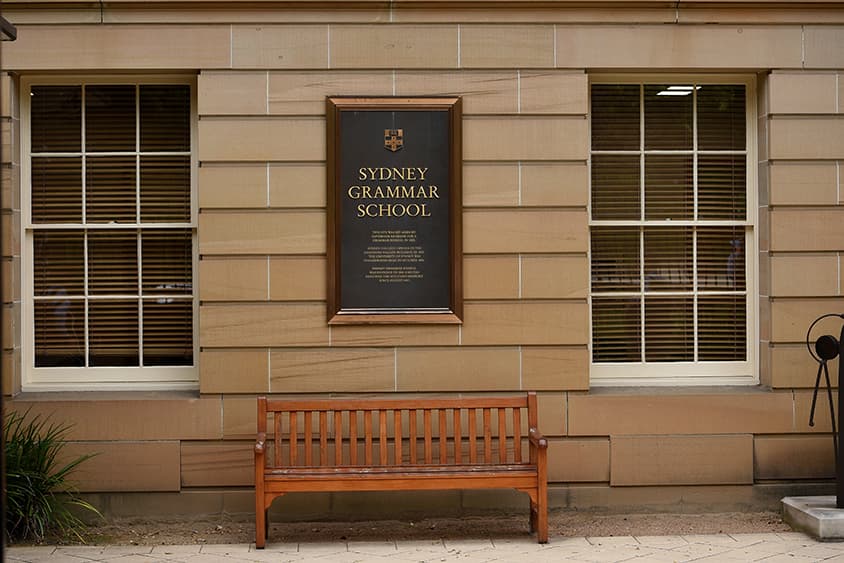
Evans jokes that Caro must have “not seen an Independent school since the introduction of colour television.” Even if she hadn’t, Sydneysiders like Caro can’t help but see boys in boaters in North Sydney or the handsome sandstone of Sydney Grammar and Saint Catherine’s.
But with an op-ed full of misleading and misdirecting claims, Evans is the one trying to make the Sydney Morning Herald’s readers see in black and white.
Verdict: Misleading.