Australia’s two major parties are being warned they face electoral wipe-out at the polls if they continue to pander to pragmatism.
By Tegan George
Mon 29 Sep 2025 15.22 AEST
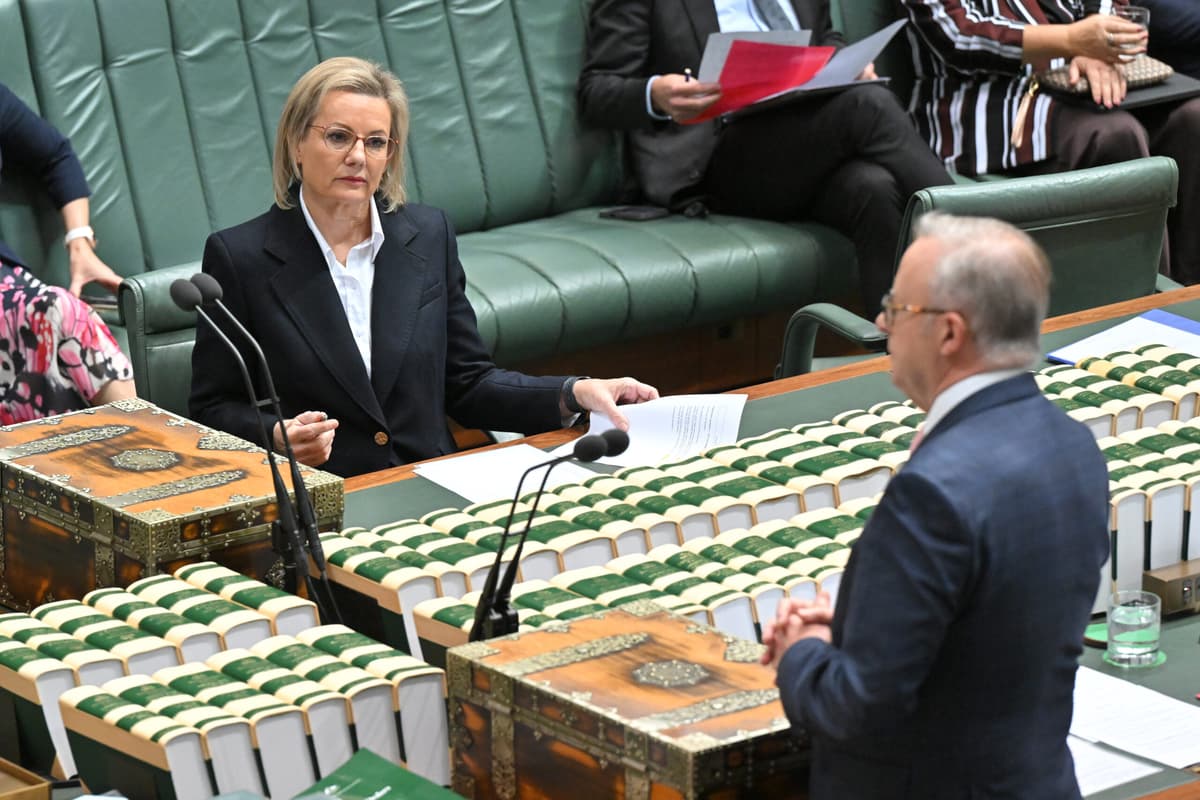
AAP Image/Mick Tsikas


The Australia Institute’s executive director, Richard Denniss, believes Labor and the Coalition are haemorrhaging support over an obsession with what he calls, ‘the sensible centre’: the space between the policy positions set by the two parties.
“That version of centrism is dangerous for all sorts of reasons, but the main one is that when the major parties agree, then the holy grail of bipartisanship exists. There’s no space between them at all and any other opinion is extreme.”
Dr Denniss made the bold declaration while discussing his new book, Dead Centre: How political pragmatism is killing us in Brisbane.
“To have an idea that sits outside that party defined centrism is ‘extreme’ or ‘crazy’ or ‘never going to happen’.”
He warns that the so-called sensible centre shouldn’t be mistaken for evidence-based policy.
“I hate to break it to you, evidence is often quite radical. Evidence says we really should do some things that the Labor Party and the Liberal Party would not touch with a barge pole.”
Things such as taking a bold stance on climate action.
“The way the media act is if we have to live in the ‘sensible centre’ and we need to base policy on evidence and then you say, well the evidence says if we keep building new coal and gas, we’re cooked,” Dr Denniss said.
“That’s literally what the evidence says. What’s extreme is ignoring the evidence and the fact that both major parties will ignore the evidence kind of speaks to something about them, but it doesn’t speak to the evidence.”
It’s this cherry-picking that has Australian voters turning to minor parties and independents, as the pursuit of the ‘sensible centre’ causes policy paralysis.
Research carried out by the Australia Institute shows a steady decline of voters choosing the major parties.
Advertisement
“There’s no room for debate,” said the Australia Institute’s chief political analyst, Amy Remeikis.
“Every single time that there is a policy discussion and Labor, has its two factions — if they even still exist — argue over a policy, that’s ‘chaos and confusion’ because it’s not everyone falling under the one leader,” Remeikis said.
The pursuit of the ‘sensible centre’, Dr Denniss says, has led to stagnation and missed opportunities for meaningful reform.
He believes the major parties are too afraid to move first and lead, and are clinging to policies they’ve outgrown to avoid the public fallout of going first.
Instead, they blame each other for a failure to launch.
“One of their great skills is to literally invent policy positions that are not designed to solve a policy problem. They’re designed to create a political problem.
“Imagine if they were so smart and they were so cynical that they cooked up policy that sounded sensible and sounded pragmatic, anticipating that the criticism of it would prove that it was pragmatic.”
Climate policy is a prime example.
“I call Labor’s approach to climate ‘The Game of Percents.’ Whatever percent they’ve picked, they’ve picked it knowing the Greens will say we want more percents than that, and the Liberals will say, that’s too many percents. And then Labor will say, ‘look at me in the sensible centre … look at me just getting the balance right.’”
And so, nothing happens.
“If the legislation’s stuck and you can’t get it advanced, that’s on you. But the trick of centrism is to say, ‘oh no, I wanted to put the perfect policy forward, but no one would let me, so I did nothing instead.’”
Dr Denniss points to the concessions John Howard made to get the GST through the Senate.
“The Democrats said, no. They said, take food out and we’ll pass it. And Peter Costello said, that’s a stupid idea. And John Howard said, yeah it’s a stupid idea but I’d rather have a GST on 90% of stuff. Howard wanted to get the legislation through.”
He says Anthony Albanese showed the same resolve to legislate Labor’s industrial relations bill.
“He was serious about getting IR reform through. So, when the Greens said, oh we’ll pass it but only with amendments to toughen it up, sold, no problem, next.”
Proof, he says, the Prime Minister can make anything happen.
“What everyone needs to understand is anything that Labor and the Greens agree on can happen. As radical as you can, imagine if Labor and the Greens want a wealth tax tomorrow. They’re done. Fixed it.”
Advertisement

