Advanced search
The Point - home
DonateSubscribe
HomeWhat's NewOpinionOff the ChartsExplainersFactcheckAbout Us
The Point — home
DonateSubscribe
The Point — home
Advanced search
  • Home
  • What's New
  • Opinion
  • Off the Charts
  • Explainers
  • Factcheck
  • About Us
DonateSubscribe
Subscribe
  • Home
  • What's New
  • Opinion
  • Off the Charts
  • Explainers
  • Factcheck
  • About Us
The Point - home
Privacy PolicySitemapComplaints & CorrectionsNewsletter

The Point recognises the ancestral connections and custodianship of Traditional Owners throughout Australia. We pay respect to Aboriginal and Torres Strait Islander cultures and to Elders past and present.

©2025–2026 The Point, an initiative of The Australia Institute

WHAT'S NEW

What the Washington Post cuts mean for democracy, and Australia

As American democracy teeters on the brink, there’s been a significant setback for journalism with the Washington Post slashing a third of its staff, including 14 climate change journalists. 

By Tegan George

Thu 12 Feb 2026 00.33 AEDT
International Affairs
What the Washington Post cuts mean for democracy, and Australia

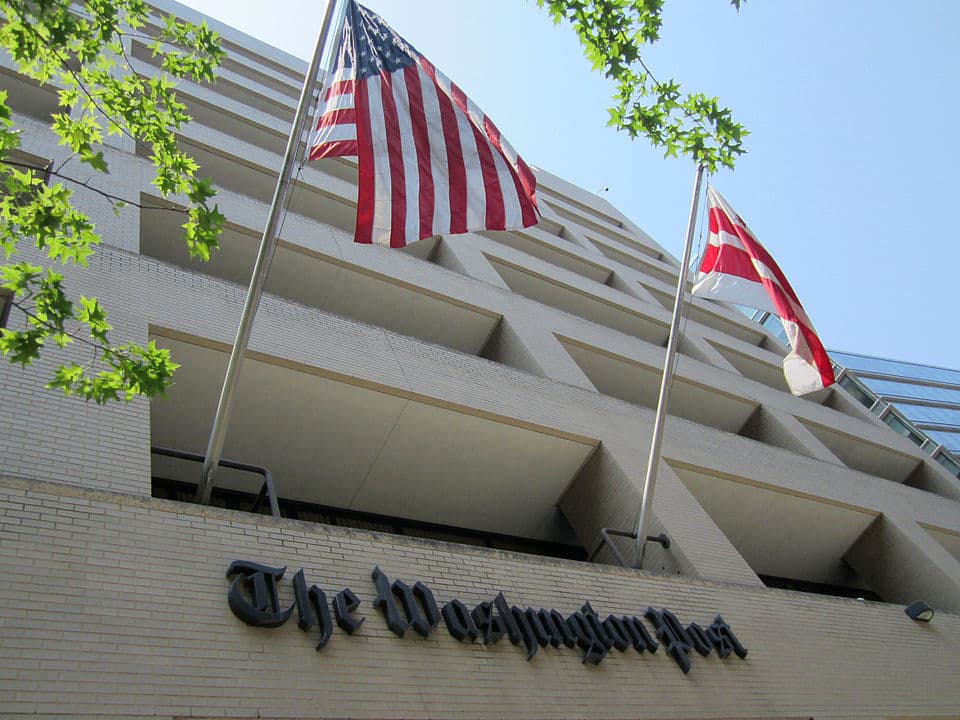
The Washington Post building in Washington, D.C. (Daniel X. O'Neil) Image used under Creative Commons license.

Republish this article

This article is licensed under Creative Commons — Attribution-NoDerivatives 4.0 International (CC BY-ND 4.0).

Republishing guidelines

  • You must credit the author(s) and The Point.
  • You must link back to the original article.
  • You may not edit or modify the article content.
  • Images may be subject to separate copyright and are not included in this licence.

As American democracy teeters on the brink, there’s been a significant setback for journalism with the Washington Post slashing a third of its staff, including 14 climate change journalists. 

“Democracy dies in the darkness is the Washington Post’s credo and someone just turned the lights out,” remarked Ben Doherty, Guardian Australia’s senior international affairs journalist. 

The masthead was considered a cornerstone of American journalism, having exposed the 1972 Watergate scandal – a story, it says, that changed American politics forever. 

Its owner, billionaire Amazon founder Jeff Bezos, has faced intense backlash over the decision to cut more than 300 jobs.

“It’s a dark day for the Washington Post. It’s a dark day for journalism. It’s a dark day for democracy in that country,” Mr Doherty said. 

Speaking on the Australia Institute’s After America podcast, he said  that this is happening when the need for accountability has never been more critical.

Accountability and transparency – or the lack thereof – are recurring concerns for journalists covering Australia’s $368 billion AUKUS nuclear-powered submarine pact with the US and UK. 

“I think the level of secrecy around AUKUS is far too great and it’s deeply troubling,” said Mr Doherty. 

Unease continues to grow in Australia as the United States Congress offers more information about the deal than Canberra. 

The Albanese Government continues to repeat the US President’s “full steam ahead” catch cry while dismissing concerns about the possibility that Australia could walk away with nothing. 

“It’s not actually clear how much the Australian government has already handed over, and where that money is going,” said Dr Emma Shortis, Director of the Australia Institute’s International & Security Affairs Program.. 

A recent report by the US Congressional Research Service  notes that the US Congress can consider holding on to the submarines promised to Australia. 

“It’s not Donald Trump’s decision to make. It’s not a political decision,” explained Mr Doherty. 

The foreign policy journalist points out that US law implementing the Aukus deal is clear: the sale of the submarines to Australia will not go ahead if it degrades “the United States’ undersea capabilities.” 

“The US Congress is now openly contemplating saying, ‘well, do we actually want to sell these submarines to Australia because we want to use them for ourselves? We give them to Australia, we can’t order them into a conflict with China over Taiwan, and this is overtly being said.” 

He pointed out that if Australia doesn’t receive the submarines “that’s not the US reneging on the deal. That’s the US upholding the deal. That’s what was signed up to”. 

Subscribe to After America on Apple Podcasts, Spotify, Pocket Casts or wherever you get your favourite podcasts.

Advertisement
Related Articles

WHAT'S NEW

Shorter America This Week: Looks like woke’s back on the menu; Choosin’ Texas; Global implications

By Emma Shortis

In “Shorter America”, Dr Emma Shortis keeps you up-to-date on the United States with news and analysis that you can trust.

International Affairs
Shorter America This Week: Looks like woke’s back on the menu; Choosin’ Texas; Global implications

OPINION

The US midterms should put Australian politicians on notice over the data centre boom

By Sarah Hanson-Young

Beyond Trump’s corruption, reckless war in the Middle East and the soaring cost of living, there’s another frustration bubbling beneath the surface, the unchecked expansion of AI data centres. As Politico in the US reported overnight, “the big winners” in the mid-terms were the candidates who campaigned against data centres.

Democracy & AccountabilityInternational Affairs
The US midterms should put Australian politicians on notice over the data centre boom

OPINION

Bearing witness to the conditions of Russian captivity and helping those who have endured it is a way to fight for humanity

By Oleksandr Hudilin

While in captivity, I used to imagine different scenarios for my life—what it would be like once I was released and what I would do. One of those scenarios was very similar to the work I do now. I pictured myself working in psychoeducation and the humanitarian sector. That is why I found at MSF exactly what I had dreamed of.

International Affairs
Bearing witness to the conditions of Russian captivity and helping those who have endured it is a way to fight for humanity

OPINION

US voters have rejected Trump's version of America. Is Australia ready to seize the moment?

By Emma Shortis

America’s embrace of a different kind of politics is a huge strategic opportunity for Australia – not just in our relationship with the United States, but at home as well. The Australian government can now back its words with action and create the new rules-based order that our new world requires.

International Affairs
US voters have rejected Trump's version of America. Is Australia ready to seize the moment?

