Clive Palmer and his United Australia Party have joined a growing chorus of voices calling for a 25% tax on Australian gas exports, saying “We need Australian gas for Australians, not sent offshore to benefit other countries.”
Tue 10 Mar 2026 15.06 AEDT
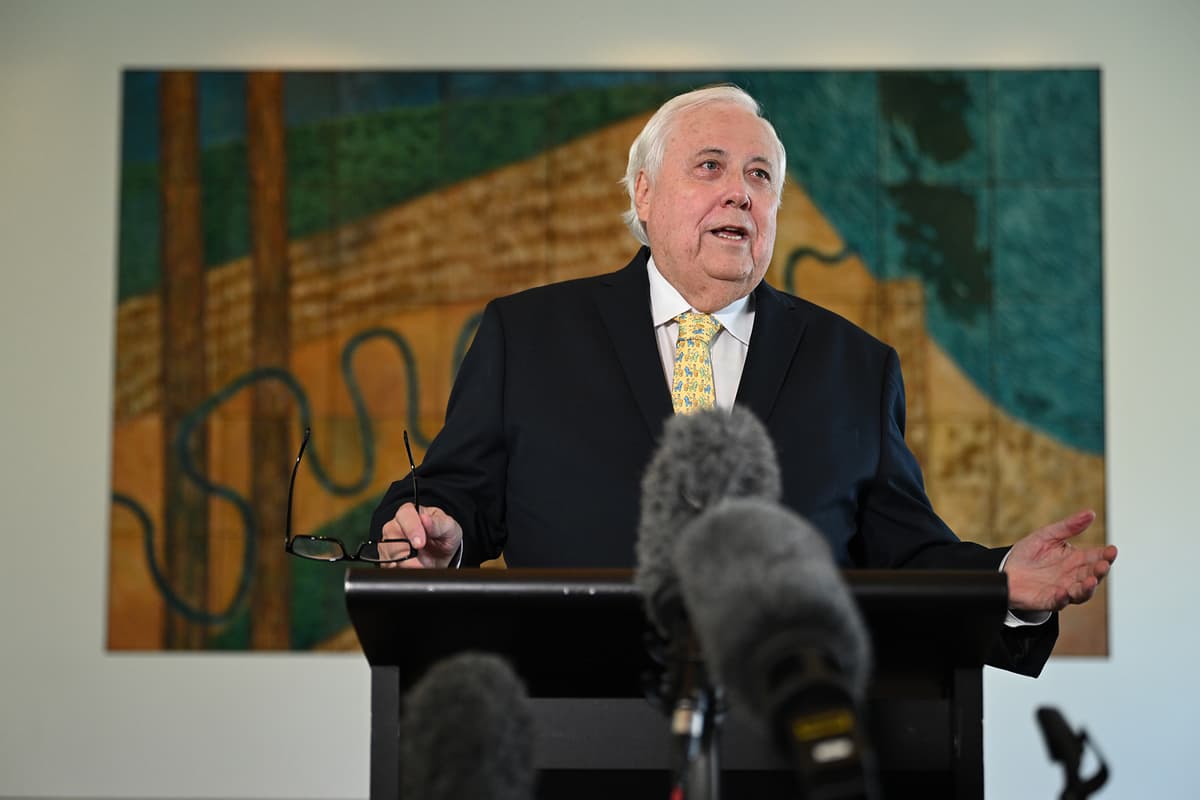
Photo: AAP Image/Lukas Coch


Clive Palmer and his United Australia Party have joined a growing chorus of voices calling for a 25% tax on Australian gas exports, saying “We need Australian gas for Australians, not sent offshore to benefit other countries.”
Mr Palmer’s support for the policy is yet another example of how the idea that Australians should get a fair return for their resources is gaining traction across the political spectrum.
Support for properly taxing Australia’s gas exports now stretches from the ACTU and the Australian Greens to Independent Senator David Pocock and One Nation.
“Australia is one of the world’s largest exporters of liquefied natural gas,” said Dr Richard Denniss, co-CEO of The Australia Institute.
“But while Norway, Qatar and Saudi Arabia grow wealthy from selling their gas, the Australian government collects more revenue from taxing beer, cigarettes and even HECS repayments than it does from the Petroleum Resource Rent Tax.
“We only get to sell our natural resources once and when governments fail to secure a fair return for Australians, we all miss out.”
Senator David Pocock has previously thrown his support behind a 25% gas export tax, famously pointing out that Australia earns less from taxing gas multinationals than it does from taxing beer, and calling for a Senate inquiry into “the great gas giveaway”.
Meanwhile, an exclusive poll in the seat of Farrer which is headed for a by-election after the resignation of former Opposition Leader Sussan Ley has revealed huge support for a 25% tax on gas exports, particularly among One Nation supporters.
The research shows that One Nation narrowly leads Independent Michelle Milthorpe in Farrer on primary votes, but that may not be enough to secure the once-safe Liberal seat.
“The Farrer by-election is shaping up as not just a big test for the Liberals, but for One Nation and the regional Independent movement as well,” Dr Denniss said.
“While there are major differences between the political parties contesting the by-election, one issue that unites voters is how strongly they agree that Australia is failing to get a fair share of the revenue from its gas exports, with 48% of voters strongly agreeing that gas exporters should pay a flat 25% tax on their exports and a further 27% agreeing.
“Remarkably, given how divisive Australian politics has become, fewer than 10% of Farrer voters oppose the idea.
“The popularity of taxing gas exports raises a big problem for the Liberals and Nationals. If they aren’t willing to listen to voters and make sure that Australia gets more revenue from gas exports than it does from beer excise, they risk losing even more seats.
“And if they do listen to voters, they risk a fight with the multinational gas industry. Picking a side in such a fight won’t be easy for them, but if they keep sitting on the fence it will likely become even more painful.”
The Senate will vote on Senator Pocock’s motion to establish a ‘Great Gas Giveaway inquiry’ on Thursday 12 March, after the motion was postponed.
Advertisement