Powers used by the NSW government to restrict protests in the wake of the Bondi Beach terror attack have been ruled unconstitutional by the state’s highest court. The legislation was rushed through an emergency sitting of Parliament in December following the attack, which killed 15 people.
By Tegan George
Tue 21 Apr 2026 01.00 AEST
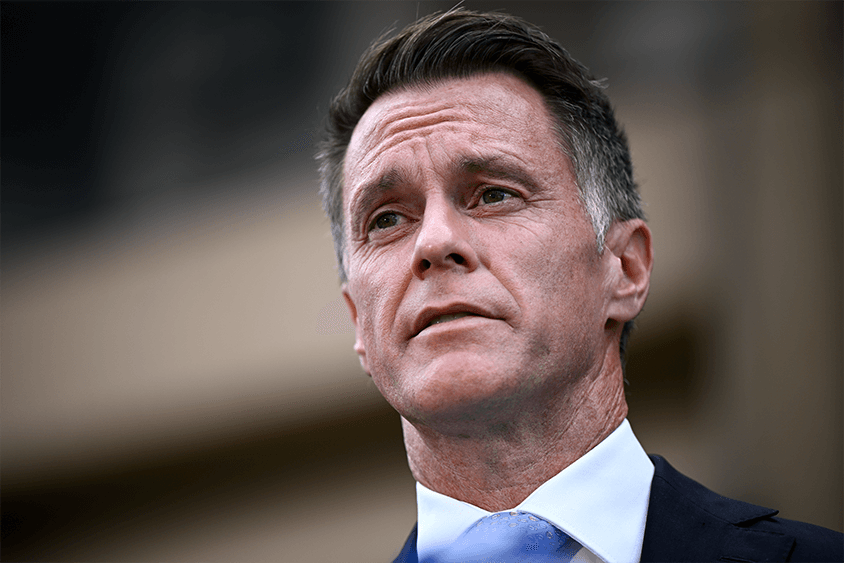
Photo: AAP Image/Bianca De Marchi


Powers used by the NSW government to restrict protests in the wake of the Bondi Beach terror attack have been ruled unconstitutional by the state’s highest court.
The legislation was rushed through an emergency sitting of Parliament in December following the attack, which killed 15 people.
It allowed the Police Commissioner to declare “public assembly restrictions” for up to three months after an act of terrorism, effectively banning protests by preventing their authorisation.
Premier Chris Minns told SBS his government was “obviously disappointed” by the decision.
“This was in the aftermath of the worst terrorist attack our country has seen,” he said.
“We believe it was necessary and important for Sydney at the time.”
The court ruled the legislation was unconstitutional, with Chief Justice Andrew Bell finding it was an “impermissible burden” on the implied freedom of political communication.
“The (declaration) scheme is a blunt tool,” he wrote in his NSW Court of Appeal judgement.
Civil liberties groups welcomed the findings.
“This decision provides yet another warning shot to NSW Premier Chris Minns and NSW Police to uphold their responsibilities to support people to peacefully protest and express their views rather than constantly trying to quash dissent,” said Sarah Schwartz, legal director at the Human Rights Law Centre (HRLC).
The decision adds to mounting legal pressure on governments over laws that test the limits of political freedoms.
“It is a good time for democracy and free speech in Australia, with the High Court striking down Victoria’s unfair political donation loopholes and now NSW’s latest attempt to crush protests in the state,” said Bill Browne, director of the Democracy & Accountability Program at the Australia Institute.
“The Constitution protects every Australian from undue restrictions on their freedom of political communication, but governments have too often failed to respect that.”
Premier Minns said finding the balance can be difficult.
“It’s tricky when you’re introducing changes to legislation like that because there’s a necessary infringement on constitutional principles,” Premier Chris Minns told SBS.
“But there are other constitutional principles: the right of individual citizens to go about living their life free of intimidation, persecution or violence.”
His government is still pushing ahead with plans to ban the phrase “globalise the intifada”, but is keeping a close eye on how on the phrase plays out.
It comes as the Cook Government’s proposed anti-protest laws ignite fierce debate in WA, with fears its crackdown on “hate-fuelled demonstrations” will instead criminalise the right to gather peacefully.
Under the Bill, WA Police would be given expanded powers to refuse a permit if a protest is considered “likely to promote hate”, with human rights advocates warning it’s an “alarming overreach”.
Australia Institute polling research shows public sentiment is firmly on the side of protecting protest rights.
“The polling shows the vast majority of Australians support the right to peaceful protest and want the federal government to do more to protect it, but for years state governments have been chipping away at those rights,” said Mr Browne.
“Hopefully, the High Court’s rebuke of NSW is a turning point towards a democracy where participation is encouraged, not subject to bans, blocks and expensive fines.”
Advertisement