A review of The Light on the Hill: an updated history of the Australian Labor Party
This is a a review of The Light on the Hill: an updated history of the Australian Labor Party, by Dr Michael McKernan.
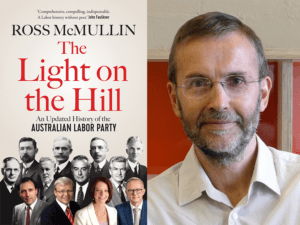
The rise of One Nation is being driven less by a broad shift to the political right than by the Coalition’s collapse and mounting frustration over the cost-of-living crisis, according to a prominent economist.
Thu 2 Jul 2026 10.39 AEST
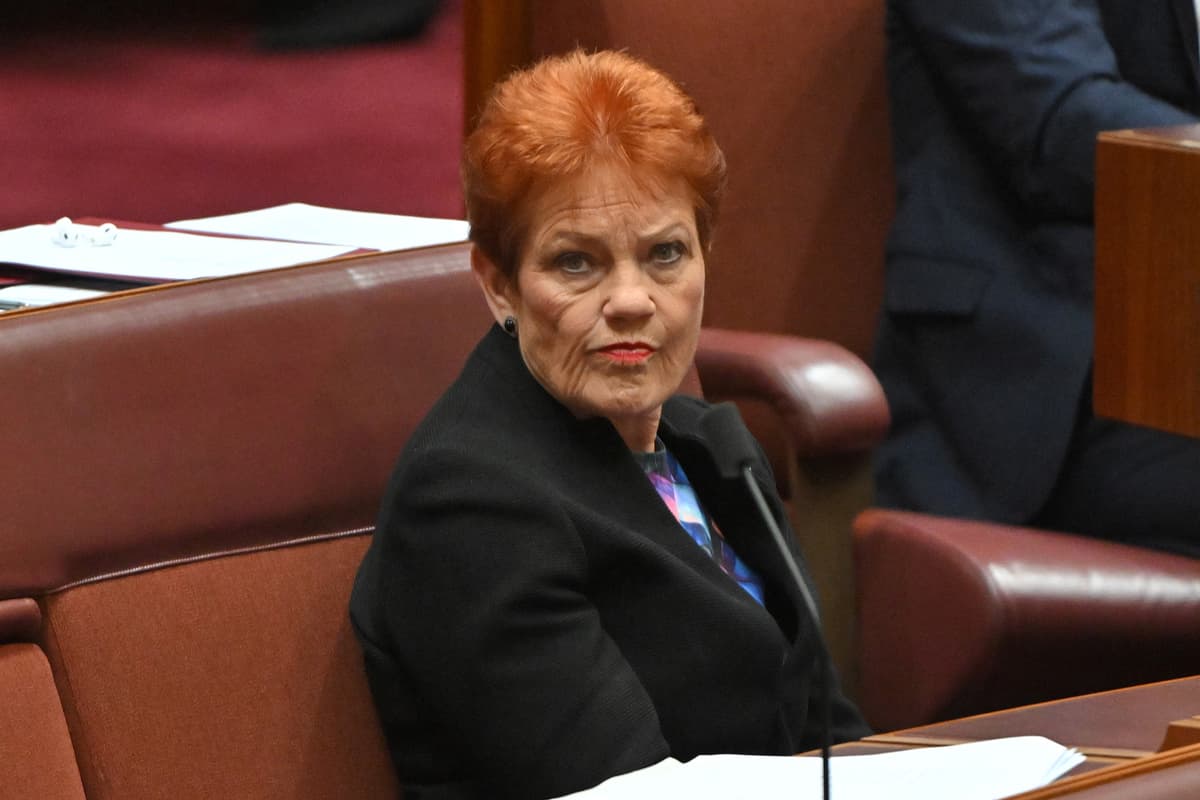
Photo: AAP Image/Mick Tsikas


The rise of One Nation is being driven less by a broad shift to the political right than by the Coalition’s collapse and mounting frustration over the cost-of-living crisis, according to a prominent economist.
Speaking on the Australia Institute’s new What’s the Point? podcast, co-CEO Dr Richard Denniss said Pauline Hanson’s resurgence reflected a combination of factors, including long-running concerns about immigration.
“She’s been talking about immigration for 30 years and around the world, immigration has become an issue in democracies again,” he said.
“So, we shouldn’t be surprised that Pauline Hanson, who was afraid of being swamped by Asians way back in the nineties, is still talking about a lot of these things.”
He argued the Coalition’s ‘absolute collapse’, coupled with mounting financial pressures on households, was pushing voters to look beyond the major parties.
“Let’s not forget, Peter Dutton was in front in the polls for quite some time and he went on to deliver one of the Liberal Party’s biggest ever losses,” said Dr Denniss.
“There really is a lot of disenchantment in Australia right now.
“People are frustrated. They’ve seen for decades that things aren’t getting better.
“Real wages are lower, the health system’s not as good as it used to be, and people are angry and want change.”
One Nation made history in the Farrer by-election in May, securing its first seat in the House of Representatives.
It has also enjoyed a strong run of public support, although Pauline Hanson’s controversial call for an Australian “monoculture” has seen its popularity slide in the past week.
In late May, Pauline Hanson declared she was ready to serve as prime minister after an Australian Financial Review poll put One Nation at 31 per cent of the primary vote, ahead of Labor’s 28 per cent and the Coalition on 20 per cent.
“We shouldn’t diminish it. It’s a historic win for One Nation to win that seat in the lower house,” said Dr Denniss.
“And at the same time, we have to be really careful not to draw too strong a conclusion about what this means.
“Is it obvious, therefore, that One Nation’s going to roll across the country? No, not at all.”
Dr Denniss said One Nation was successfully tapping into a broader global resurgence of nationalism.
“Pauline Hanson really does a good job of saying, ‘I told you so, we needed to put ourselves first,’ but there are other ways to look at this,” he said.
“The Prime Minister himself has talked about ‘progressive patriotism’ — the idea that we need to put Australia first, but not with the kind of anti-immigration or racial hostility that many nationalists tend to emphasise.”
“But progressive patriotism means a lot more than putting on a Socceroos jersey and saying, ‘Yay, team Australia’.”
But Dr Denniss argued there was another way to respond to the growing nationalist mood.
He said the Albanese government could “turn this around”, but it would require implementing policies that actually “look after Australians and that put Australia first”.
“I think someone like David Pocock is doing a much better job of progressive patriotism than Anthony Albanese by saying things like, ‘let’s tax the gas industry’ and ‘let’s spend that money on Australians’,” he said.
“So that’s a version of nationalism too.”
“I think the Prime Minister’s got the slogan right of progressive patriotism, but he hasn’t got the policies to back it up yet.”
What’s the Point? with Richard Denniss cuts through the spin to explain the political and economic decisions shaping the lives of everyday Australians.
Advertisement

This is a a review of The Light on the Hill: an updated history of the Australian Labor Party, by Dr Michael McKernan.
‘AI hallucinations’ contained in a document used by Tasmania’s parole board have helped overturn a media ban on Sue Neill-Fraser, the woman found guilty of killing her partner onboard a yacht.