This morning, Dr Allen received a fulsome apology, not from Bishop, but from ANU. “The university accepts that it has failed Dr. Allen, and that these failings have caused her considerable harm. The university unreservedly apologizes to Dr. Allen for all of its failings and the harm it has caused her,” it reads.
By Julie Hare
Tue 25 Aug 2026 13.20 AEST
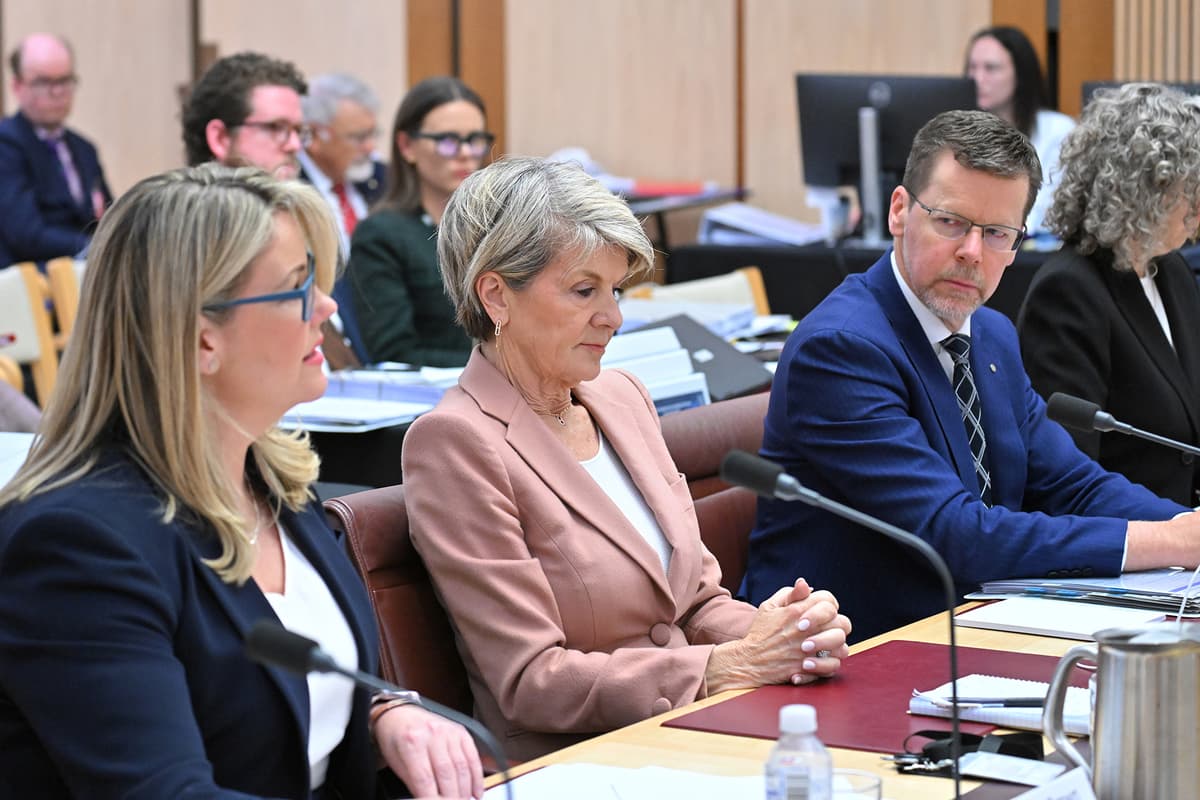
Photo: AAP Image/Mick Tsikas


This morning, Dr Liz Allen received a fulsome apology, not from Julie Bishop, but from ANU.
“The university accepts that it has failed Dr. Allen, and that these failings have caused her considerable harm. The university unreservedly apologizes to Dr. Allen for all of its failings and the harm it has caused her,” it reads.
“I’ve experienced threats, intimidation and bullying,” Allen told a Senate inquiry last August.
“I was bullied into near suicide. I had a miscarriage of a much-wanted baby. I lost the opportunity for a promotion. I fear for my job, and my career has been derailed.”
The circumstances underpinning the apology stem from a council meeting during which Bishop, along with two other senior leaders, accused Allen of “improper and illegal activity”, including leaks to the media from which, Bishop claimed, she profited. A “near-two-hour” diatribe by Bishop directed at Allen took place in front of the entire council.
“The repeated allegations and increasing aggression were so distressing I cried and began to hyperventilate during the meeting,” Allen told the Senate inquiry
Allen was later taken to a private room where the tirade continued.
“I felt threatened and became extremely fearful… I became further distressed with the continued pursuit of false leaking allegations. Chancellor Bishop laughed incredulously at my emotional response,” Allen said.
“Many people in the building saw my distress; no one did anything to help, resulting in great shame and trauma.”
Allen told the Senate during a highly emotional testimony that she experienced suicidal ideation on the way home and miscarried her baby two weeks later.
Following the events, Allen lodged a workplace grievance with the university. Two attempts at investigating her claims were abandoned, while the bullying and threats continued.
“The chief people officer told my boss that I simply needed to reframe my thinking. She implied I had mental health problems,” Allen said.
Which is why she ended up exposing the traumatic incident to the Senate committee.
That, in turn, prompted the university to establish a special governance committee, which then commissioned integrity expert Vivienne Thom to investigate the allegations raised that day.
Bishop resigned as chancellor on the eve of the report’s handover to council members on May 8, while four of Bishop’s closest allies resigned from the council in the ensuing days.
Bishop has repeatedly dismissed the allegations, accusing Allen of “false and defamatory” slurs against her in various media outlets.
Quality research, analysis, explainers and factchecks from experts you can trust.
The university, too, put statements into the public domain that parroted Bishop’s version of events.
“Publications were made about Dr. Allen that were false and unjustified. These publications should not have occurred, and the university unreservedly apologises for the university’s part in these events, for the maladministration of several processes, and for its indefensible treatment of her,” the apology reads.
Contacted yesterday, Bishop said Thom had “found that there was no disclosable conduct on my part under the Public Interest Disclosure Act”.
She also noted that a document detailing her version of events was handed to the Senate education committee last year but is subject to a suppression order and cannot be made public.
Emeritus Professor Robyn Carroll from the University of Western Australia, who specialises in public apologies, said it was a “mea culpa” by the university.
“This apology is not coming from Julie Bishop or the non-elected council members. It’s not coming from the people who did the wrong thing,” Carroll said.
“This is the next best thing. There’s no question in my mind that the people who are charged with running ANU now are really sorry. But a good apology is entirely dependent on what the recipient needs to hear. The only thing that matters is how Liz Allen views this apology.”
A calamitous $250 million cost-cutting program approved by the council in 2024 caused widespread dysfunction and distress within the university. At least four major reports, including the Thom review, have examined what went wrong in the university’s leadership and governance.
But change is on the horizon.
Bishop’s successor as chancellor, Gordon de Brouwer, stepped into the role last week and education minister Jason Clare released a discussion paper to inform changes to ANU’s legislation in an attempt to prevent anything similar happening in the future.
“Ethics matter. And decency. There’s no high-handedness in saying that. It actually just makes everything so much easier,” de Brouwer told The Point.
That is the polar opposite of the university council Allen sat on.
“The culture that developed [was] one of fear, one of intimidation, and one of carefully orchestrated cinema to make it appear what’s happening is legitimate, when, in actual fact, it’s not,” Allen told the Senate.
Julie Hare is an honorary senior fellow at the Melbourne Centre for the Study of Higher Education at The University of Melbourne.
She is a former education editor at The Australian Financial Review, and has over 20 years’ experience as a writer, journalist and editor, including as the higher education editor of The Australian.
You can subscribe to Julie Hare’s substack, The Hare Report, here.
Advertisement