To mark Triple R’s 50th anniversary and radiothon, I spoke to station manager Dave Houchin about what has kept the community broadcaster thriving for five decades:
Q: In a world where social media platforms and algorithms increasingly dictate what people see and hear, why is community radio so important?
A: At Triple R, our presenters are volunteers who are experts in their field, so they’re really motivated by very little other than creating discovery opportunities and connections for our audiences.
In the area of music, community radio stations are not-for-profit music discovery infrastructure with a mandate to support local culture. While the streaming platform algorithms favour overseas artists and back-catalogue releases, community radio favours local new music.
Our volunteer presenters are tastemakers – musicians, DJs, venue and festival bookers, music label and record store workers – community radio stations are hubs of local music activity.
Community broadcasters support talent very early in their careers, that’s certainly been the case for artists like Courtney Barnett, Sampa The Great, Amyl and the Sniffers and so many others that have gone on to be breakthrough artists. But just as important is the role community radio plays in helping local artists sustain their careers in the long-term – playing an artist’s six or seventh album when the “trend” or “viral moment” has well and truly moved on.
A recent study by Monash and Griffiths Universities found that Triple R delivers more than $15M in social impact returns to local music.
Similarly, Triple R provides a platform for in-depth long format conversations, niche talks content, and things of local interest – all of which are increasingly under-represented in mainstream media which is increasingly reliant on finding its audience via social media.
Q: What do you believe has contributed to Triple R’s success over 5 decades?
Get our newsletter
Quality research, analysis, explainers and factchecks from experts you can trust.
A: Vision. Sue Matthews, the first station manager, really set the blueprint for what the station would be and this was set at a particular place and point in time – the mid-1970s were a time of social activism and experimentation, and I believe there was a strong desire to put contemporary music and popular culture on a pedestal similar to the “high” arts.
I don’t think Triple R could exist anywhere but Melbourne/Naarm. We’ve been informed by Melbourne and informed its cultural underbelly for 50 years in a way that means they can’t be extracted from one another. I don’t think there’s any way Melbourne/Naarm would have the local contemporary music and creative communities it does without Triple R, and Triple R would not be the station it is without those communities.
Amazing shows and presenters. Triple R has never seen itself as a stepping stone or thought that we should settle for second rate content, just because we rely on volunteers. To quote Stephen “The Ghost” Walker, Triple R is the “nemesis to mediocre radio everywhere”. This pride in the content our volunteer presenters produce informs everything else and tells us not to settle for second best.
Volunteer passion, pride and commitment. Triple R’s main workforce is our volunteers. In 2026, we have 695 volunteers dedicating over 46,000 hours to the station. I’ve said it many times, but I’m continually struck by the feeling of volunteer pride dripping from the walls at Triple R.
Consistent leadership. We’re 50 years deep and have only had five station managers. Although we’re independent, we’ve had a long association with the university sector, and this has provided us with a stable board and governance structure. This is a goodwill project that applies subscriber and volunteer stakeholder lenses to all of our decision-making.
Q. How are you adapting to the changes in technology and what does the station need to do to compete with streaming services?
A. People always ask about how we’re competing with streaming services, whereas I can’t recall anyone previously asking how we were competing with recorded music on CDs and vinyl – they were seen as complementary to listening to the radio. And by and large, that is still the case, Triple R listeners tend to do both and many still engage with physical music media too. The share of time spent listening to music has increased with the advent of streaming services, but community radio’s audience numbers have remained steady, growing in line with population growth.
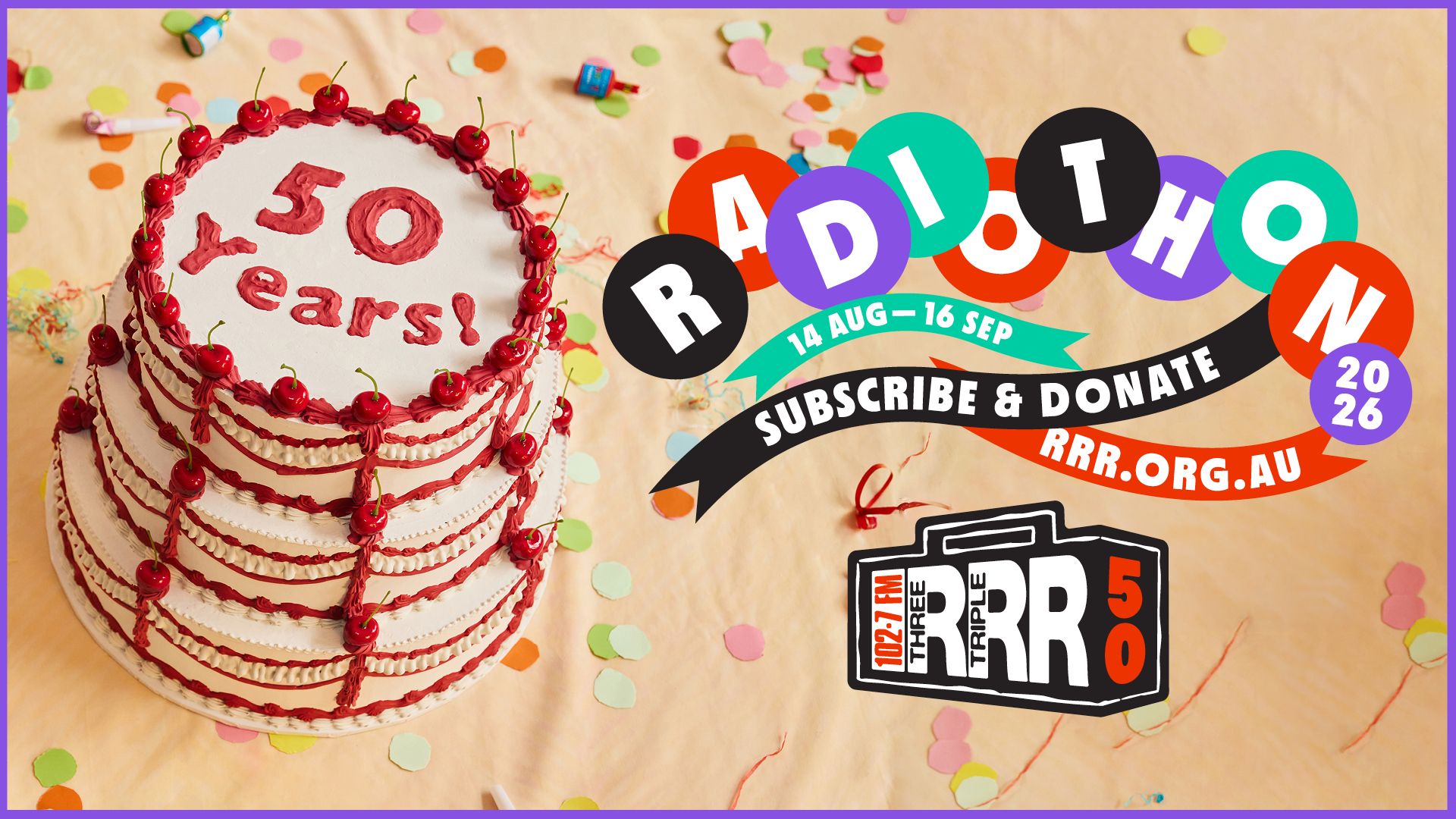
Radiothon 2026 is Triple R’s largest annual subscription and donation drive. If you believe in the power of Triple R, help them Celebrate 50 Years. Subscribe and donate now.