Half of Australians believe tech executives should face jail time if their companies facilitate the spread of illegal and dangerous content online, as the Albanese government moves to impose a new duty of care on digital platforms.
By Tegan George
Thu 10 Sep 2026 10.37 AEST
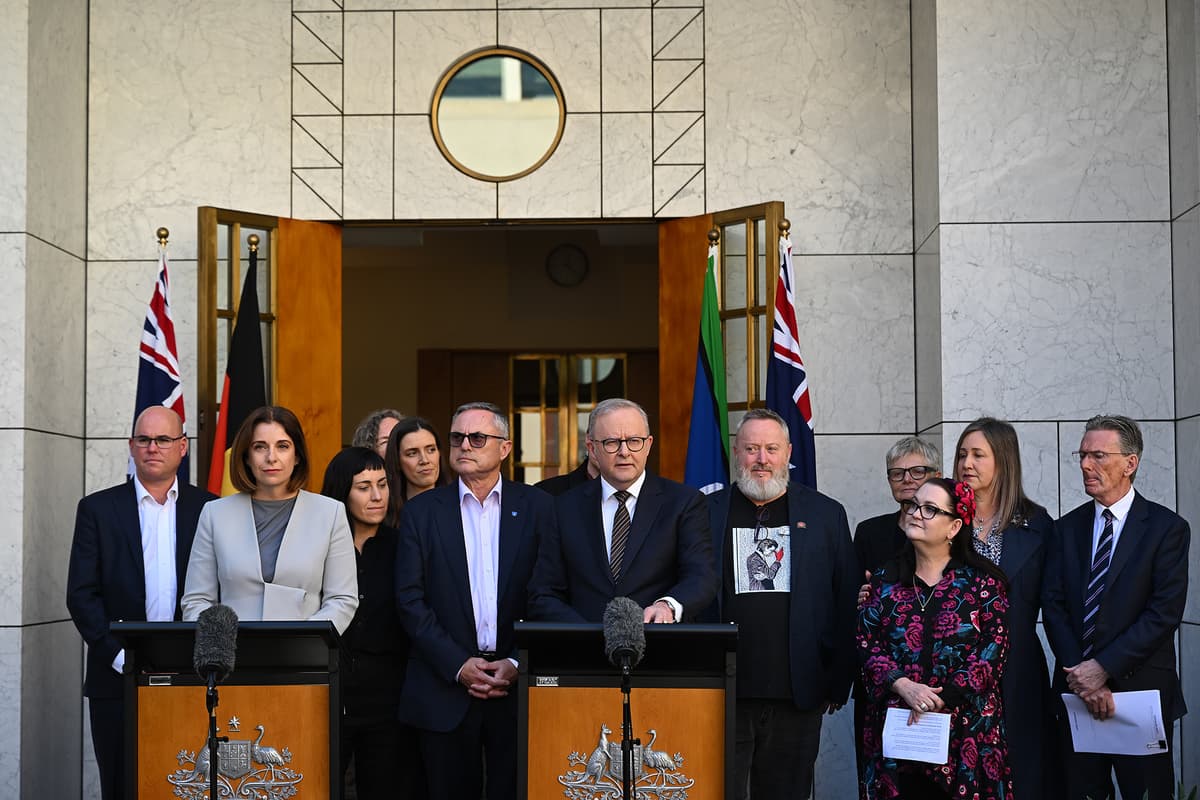
Australian Prime Minister Anthony Albanese and Australian Communications Minister Anika Wells speak to the media during a press conference at Parliament House in Canberra. Photo: AAP Image/Lukas Coch


Half of Australians believe tech executives should face jail time if their companies facilitate the spread of illegal and dangerous content online, as the Albanese government moves to impose a new duty of care on digital platforms.
Polling by the Australia Institute found 83 per cent support financial penalties for offending companies, with 50 per cent backing jail terms for their executives.
“That response is indicative of the volcanic anger in the community about the failure to hold Big Tech companies to account for the damage that they are doing,” said Josh Bornstein, director of corporate regulation at the Australia Institute.
Mr Bornstein said the results showed the “tide has turned” with an “astonishing” 93 per cent of voters calling for online platforms to be legally compelled to provide a safe online environment and block harmful content.
“We all have either experienced online harm or know someone who has. Politicians considering opposing stronger regulation of Big Tech will find this poll very sobering.”
The findings come after Prime Minister Anthony Albanese unveiled the government’s proposed Digital Duty of Care laws, designed to shift greater responsibility for preventing online harm onto digital platforms.
“This is not about giving government control, it is about giving people control,” Mr Albanese said.
“This work has been led by parents and advocates and we have backed them. We will continue to do so.”
One key measure would give Australians greater control over their social media feeds, with the choice to opt out of content recommended by algorithms.
Quality research, analysis, explainers and factchecks from experts you can trust.
Platforms such as Facebook, Instagram and TikTok would be required to send a notification to users aged 16 and above, offering them a choice over their default feed.
For children, companies would be required to take steps to protect them from content such as pornography and bullying, as well as material that promotes eating disorders and hostile ideas about women, glorifies crime or encourages life-endangering stunts.
“The duty of care goes beyond social media to ensure children are protected from harmful content and features, including on chatbots and gaming platforms, apps and messaging platforms,” said Communications Minister Anika Wells.
Failure to comply could attract penalties of up to $109.2 million.
“The digital duty of care will ensure online service providers – including some of the most powerful companies in the world – step up and do more to keep Australians safe from harm on their platforms,” Ms Wells said.
However, the polling suggests voters want the legislation to go much further than what has been announced.
“Almost three quarters of Australians support having the right to pursue Big Tech for compensation where they are harmed,” said Mr Bornstein.
“Australians want agency and autonomy over how they respond to online abuses and they want the choice to take civil action.”
That right was supported by majorities across all voting intentions, with only one in eight Australians disagreeing.

