An unlikely alliance of industry, unions, environmentalists and welfare groups have warned the Albanese government to “correct course” on its gas reservation policy or risk having it hijacked by powerful vested interests.
By Tegan George
Tue 13 Oct 2026 16.26 AEDT
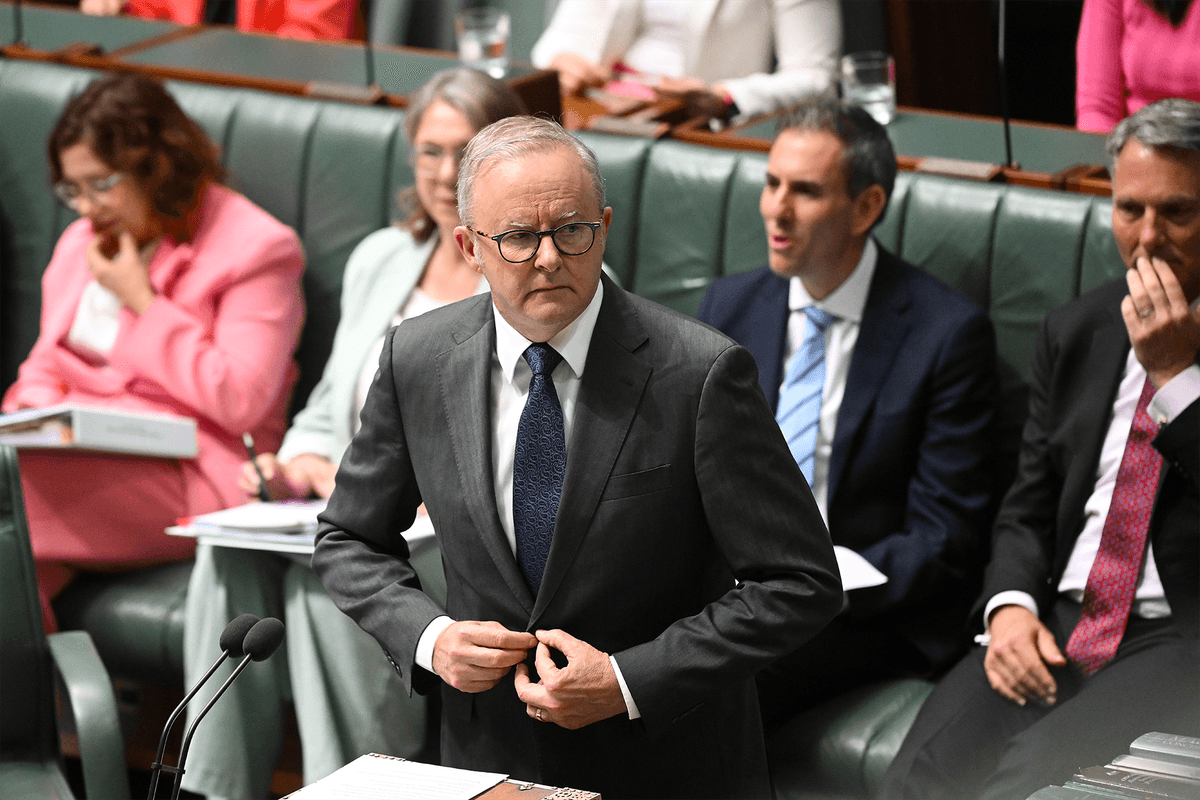
Photo: AAP Image/Lukas Coch


An unlikely alliance of industry, unions, environmentalists and welfare groups have warned the Albanese government to “correct course” on its gas reservation policy or risk having it hijacked by powerful vested interests.
Labor is expected to introduce its legislation to Parliament in the coming weeks that would require gas exporters to set aside a portion of their supply for the domestic market.
But the alliance fears the government has already weakened its proposal, leaving loopholes that could allow gas producers to prioritise lucrative exports over Australian homes and businesses.
“If we get this right, we get much needed gas price relief and greater energy security. If we fall for Santos spin, we get a leave pass for them that we all pay for,” said Australian Workers’ Union (AWU) national secretary Paul Farrow.
Critics, including the AWU, have blamed Santos’s Gladstone LNG (GLNG) export project for driving up east coast gas prices by drawing on domestic supplies to fulfil contracts overseas.
The ABC reports that industry figures fear the draft legislation contains “Santos-sized loopholes” that would allow the company to avoid its domestic supply obligations.
Australian Industry Group chief executive Innes Willox said the choice facing the government was straightforward.
“The gas reservation debate looks complex but it really isn’t,” he said.
“Will we do now what we should have done before, and put strong clear and fair expectations on gas exporters ahead of their next wave of contracts? Or will we fudge it until it’s too late, and condemn Australia to decades more of costly insecurity?”
Labor announced in May that LNG exporters would be required to reserve 20 per cent of their gas for the domestic market, but has since retreated, now proposing a requirement of “up to 20 per cent”.
“Big gas has gamed the system for too long, and it’s time the government reined it in and delivered a loophole-free reservation scheme,” said Australian Conservation Foundation chief executive Dr Adam Bandt.
“Instead of giving free passes to big corporations like Santos to keep on polluting, the government must ensure that any gas reservation puts Australian homes and industry first by diverting existing gas back to Australia, not rewarding speculative schemes for expensive new gas basins.”
Quality research, analysis, explainers and factchecks from experts you can trust.
While the scheme is likely to exempt existing contracts, critics fear loopholes could allow companies such as Santos to extend those agreements and avoid the new domestic supply obligations.
Australian Council of Social Service (ACOSS) chief executive Dr Cassandra Goldie blamed gas exports for a tripling of domestic prices, arguing Australia needed policies that put its citizens first.
“A functioning national domestic gas reserve is critical alongside the transition to renewable energy, to bring down energy prices, inflation and relieve cost of living pressures – especially for those on the lowest incomes,” she said.
“The design of the reserve must put the interests of people in Australia first, not highly profitable exporters and foreign investors. The Labor Government must shut down loopholes and prevent corporate carve-outs and gaming.”
Greens Senator Sarah Hanson-Young called for the government to adopt a simpler approach.
“And that would be a twenty-five per cent tax on gas exports,” she told the ABC’s 7.30.
“It’s hugely popular. The community wants it. They’re sick of gas companies getting Australians gas for free, flogging it off overseas, making massive profits, and not even contributing to the national budget.
“So, let’s be bigger and let’s be simpler, and let’s put in place a tax instead.”
Dr Richard Denniss, co-CEO of The Australia Institute, described the gas reservation policy as “half-baked” and accused the government of using it to distract from the billions in potential revenue lost.
“The government is trying to shift attention away from its determination to keep giving more than half the gas Australia exports away for free,” Dr Denniss said.
“The Albanese Government wants Australians to think it’s doing something about gas, but instead of collecting $350 million per week from a gas export tax, it is pursuing a new policy that won’t raise a cent.”
The Australia Institute’s Gas Giveaway Live Tracker estimates the government could have collected $78 billion in additional revenue if it had implemented a 25 per cent export tax in July 2022.

