Victoria’s Surf Coast Shire Council is the latest local government to call for big polluters to pay for the costs of global warming. The council passed a motion at its 27 October meeting, urging the Australian Government to establish a Climate Compensation Fund, paid for by a levy on major coal, oil and gas export corporations.
Wed 11 Nov 2026 13.42 AEDT
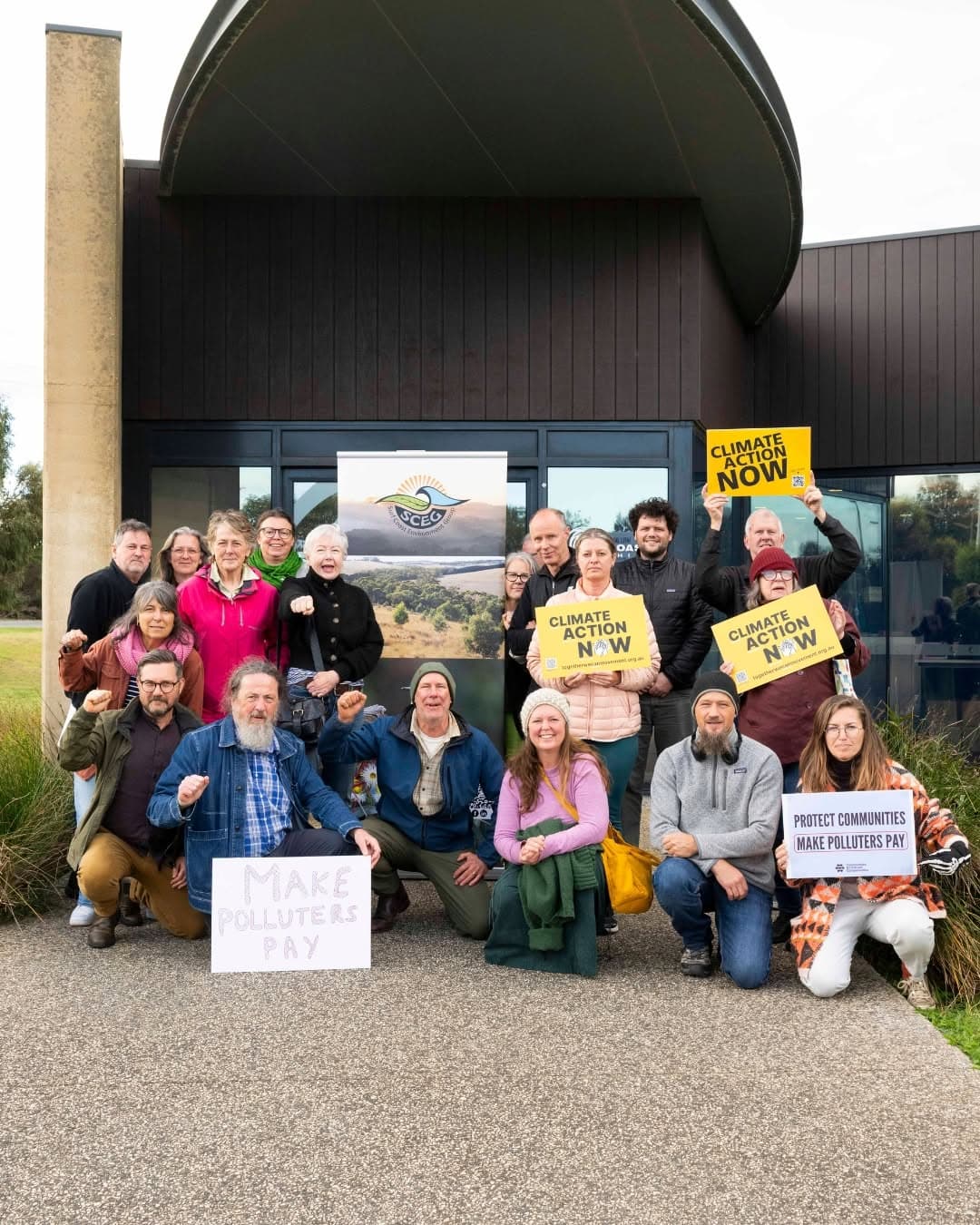
Photo: Facebook/Surf Coast Environment Group


Victoria’s Surf Coast Shire Council is the latest local government to call for big polluters to pay for the costs of global warming.
The council passed a motion at its 27 October meeting, urging the Australian Government to establish a Climate Compensation Fund, paid for by a levy on major coal, oil and gas export corporations.
The Council, which is located south west of Melbourne and Geelong and covers the famous Bells Beach, becomes the fifteenth local government to back the Communities for Climate Compensation campaign, building on earlier motions from City of Sydney, Darebin, and Bass Coast councils.
The proposed fund would include a dedicated revenue stream for local governments to address rising costs of climate change.
Surf Coast Council will also ask the federal government to establish a parliamentary inquiry into the adequacy of the 2025 National Adaptation Plan and its implementation.
A report presented to Council detailed the growing financial strain being placed on local governments to meet their obligations around climate change adaptation, emergency management and recovery.
The report highlighted the most recent summer as an example of the increasing frequency and severity of weather events such as floods, bushfires, drought and extreme heat in local areas.
In January 2026, unprecedented flash flooding in the coastal areas of Surf Coast Shire saw cars swept out to sea and major damage to some of Victoria’s best-known campsites and holiday destinations. Confronting images of the flooding led news bulletins nationwide.
The January floods were highlighted in the report to Council as an example of the increasing frequency and severity of weather events such as floods, bushfires, drought and extreme heat in local areas.
While some of the extensive clean-up and repair costs from January’s flash flooding in Lorne and surrounds can be recovered through Disaster Recovery Funding Arrangements, significant direct and indirect costs remain unfunded according to the council.
Further, the report noted that climate-related sea level rise and coastal erosion will require ongoing investment to mitigate, including the protection of existing assets.
Councillor Phoebe Crockett said climate-related emergencies impacted residents, businesses and tourism, as well as Council’s infrastructure and services.
Quality research, analysis, explainers and factchecks from experts you can trust.
“After a climate disaster event, it’s the council and the community who pick up the cleaning bill,” Cr Crockett said.
“After the floods our community came together, with neighbours helping neighbours clear mud from homes and businesses and get back on their feet.
“But that goodwill shouldn’t be the only safety net we have.
“We need the federal government to back communities like ours with real, ongoing funding, not leave ratepayers to carry the cost of a crisis we didn’t create.”
The council was presented with a petition supporting the motion by Surf Coat Environment Group. The petition consisted of 202 signatures, 177 of which were Surf Coast Shire local residents.
“When bushfires, floods and storms hit, it’s our community picking up the bill in higher insurance and food prices, damaged roads, and disaster clean-up,” said Jamie Thom, Aireys Inlet resident and committee member from Surf Coast Environment Group
“We congratulate our council for backing our community petition and calling for a Climate Pollution Levy, so the corporations driving three-quarters of Australia’s climate pollution pay their fair share, instead of leaving ratepayers to foot the bill.”
The costs of climate-driven disasters are rising rapidly, while local government revenue is increasing slowly, according to Australia Institute research.
“When the Surf Coast or any other local government area is battered by storms, the local council is left to pick up the tab. It’s happening more often and with greater severity,” said Rod Campbell, Research Director at The Australia Institute.
“This damage is caused by fossil fuel companies, so ratepayers shouldn’t be expected to pay for the damage caused by coal, gas and oil companies.
“The federal government does have the power to tax the companies that are profiting from climate change. It is the coal and gas companies that should help pay for the disasters that they are making worse.”

