Fri 31 Oct 2025 11.34 AEDT
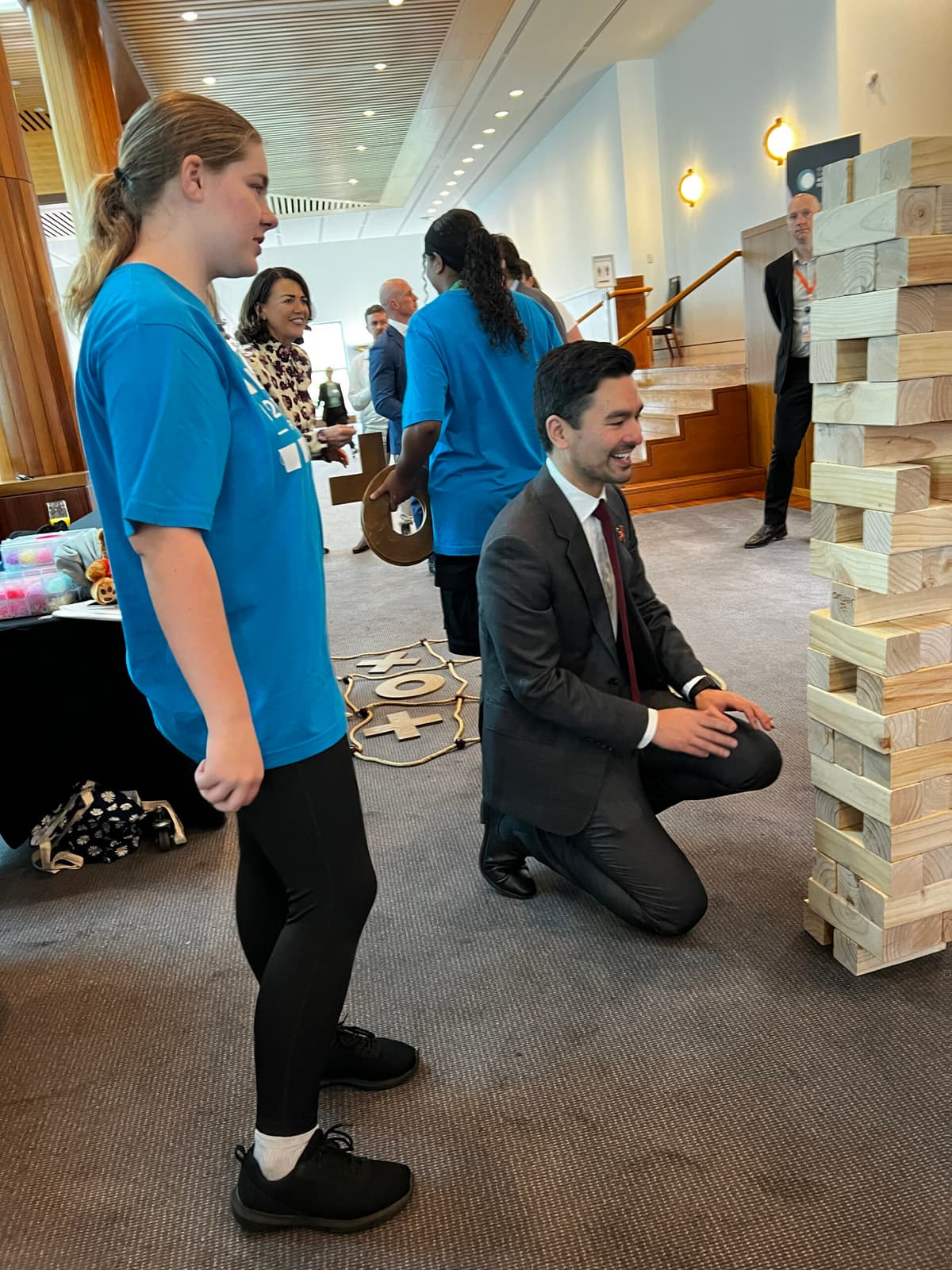
photo: supplied


Who says politics is just a game?
This morning, in the Mural Hall of Parliament House in Canberra, five remarkable young Australians took on our political leaders in games of giant jenga, connect four and noughts & crosses.
But it wasn’t all fun and games.
These kids had a stark message for their political playmates.
They told them what it’s like to be young and poor.
They spoke about missing meals, wearing ripped school uniforms and being excluded from opportunities their parents couldn’t afford, which other kids take for granted.
“Sometimes I choose not to ask for food, because it’s easier to go hungry rather than upset anyone or risk them not helping me in the future,” said one participant, Aimee, who is one of six children in a blended family that squeezes into a three-bedroom unit.
“My dad didn’t have enough money to buy we a new school shirt when my school shirt got a rip in it,” said another, Hunter, who helps his parents by caring for his younger siblings.
“My teachers at school would give me warnings, and I would explain to them that I couldn’t afford to buy a new one. One day the warnings stopped, and I started getting detentions instead.”
“It was really hard to be in detention because I didn’t do anything wrong, and they knew I needed help.”
They were tough, but necessary, conversations.
It was all part of an initiative to raise awareness about the extraordinary – and growing – number of Australian children living in poverty.
The games were hosted by the End Child Poverty campaign, run by the Valuing Children Initiative.
The children visiting Parliament this morning all take part in programs run by 12 Buckets, which provides mentoring for disadvantaged children in schools and the community.
The End Child Poverty campaign wants the Federal Government to legislate a “clear, child-centred poverty measure and definition”.
There is no official measure of poverty in Australia, which makes it difficult to monitor the effectiveness policies aimed at improving the lives of those doing it hardest in our society.
“We need to measure the impacts of poverty in a child-centred way, so we can reduce the harmful effect that can last a lifetime,” said campaign lead, Sarah Quinton.
Last year, the Productivity Commission estimated that 14 percent of Australians lived in poverty, which is the number of people living on 50 percent of the median income, or below.
The End Child Poverty campaign calculates that nearly a million Australian children now live below the poverty line.
It’s now nearly 40 years since the late Bob Hawke declared in his 1987 re-election campaign launch “by 1990, no Australian child will be living in poverty”.
Last year, the Australia Institute released its Ending Child Poverty in Australia report, with chief economist Greg Jericho noting, “there is no excuse for a country as rich as Australia to have one in six children growing up in poverty.
“Poverty is not too big or too complicated to solve – it’s a question of choice.”
In a rich country like Australia, governments could effectively wipe out poverty with a single piece of legislation.
The report stated, “poverty has long-lasting and insidious impacts on a child’s health and well-being and can affect their schooling and employment opportunities throughout their entire lifetime.
“Given that the low rate of income support payments keeps many families in poverty, reducing child poverty is not inherently complicated.
“During the COVID-19 pandemic, the Australian Government managed to lift 650,000 Australians, including children, out of poverty overnight by supplementing existing income support payments.”
Surely, if there was one single ambition of a government with a big mandate and, seemingly, little appetite for meaningful reform, ending child poverty is a no brainer.

