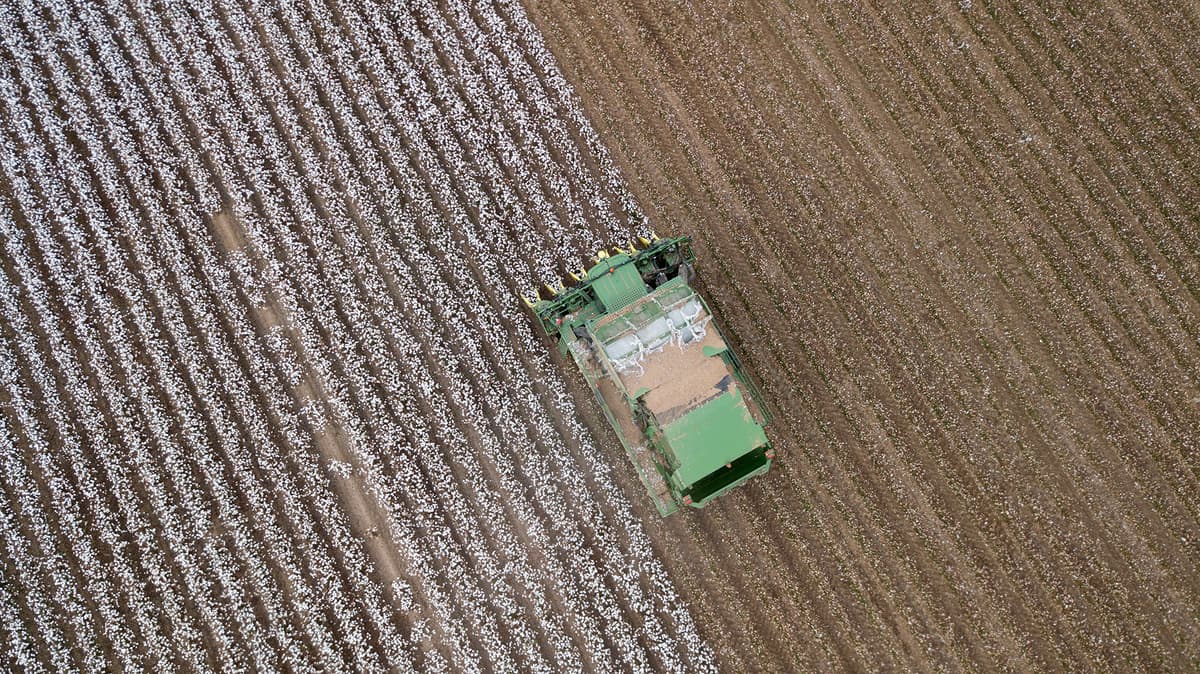
An influential farming group has called for reform of Australia’s largest fossil fuel subsidy, the $10 billion per year Fuel Tax Credit Scheme (FTCS).
The call comes in a new report, Energy Sovereignty for Regional Australia, commissioned by Farmers for Climate Action and written by University of Western Australia Adjunct Professor Ray Wills.
The report highlights that Australian farmers are strongly exposed to the global diesel supply chain and price spikes that they cannot control. It examines electrification of farm equipment and how this can improve regional Australia’s fuel security.
“Diesel dependence is a vulnerability,” said Professor Wills.
“Energy sovereignty is the opportunity. The job of policy now is to turn that opportunity into practical change – reducing exposure, lowering risk, and giving regional Australians more durable control over the energy systems their businesses and communities depend on.”
Debate over fuel security has increased with the Middle East war and the role of the mining industry, as Australia’s largest diesel user was highlighted with the recent leaking of the ‘BHP files’ to ABC Four Corners and Guardian Australia. The files exposed how BHP had shelved its plans to reduce diesel use and electrify mining equipment.
“Discount diesel should be capped for the biggest mining companies to protect the financial sustainability of the [FTCS],” said Ellen Litchfield, South Australian grazier, responding to the Farmers for Climate Action report.
Farmers for Climate Action endorse a cap on FTCS of $50 million per claim, a proposal initially put forward by the Climate Energy Finance think tank. The proposal has wide support from organisations including the ACTU, mining company Fortescue and former NSW Treasurer Matt Keen, now head of the Climate Change Authority.
“Putting a sensible cap of $50m on the Fuel Tax Credit Scheme, while protecting farmers, is just a no-brainer when it comes to accelerating the shift to electrification for heavy machinery,” said Farmers for Climate Action CEO, Verity Morgan-Schmidt.
“In a cost-of-living squeeze, why should we continue to encourage the biggest companies to enjoy unlimited taxpayer-subsidised diesel? There is a real opportunity for these biggest users to shift their focus to an electrified fleet; accelerating technology and bringing down emissions.”
The new report comes after Australia Institute research revealed in May that mining companies use 8 billion litres of diesel per year, 3.4 times more than all agriculture, farming and forestry.
Australia Institute Research Director Rod Campbell welcomed the new report.
“Farmers have long been used by the mining industry to defend this indefensible fossil fuel subsidy. It’s great to see prominent voices in agriculture pushing back.
“Miners like BHP are happy to keep using subsidised diesel while the rest of Australia goes through a fuel security crisis.
“You can fill every big ute in Australia 30 times with the subsidised diesel that mining companies each year.
“At the same time, ordinary Australians are being told to catch the bus in the name of fuel security.
“Instead of telling Australians to pump up their tyres, the Albanese Government should be cutting the Fuel Tax Credits Scheme and telling mining companies to go electric.”
Morgan-Schmidt agreed, “The fuel supply disruption has highlighted just how vulnerable our sector is. The time has come for us to look at all sensible options to accelerate our shift towards energy sovereignty.
“Why would we rely on imported diesel we can’t control when, with sensible shifts, we can help build the systems to get us to electric machines running on cheap, clean energy powered by the Aussie sun?”