Excessive election signage in New South Wales has become an “arms race”, with a parliamentary committee finding it creates safety risks, visual clutter and an uneven playing field for candidates around polling places. The Joint Standing Committee on Electoral Matters has recommended the NSW Government establish a 100-metre restricted signage zone around voting booths ahead of next year’s state election.
By Tegan George
Fri 12 Jun 2026 10.00 AEST
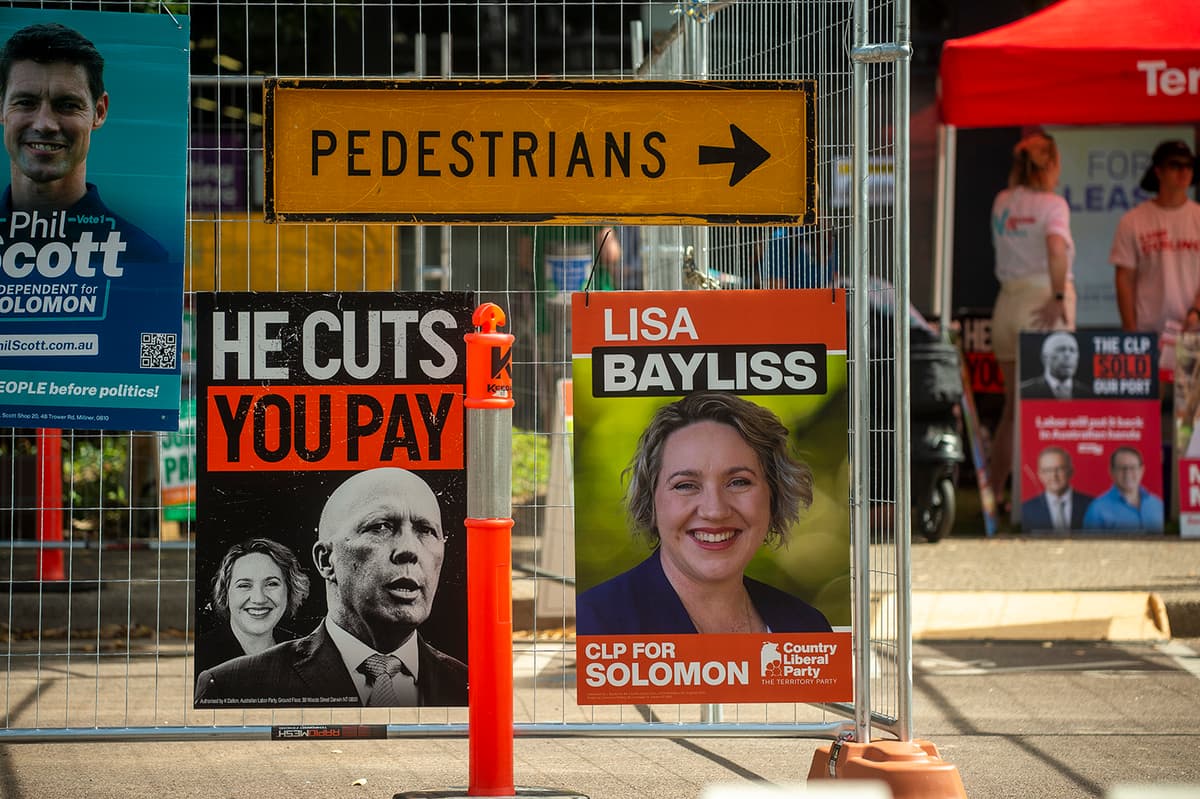
Photo: AAP Image/Aaron Bunch


Excessive election signage in New South Wales has become an “arms race”, with a parliamentary committee finding it creates safety risks, visual clutter and an uneven playing field for candidates around polling places.
The Joint Standing Committee on Electoral Matters has recommended the NSW Government establish a 100-metre restricted signage zone around voting booths ahead of next year’s state election.
Under current laws, election signage is restricted only within six metres of a polling place.
The proposal would limit parties, groups, independent candidates and registered third-party campaigners to six signs each within the 100-metre zone, while banning large-scale promotional materials.
Evidence to the committee revealed campaign volunteers often arrive before dawn, or even the day before polling, to stake out prime real estate for promotional material.
Witnesses said the scramble to secure space had occasionally resulted in physical violence and caused problems for schools and surrounding neighbourhoods.
“Stakeholders explained that this activity disrupts communities and impacts voters’ enthusiasm and engagement,” found the multiparty committee in its final report.
“Critically, excessive quantities of posters that block paths make voting centres unsafe for voters, especially those with additional accessibility needs.”
Bill Browne, director of the Australia Institute’s Democracy & Accountability Program, said the current rules encouraged excessive campaigning around polling places.
“The current lack of regulation does encourage wasteful and unfair practices — like covering all available space in cheap plastic bunting or camping out to claim prime real estate overnight,” he said.
But the Australia Institute warned that any changes must not infringe on the implied freedom of political communication.
“Measures that significantly disadvantage third-party campaign groups or non-major parties or that restrict posters on private property would be particularly at risk of falling foul of this constitutional right,” said Australia Institute researcher Skye Predavec in her evidence to the committee.
Ms Predavec said Australian elections are accompanied by a “flurry of pamphlets, posters, forums, advertisements and signage”, noting democracy sausages and election corflutes “are core enough to Australia’s democracy to have made it onto Bluey”.
“The overall festival of democracy enriches the civic experience and makes compulsory voting a pleasure and a custom, as well as a duty,” she said.
Mr Browne argued posters and how-to-vote cards “communicate key information to voters” and the absence of signs favours incumbents “who come into the election with the advantage of name recognition”.
“Being able to put up signs and mobilise volunteers is one way of levelling that advantage,” he said.
The committee ultimately decided that limiting, rather than banning, election signage would improve accessibility and fairness while preserving political communication.
“The Committee shares stakeholders’ views that limiting signage in this way should improve, rather than restrict, political communication,” the committee said in its report.
Mr Browne said the committee appeared to have struck the right balance.
“The committee’s suggestion of allowing some posters but not an unlimited amount could prove a good compromise,” he said.
The recommendation comes as the ACT considers relaxing some election restrictions.
While supporting limits on election signage, an ACT parliamentary committee has recommended abolishing the territory’s 100-metre canvassing exclusion zone around polling places.
It found there was insufficient evidence the restriction was needed, with stakeholders raising concerns about its impact on political communication.
Giving evidence to the ACT committee, Ms Predavec said the rule often prevented campaigners from reaching voters before they cast their ballot.
“It means that people going to vote are less likely to see political information,” she said.
Advertisement