Australia Institute co-CEO Richard Denniss has accused the Albanese government of watering down its gas reservation plan, warning the scheme ‘probably won’t’ lower prices for Australian households and businesses.
Labor announced in May that LNG exporters would be required to reserve 20 per cent of their exports for the domestic market but has since retreated, now proposing to make them supply ‘up to 20 per cent’.
“For 15 years now, Australians have seen an enormous amount of Australian gas exported overseas,” Dr Denniss told ABC Radio National Breakfast.
“And yet again, we’ve been told that the detail is coming.”
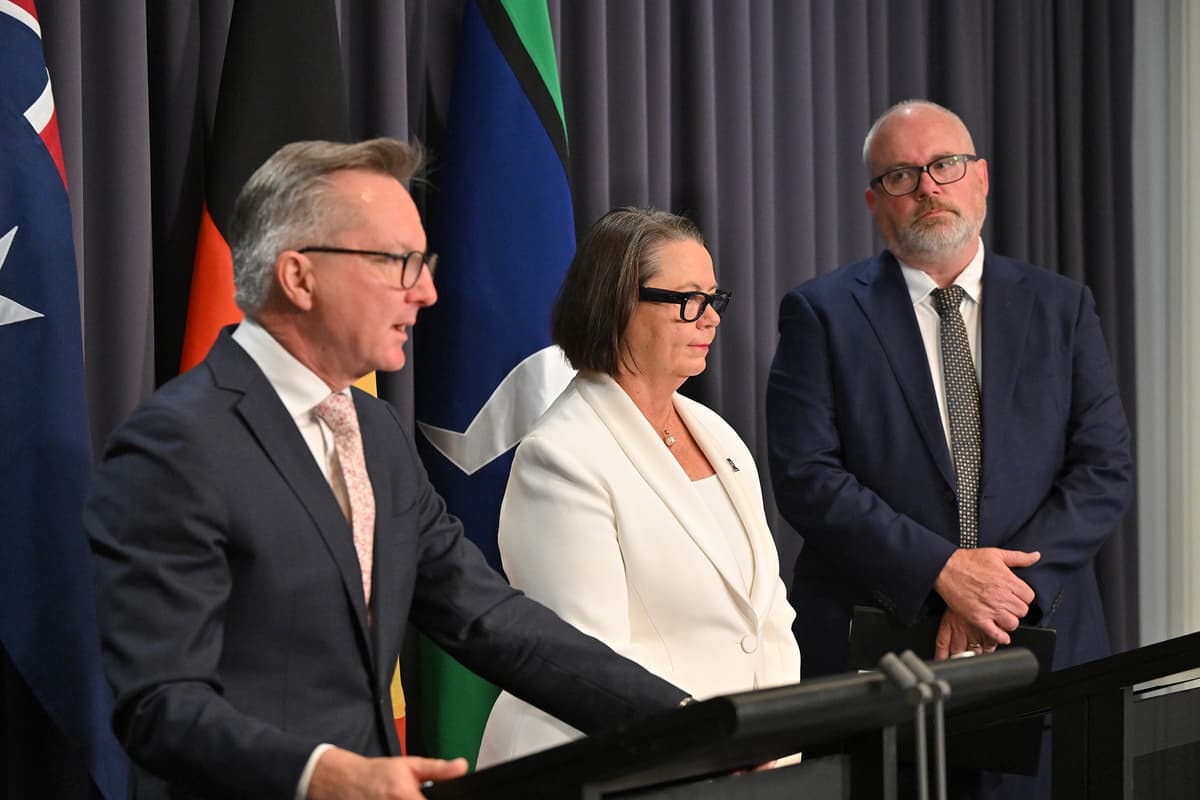
“There’s no point in reserving gas that Australians don’t need,” said Energy Minister Chris Bowen.
The policy is meant to create a “modest oversupply” for the domestic market to put downward pressure on prices, but Dr Denniss said the latest change meant the government has now “kicked it into the long grass yet again”.
“If this reservation policy were introduced tomorrow, it wouldn’t collect a cent in revenue and all we get told is it’ll put downward pressure on prices; not how much prices will fall,” he said.
Comparing Australia with Norway and Qatar – both major gas exporters – Dr Denniss said it was “hard to imagine a worse position” for the country to be in.
“Of course, something is better than nothing,” he said.
But with Australia the world’s third largest fossil fuel exporter, he asked: “Why don’t Australians feel rich when the world price of our exports soars?”
“The answer is 15 years of people saying, ‘I’ve got a complicated scheme, it’s going to work in the future. Just stick with me for another year or three while we sort out the details’.”
The prominent economist instead called for a fixed 25 per cent tax on gas exporters, arguing it would raise revenue and encourage exports to supply more gas domestically.
Get our newsletter
Quality research, analysis, explainers and factchecks from experts you can trust.
The Australia Institute estimates it would generate $17 billion annually.
“The gas export tax would do one very important thing: it would mean that the gas industry could avoid paying the export tax by supplying more gas to Australians,” he said.
“So, a gas export tax would instantly collect revenue and instantly push prices down and instantly push supply to Australians up, but instead of doing that, we’re going to talk for years about exactly how many molecules of gas will Australians need.”
Dr Denniss also criticised the majority of Greens Senators for opposing a disallowance motion that would have blocked a new carbon-crediting method for public native forests.
“Unfortunately, the Greens felt so much pressure from the state and federal Labor government to save koalas that they agreed to actually cause more climate change,” he said.
“It was a shameful day.”
Three Greens senators – Nick McKim, Jordon Steele-John and Vanessa Bleyer – crossed the floor in a bid to stop the new method from going ahead.
Senators McKim and Bleyer described the Improve Native Forest Management (INFM) method as “a neoliberal response to a crisis caused by neoliberalism.”
“It sets an alarming precedent.”
“If it passes, we may never again see a National Park or marine protected area created unless carbon or biodiversity can be monetised in some way.”
The disallowance motion was defeated 34 to 27.
It now clears the way for big industry to use a new koala national park in New South Wales to offset its climate pollution.