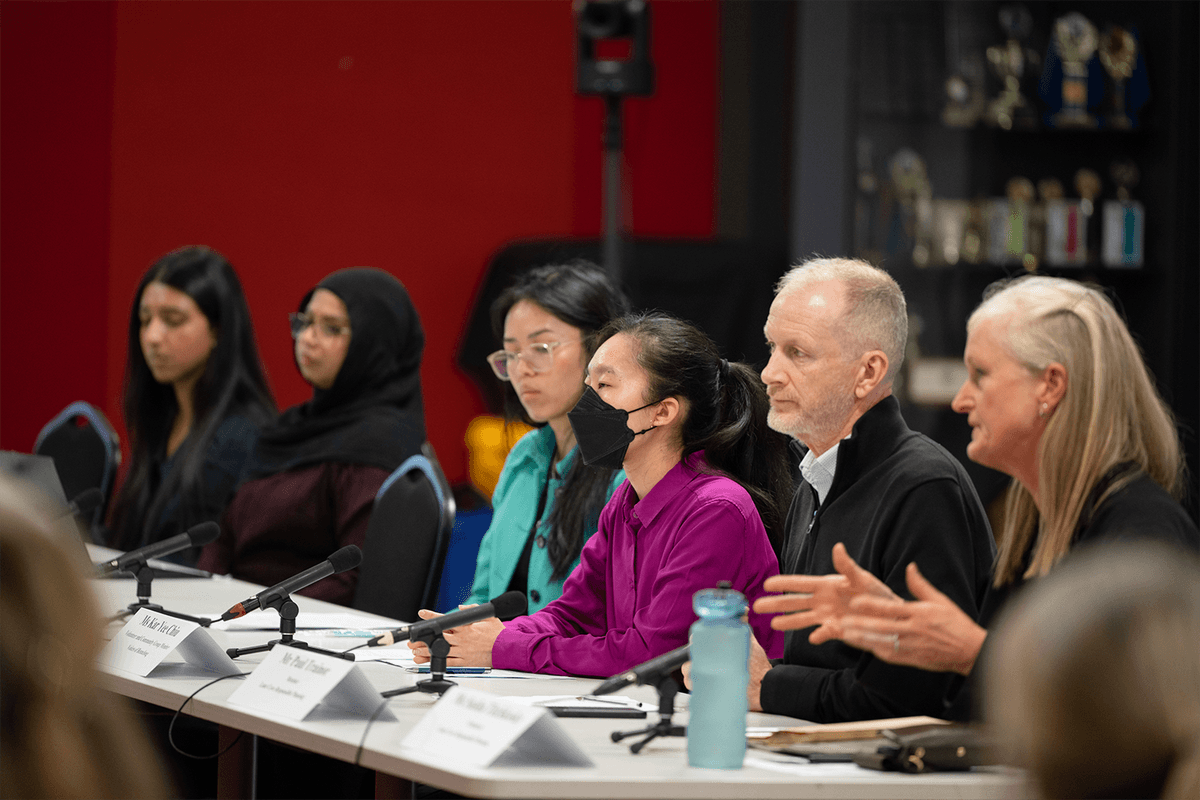
New South Wales planning officials allegedly bypassed consultation with key agencies over a proposed data centre and gas-fired power station after the developer threatened legal action, a Senate inquiry has heard.
Southern Highlands campaigner Jessica Ryall said government officials were required to seek advice from relevant authorities before issuing the environmental assessment requirements, known as SEARs, for major state-significant developments.
But in this case, she said, a departmental planner wrote in an email: “We were required to issue the SEARs quickly and without consultation because the proponent threatened legal action.”
Ms Ryall said the consultation requirement had since been repealed.
“We feel a little bit blindsided by the state government because we’ve had rules change on us on the fly,” she said.
Sydney company Cloud Carrier is seeking approval to build a 673-megawatt gas-fired power station six kilometres from the town of Moss Vale.
The station would generate enough electricity to run 70,000 homes, according to the ABC, but it would instead be used exclusively to run up to three private data centres.
“This is a private BYO power station operating outside the national energy market rules,” Ms Ryall said.
She described the data campus as a rural industrial site the “size of 134 football fields” on bushfire-prone land within Sydney’s drinking-water catchment.
The committee heard the project had been broken into several separate development applications and had never been assessed as a single precinct-wide plan.
Residents also claimed they had been left in the dark about the development, with consultation described as little more than “a PowerPoint presentation and a few Post-it notes”.
“We’re over it,” said Gaye White, deputy chair of WinZero.
“We’ve been fighting now for years — coalmines and the largest plastic recycling plant — without the regulations in place to control them.”
Ms White said residents were committed to reducing their own emissions and that the Wingecarribee Shire was a leader in electric vehicle and household battery uptake.
“It’s insulting to allow something like this when we have tried so hard,” she said.
“The government has to stop anything like this. It’s just out of the question.”
Community representatives called for a moratorium on data centre approvals until national rules governing their location and environmental impacts were introduced.
Get our newsletter
Quality research, analysis, explainers and factchecks from experts you can trust.
“AI is moving far faster than our political system can respond and major proposals are arriving now, while national rules are still being developed,” said Ms White.
“If the government is serious about getting the location right and giving communities a genuine say, there must be a moratorium on new approvals … because our political system moves at human speed. AI does not.”
The inquiry also heard that there were no specific NSW rules preventing data centres from being built close to homes and schools.
Community advocates said the proposed three-storey Project Mars data centre at Lane Cove West would sit just 16 metres from the residential boundary and about 160 metres from a primary school.
Sasha Titchkosky, a member of Lane Cove Responsible Planning (LCRP), said developer Goodman had told locals their input wouldn’t change its plans.
“They’ve said to us that they weren’t really going to change anything in their proposal as a result of any community consultation that they did, and they have refused to come and meet us in person,” she said.
Residents at Lane Cove West also shared concerns that each stage of a large development could be considered in isolation.
“Why are data centres largely assessed as individual developments with minimal consideration to the cumulative impacts of emissions, fuel loads, light and heat, resource use and national security risks?” said LCRP member Paul Trainor.
Stop the Slop told the inquiry that Western Sydney alone had at least 14 hyperscale proposals.
Volunteer Sophie Shanaaz said she lived close to the Marsden Park data centre, which was approved in 2025.
“I, as someone who lives less than a kilometre from this site, only became aware of the development in June of this year,” she said.
“We do deeply believe that the lack of transparency in this consultation process has not taken on feedback from those of us who will have to bear the brunt of the impacts.”
Ms White questioned why Australia wasn’t ready for the AI rush.
“Why are we not prepared for all of this because we’ve known this has been coming for years, and yet here we are playing complete catch up, and this is just galloping away from us,” she said.
She told the senators that any new regulations should be bipartisan.
“We can’t be playing political games with this. This is very serious,” she said.