Big Tech is facing a new era of corporate accountability, with Australians set to gain the right to sue digital platforms under strengthened online safety laws expected to pass parliament this week.
By Tegan George
Wed 25 Nov 2026 08.17 AEDT
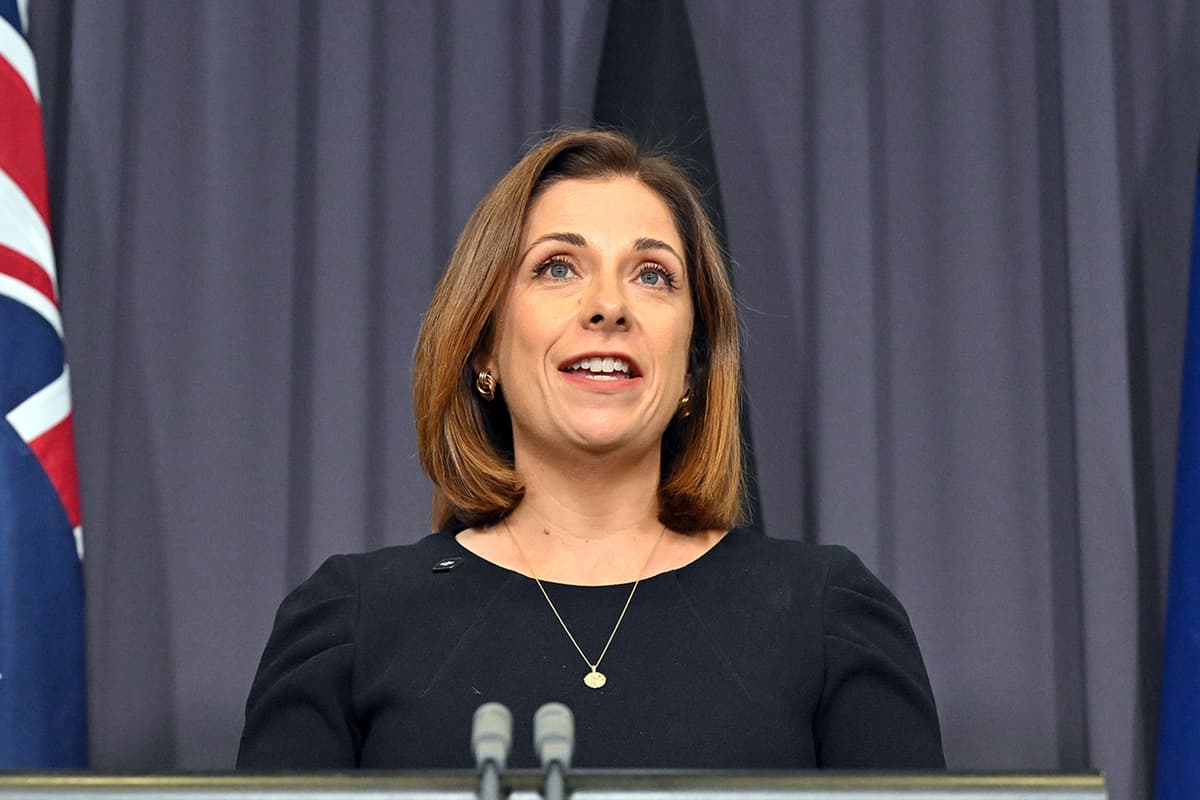
Photo: Minister for Communications Anika Wells (AAP Image/Mick Tsikas)


Big Tech is facing a new era of corporate accountability, with Australians set to gain the right to sue digital platforms under strengthened online safety laws expected to pass parliament this week.
The Albanese Government struck a deal with the Greens on Tuesday to secure the passage of its digital duty of care legislation through the Senate, with Communications Minister Anika Wells describing it as “the most seismic and significant online safety reform that our country has ever known”.
“If you build it, you should be responsible for its risks. That occurs in every other industry. That has not occurred in this industry,” she said.
In exchange for the Greens’ support, Labor agreed to a series of changes, including increased penalties and giving people “a private right of action” – meaning they’ll be able to sue social media companies for harm suffered online.
Under the deal, tech companies could face fines of up to 5 per cent of their global revenue for breaching the duty of care, a significant increase on the originally proposed maximum penalty of $109 million.
“The only way to get these massive companies to change their behaviour is to hit their bottom line. The big social media giants, like Meta and Google, will now be on the hook for tens of billions of dollars if they breach the digital duty of care,” said Senator Sarah Hanson-Young, the Greens’ spokesperson for communications.
“For too long, social media giants have been able to profit off products they know are addictive and harmful, with little to no consequences.”
She said the Greens had also secured measures to “dump the doomscroll”, with rules requiring tech companies to prevent harm from addictive design features.
There will also be provisions to establish an independent ombudsman.
“The new digital duty of care law is a landmark in the global struggle to regulate the many harms caused by the social media industry,” said Josh Bornstein, director of corporate regulation at the Australia Institute.
“I hope that other democracies follow suit and empower their citizens to sue these companies if they are harmed by them.”
There was overwhelming support for stronger online safety obligations, with research by the Australia Institute finding 93 per cent of Australians agreed that online platforms should be required to prevent illegal and harmful content.
“Our campaign for the right to sue Big Tech was supported by more than 80 civil society organisations and trade unions,” said Mr Bornstein.
“Everyone has skin in this game. We have all either experienced online harm or know someone who has been harmed. This law should stop the industry from profiting by harming its users.”
Quality research, analysis, explainers and factchecks from experts you can trust.
The impending passage of the legislation comes amid broader calls for greater corporate accountability from tech giants, including those developing artificial intelligence.
On Tuesday, a joint committee examining the opportunities and risks of AI handed down 46 recommendations, including strengthening copyright protections and giving Australians legal rights over their appearance, voice and likeness.
In additional comments to the committee’s report, independent MP Kate Chaney warned against a hands-off approach to regulating the industry.
“A passive or hands-off approach to AI effectively cedes control of our future to a handful of international tech companies and the billionaires who run them,” she wrote.
“To take control of our future, Australia needs AI policy that is alive to the uncertainty and speed of AI development and that addresses the current and emerging risks and harms to ensure AI benefits Australia and Australians.”
In a dissenting report, independent senator David Pocock questioned whether the proposed safeguards went far enough.
He argued the problem wasn’t Australia’s copyright laws but a failure to enforce them.
“We cannot allow Australia to become the copyright equivalent of the Cayman Islands,” he wrote.
Senator Pocock also called for the introduction of a National AI Safety Act.
“If we are prepared to legislate pervasive things that cause harm like a Scams Prevention Framework or a Digital Duty of Care, we should also be prepared to legislate specifically for AI safety, especially given Australians’ high adoption but low trust in the technology,” he wrote.
The digital duty of care legislation is expected to pass parliament this week without the support of the Coalition, which raised concerns about freedom of speech.
Minister Wells said there would be a 12-month transition period, with scope for further improvements to the laws.
“We can’t cure the internet. But this is providing some basic safety standards and saying, if you build it, you are responsible for its risks,” she said.
Advertisement