What was supposed to be the “Antalya pact” has died. After more than two weeks of talks, the text still could not name coal, oil and gas as the cause of the climate crisis, or a transition away from fossil fuels as the solution.
Mon 23 Nov 2026 12.51 AEDT
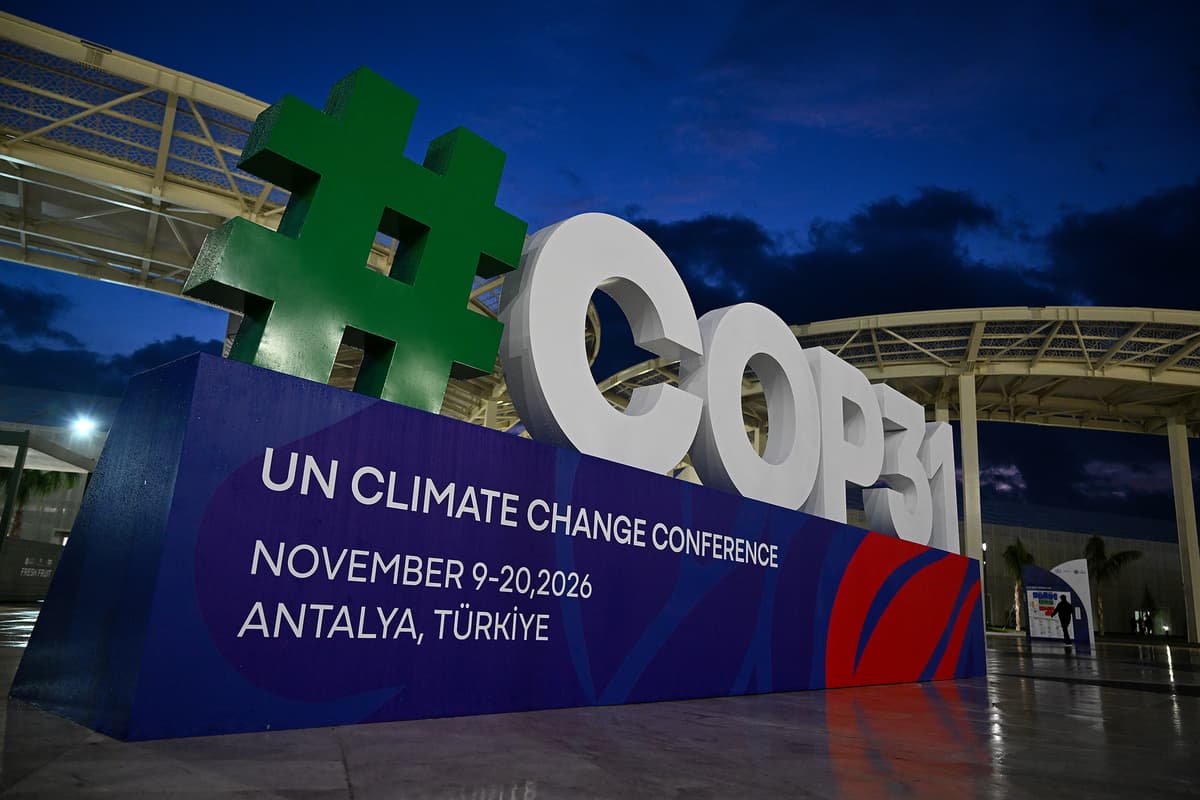
Photo: AAP Image/Lukas Coch


The COP31 UN climate summit in Antalya, Türkiye, has ended without an agreement. What was supposed to be the “Antalya pact” died overnight Sunday, Australia time, at the end of the longest climate summit ever held. After more than two weeks of talks, the text still could not name coal, oil and gas as the cause of the climate crisis, or a transition away from fossil fuels as the solution.
In an act of bravery, this led 130 countries to walk away. They refused a deal that ignored the problem, dodged the solution, and wrote in provisions for carbon capture and storage (CCS), a proven tool for prolonging the use of fossil fuels. They refused to stay captive to the fossil fuel and carbon capture industries and to talk fests that deliver nothing. The move is on.
Ireland’s Darragh O’Brien, speaking for the EU, called a pact with no mention of fossil fuels unconscionable. Norway, Panama, the Marshall Islands and Vanuatu joined the EU in refusing to endorse the proposed pact. Tuvalu refused too. COP President Murat Kurum had no choice but to concede there was no consensus.
Australia holds the pen as President of Negotiations. That makes this our failure as much as anyone’s.
On Tuesday when Minister Bowen’s first draft put fossil fuel transition on the page, I asked if it would stay there. We got out answer on Friday, when a revised text dropped the words “fossil fuels” entirely. They were never brought back.
What was kept in the draft is telling. It still aims for an unidentified gigatonne-scale carbon capture, utilisation and storage (CCS) target by 2035. It still sets a global electrification target that is not tied to renewables. It still waves at “clean energy” without saying what is being replaced.
In the final hours of negotiations, more than 100 civil society groups, including The Australia Institute, sent the Presidencies an open letter. We asked for the obvious to be said out loud: name coal, oil and gas as the causes of the climate crisis, drop the CCS false solution, and ensure electrification is tied to renewables and a transition away from fossil fuels. The letter warned that the proposed pact read like a deal to let carbon capture through in exchange for an electrification target. The Presidencies ignored it.
Then there are the lobbyists. A record 700 CCS lobbyists registered for Antalya, according to the Centre for International Environmental Law. That is more than the combined delegations of the G7, and more than the passes given to all 14 Pacific Small Island Developing States, the nations that did the least to cause this crisis and stand to lose the most from it. It is the third year in a row the number of CCS lobbyists has grown, up from 480 at COP29 and 531 at COP30.
Quality research, analysis, explainers and factchecks from experts you can trust.
Australia was no passive onlooker. According to the UNFCCC list of registered on-site participants, we gave 11 party overflow badges to CCS lobbyists. We are meant to be steering these talks toward a fossil fuel phase-out. Instead, we held the door open for the people paid to stop one.
Pacific leaders called it like it is, again. Tuvalu’s Maina Talia said the fossil fuel fight is about the root cause of the crisis, and warned that if the world cannot address fossil fuels it is wasting its time. Vanuatu’s Ralph Regenvanu said days earlier that a small group of states is blocking ambition for everyone else, and called for COP reform. They were right on both counts.
CCS is a proven failure. It is a business model built to prolong and expand the fossil fuel industry. The Australia Institute has documented its failures for more than a decade: missed targets, huge public subsidies, and a record of being used as a carbon offset boondoggle to wave through new coal and gas. A CCS target in a COP decision is a fossil fuel executive’s dream. The 130 countries that walked away understood that.
So where do the world’s diplomats go from here?
They go to the Transition Away from Fossil Fuels (TAFF) process, which Australia has signed up to. Countries that want to act have already been meeting outside the COP room, first in Santa Marta, Colombia, in April 2026. Next year, Ireland and Tuvalu, two nations that stood up in Antalya, will host the next TAFF meeting.
Ireland, Denmark, Luxembourg, Spain and Portugal have already said they will bring national roadmaps. The Pacific is building a regional one. TAFF names fossil fuels as the problem and a fossil fuel phase-out as the solution. It treats CCS and carbon offsets as the false solutions that experience shows them to be, and it asks every country to arrive with a roadmap and an action plan.
The test of who is serious is simple: will they sign the Fossil Fuel Non-Proliferation Treaty? Words at a summit are easy. Signing up to real action to phase out fossil fuels will separate the talkers from the doers.
Australia’s next test on turning the valve off on new fossil fuels comes this summer. We face another extreme fire and cyclone season, with the climate costs already on our doorstep. At the same time, new coal and gas approvals, including the Hunter Valley Operations coal mine and Woodside’s Browse gas project, sit on the government’s desk. Approving them would say everything about how seriously we take the transition we signed up to, and our role in TAFF.

