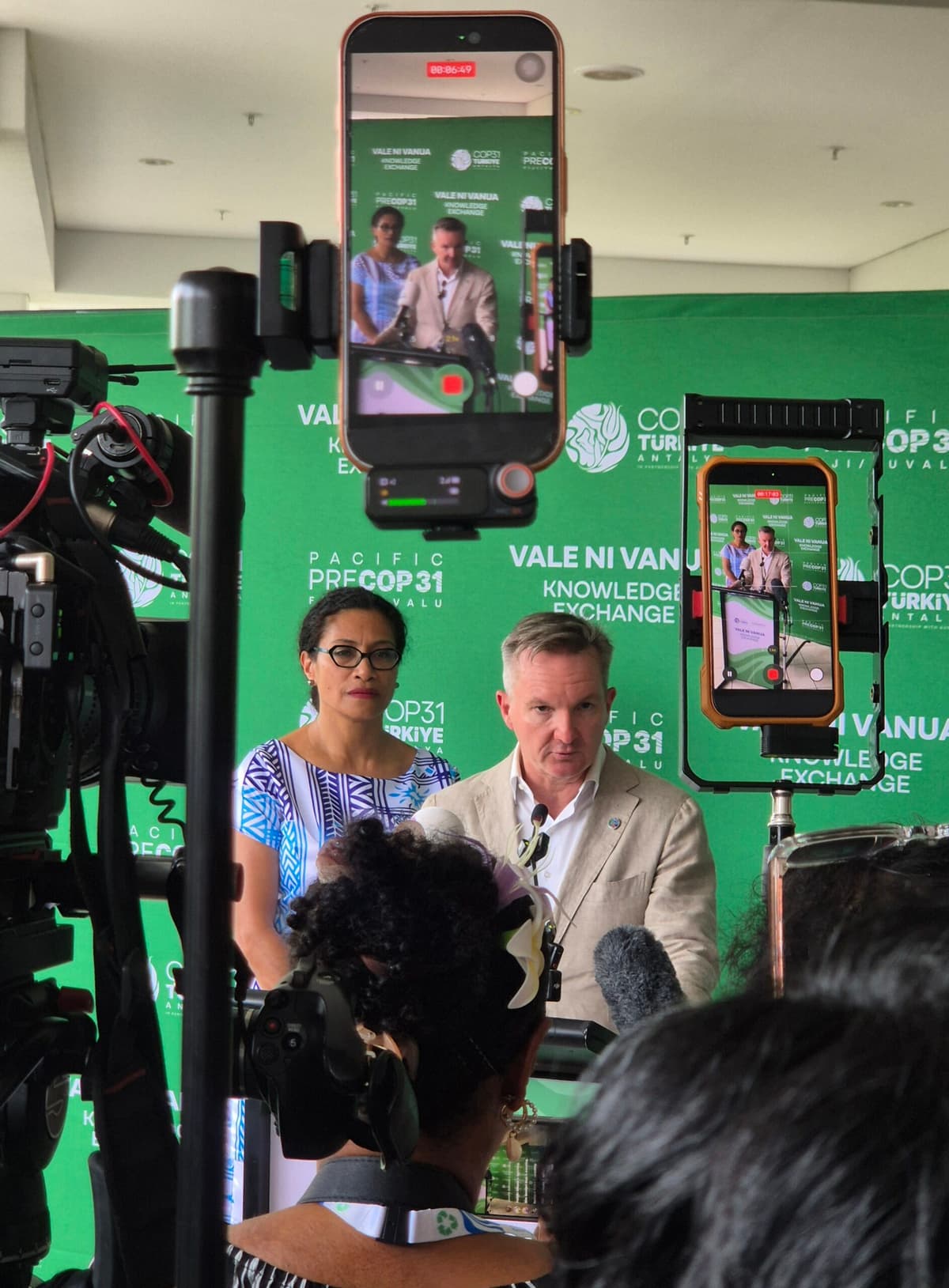
While the cameras chased a garland snub, Tuvalu told the world what COP31 must deliver
If you only followed mainstream coverage of the Pre-COP Leaders' visit to Tuvalu, you could be forgiven for thinking the big issue was headwear.
Western commentary on the Xi-Trump telephone conversation on 23 November has been muted. Understandably so – the primary source is Donald Trump’s take on the call, which he appears to think was about fentanyl, soybeans and “our great farmers”.

Fri 28 Nov 2025 23.58 AEDT
The White House/Flickr


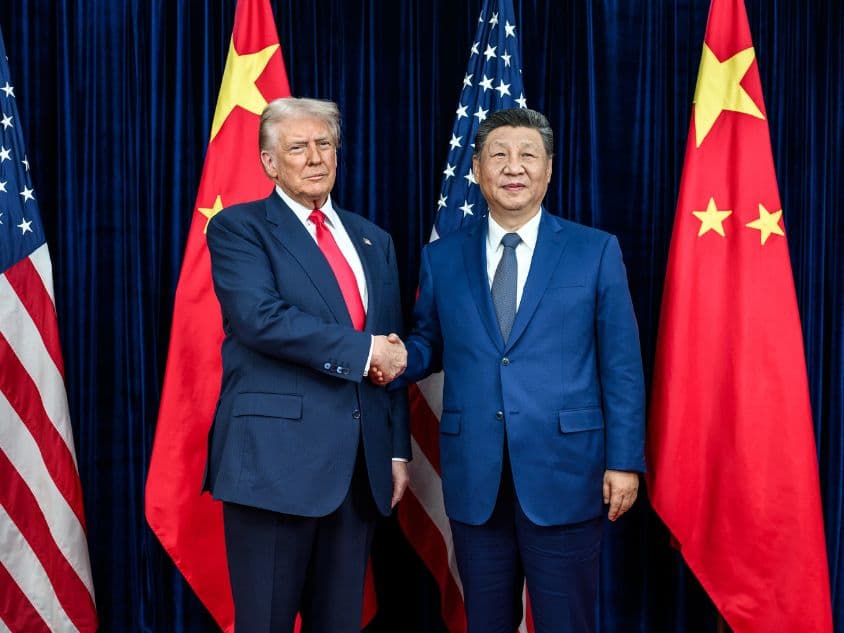
Western commentary on the Xi-Trump telephone conversation on 23 November has been muted. Understandably so – the primary source is Donald Trump’s take on the call, which he appears to think was about fentanyl, soybeans and “our great farmers”. And, of course, the prospect of red carpets, brass bands and jet fighter flypasts when Trump accepts Xi’s invitation to visit Beijing in April.
But to the strategic theatre of it all, Trump is blind, deaf and dumb. So are we all.
The very fact of the conversation marks a watershed in the US-China relationship. For the first time, China’s President has signalled his arrival as the US President’s peer. The only precedent that analysts can find is President Jiang Zemin’s having initiated a condolence telegram on 9/11.
The read-out from China’s Foreign Ministry is rather different. The focus of the call was the Taiwan question and, implicitly, to rebut the Japanese Prime Minister’s surprisingly assertive foray into the matter when she said that Japan would consider a military response to a Chinese naval blockade of Taiwan.
The tone of President Xi’s remarks was one of equality, freighted with shared history and common interests. With his statement “Taiwan’s return to China is an integral part of the post-war international order”, Xi is evidently confident enough to begin manoeuvring the US into a more accommodating position on Taiwan. “China and the US fought shoulder to shoulder against fascism and militarism (code for Japan). Given what is going on (code for the Japanese Prime Minister’s remarks) it is even more important for us to jointly safeguard the victory of WWII.”
Xi could not have been clearer. But Trump, it seems, neither heard nor listened.
There is nothing accidental in China’s conduct of its foreign policy, or its security policy for that matter. Nor is an initiative such as Xi’s phone call simply tactical. It is the considered exploitation of a provocative (and perhaps accidental) comment by America’s principal Asian protégé as a way of emphasising that what China thinks matters. What Japan thinks does not. And the US needs to understand that fact.
China’s diplomacy is often ham-fisted. But it is also capable of great subtlety. This is one of those moments. China’s diplomacy in Asia has more or less concluded that the era of US dominance is over, and that harking back to a shared history signals the arrival of a multipolar world where peer relationships are competitive rather than adversarial.
Whether the US, or Australia, recognises or appreciates the significance of this watershed, as signalled by Xi’s telephone call, is moot. But one thing is becoming clearer by the day: China is here, it is here to stay, and we had all better get on with the job of adjusting to the new strategic reality.
Allan Behm is an international & security affairs advisor at the Australia Institute.
If you only followed mainstream coverage of the Pre-COP Leaders' visit to Tuvalu, you could be forgiven for thinking the big issue was headwear.
There’s tension in the air at this pre-COP. Tension between Pacific Island states and Australia. Tension over the world leaders who have not turned up. Tension over Australia’s continued expansion of coal and gas, even as it asks to be applauded for its climate leadership. And tension over how to call out a powerful partner whose aid and cooperation you still need.