Recent polling research shows 87% of Australians support stronger legal protections for whistleblowers. This is an all-time high, and a slight increase on what were then record high support levels one year ago.
The polling, undertaken by the Australia Institute in partnership with the Human Rights Law Centre and Whistleblower Justice Fund, also found that four in five Australians (81%) think that whistleblowers make Australia a better place.
Levels of support are high across all Australians, regardless of voting intention – from One Nation to the Greens. Whistleblower protection is an issue that unites the public.
Time to act
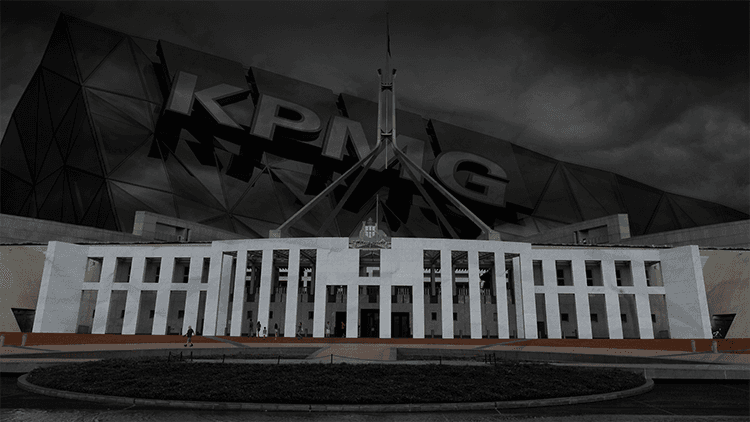
These results are salient given recent events. Just weeks ago, KPMG Australia’s CEO and other senior leaders resigned over the mishandling of a whistleblower’s complaint. The whistleblower raised concerns that confidential client information was being misused to win major, lucrative auditing contracts.
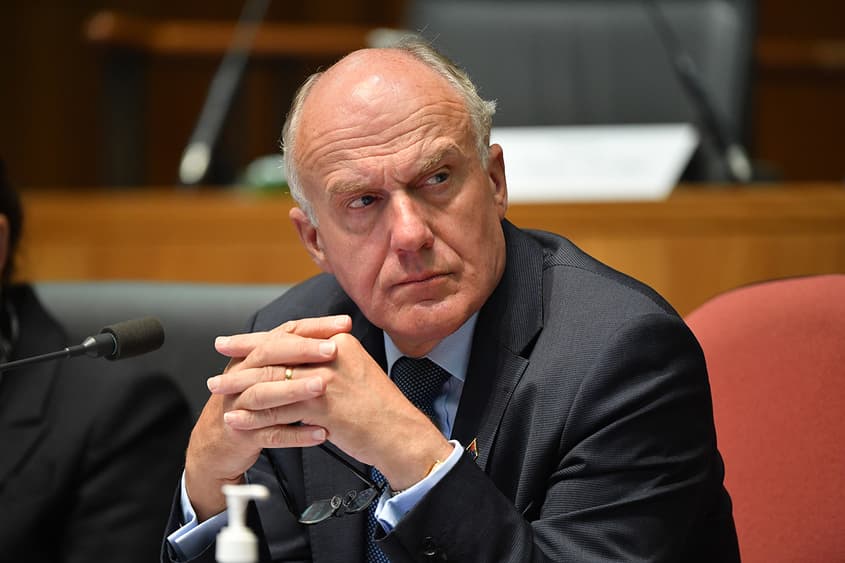
These concerns only came to light after Labor Senator Deborah O’Neill raised them in the Senate, under the protection of parliamentary privilege.
The scandal has rocked corporate Australia and entangled many beyond KPMG. Lendlease has dropped KPMG as its auditor, ending a 68-year-long relationship. Several investigations are underway: the parliamentary joint committee on corporations and financial services will hold a hearing into the allegations this Friday, the 19th of June; ASIC has announced an investigation into KPMG; Australia’s accounting industry body is investigating KPMG and conducting a review of ethical standards at Australia’s largest accounting firms. On Tuesday, KPMG was referred to the national anti-corruption watchdog.
Less has been said about the circumstances leading to this moment, and how close the public came to being left in the dark. Behind the scenes, the situation for the whistleblower was far from clear. There was no guarantee that the public would ever find out about KPMG’s misconduct and the whistleblower is much less protected than Australians might expect.
The gaps in whistleblowing laws
KPMG’s misconduct only became known because of a whistleblower. But partnerships, such as KPMG, are a distinct legal entity that is not covered by Australia’s primary private sector whistleblowing framework. If it was not for parliamentary privilege and Senator O’Neill, these concerns may never have seen the light of day.
This gap in the regulatory framework is a glaring one. Consulting firms, law firms and accounting firms are often set up as partnerships. Whistleblowers in these multi-billion dollar industries have no legal protections for speaking up about wrongdoing. Complicating the matter further, some partnerships operate in conjunction with a services company that is covered by whistleblowing laws, meaning some misconduct and some workers are covered by whistleblowing laws, and some are not. Without guaranteed protections, and surety that concerns will be taken seriously, many people choose silence.
The KPMG saga is only the most recent of many scandals caused by wrongdoing at major corporates. Whistleblowers have exposed them. Without whistleblowers, wrongdoing stays hidden.
In the US, whistleblowers are rewarded for exposing corporate wrongdoing. This improves regulatory and investigative efficiency, incentivises speaking up and disincentivises remaining complicit or involved in unlawful or unethical practices.
Over three in five Australians (63%) support our country adopting similar laws. In addition to fixing the fragmented and incomplete whistleblower protection framework, the Labor government has an opportunity, and a clear reason, to implement a rewards scheme in the corporate whistleblowing framework. As former competition tsar Professor Allan Fels AO wrote recently, ‘plain and clear – rewards schemes are good policy that have been repeatedly proven to work around the world.’
An easy win
Australia’s scant whistleblower protections are out of step with the views of nearly nine in ten Australians. The laws are stacked against whistleblowers; people who most Australians agree make this country better. This latest corporate scandal – coupled with high levels of support for reform – provides an obvious opportunity for the Albanese Government. It is not enough to investigate KPMG, the latest bad apple. The government must ensure the next whistleblower, and the many that follow, are protected, wherever they work.
The Australian Government is considering reform. In early June, Treasury released a new consultation paper for reviewing the private sector whistleblowing regime. In that paper, many issues with the regime – including the lack of protections for whistleblowers at partnerships – were identified. The paper also raises the possibility of a rewards scheme.
Some of the issues are harder to resolve than others, but it is time to act swiftly. There is clear public support for making change. Polling research shows that Australians want more than talk. This current round of shock, investigation and consultation must result in tangible protections for whistleblowers.
Alana Barbaro is a lawyer and Anne Kantor Fellow at the Human Rights Law Centre’s Whistleblower Project, Australia’s only specialist legal service for whistleblowers.
Kieran Pender is an associate legal director at the Project.
Bill Browne is the Director of the Democracy & Accountability Program at the Australia Institute.