Wed 29 Apr 2026 13.54 AEST
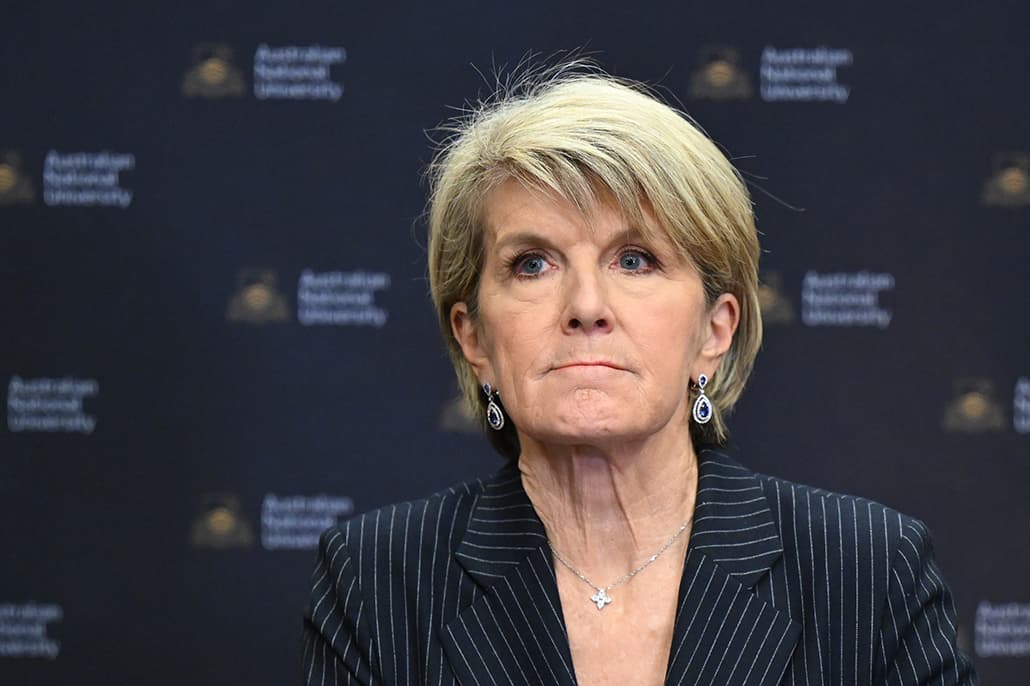
Photo: AAP Image/Lukas Coch


Julie Bishop’s reign as chancellor of Australian National University is coming to an end, but her loyal council will not have the pleasure of choosing her successor, as is usual, after an unprecedented intervention by the higher education regulator.
On Tuesday, TEQSA published a “voluntary” agreement between it and the ANU council which sets strict parameters around the process of how the selection process for the next chancellor can progress.
If there is one clear signal coming from this undertaking, it is that TEQSA has very little trust that the council will do the right thing.
And maybe even worse, very little trust in whether the council even knows if it’s doing the right thing – or not.
I’m not being inflammatory. It’s spelt out in the “voluntary undertaking”, dated April 27.
In TEQSA’s 14 year history, it never intervened so intentionally or wholeheartedly in what should be, under normal circumstances, a straightforward matter.
Not only will TEQSA appoint the chair of the selection panel and appoint two members for Bishop’s replacement (we are assuming it will not be a reappointment), it will also have to approve in writing the two members of council that ANU selects to be on it. A sixth member will be from the indigenous community.
Normally, the council would nominate the selection committee and make a recommendation to education minister Jason Clare.
In the undertaking TEQSA makes clear that it does not trust the council to be fair, unbiased, transparent, accountable or clear-sighted. Or even, act in the best interests of the ANU community.
It also, I would argue, lays the groundwork for the upcoming review into university governance and leadership that TEQSA commissioned former public service commissioner Lynelle Briggs to conduct.
That review is due to land soon. As is a separate review by the Australian National Audit Office, which reportedly has found (according to ABC’s 4 Corners) that the ANU council did not fully comprehend the risks associated with a massive $250 million cost-cutting program known as Renew ANU. Even worse, it didn’t fully understand or interrogate the finances (as governing bodies are designed to do).
It also did not consider alternatives to Renew ANU.
If ANAO, when the final report is handed down, does find the council lacking in its ability to objectively scrutinise the information being presented to it, then the question is why? What does it think, collectively, it’s job is?
And there’s a third report, which the ANU council commissioned to examine allegations made against Bishop during a Senate inquiry last year. They include bullying and intimidation – accusations which Bishop has continued to vehemently deny.
In other words, there is a lot about to drop on ANU and how it has been governed and led since January 2024.
Writing to staff on Tuesday, pro chancellor Larry Marshall acknowledged the TEQSA agreement and said the process for appointing the next chancellor had now begun.
“It is important that this appointment is made through a process that is robust, transparent, and commands confidence across our sector,” Marshall wrote.
“I have commenced a listening process with senior leadership to ensure the process is informed by the university’s culture, values and future priorities.”
Which is just a bit cheeky, since the agreement about Bishop’s replacement spells out in no short measure that the council’s “culture, values and future priorities” – but not the university’s – are all under question.
As the voluntary undertaking states, TEQSA wrote to Bishop on October 20 last year raising concerns over the culture of the council and whether it had:
This is damning stuff.
Perhaps, most disturbingly, TEQSA also expresses “uncertainty about ANU’s strategic direction and operating environment”, including whether it understood the need to “revise previous decisions about organisational change relevant to Renew ANU”.
Call it what you will, but it is an unedifying assessment of a university under siege by its own leadership.
Julie Hare is an honorary senior fellow at the Melbourne Centre for the Study of Higher Education at The University of Melbourne.
She is a former education editor at The Australian Financial Review, and has over 20 years’ experience as a writer, journalist and editor, including as the higher education editor of The Australian.
This article was first published on Julie Hare’s substack, The Hare Report. Subscribe here.
Advertisement