Mon 18 May 2026 15.00 AEST
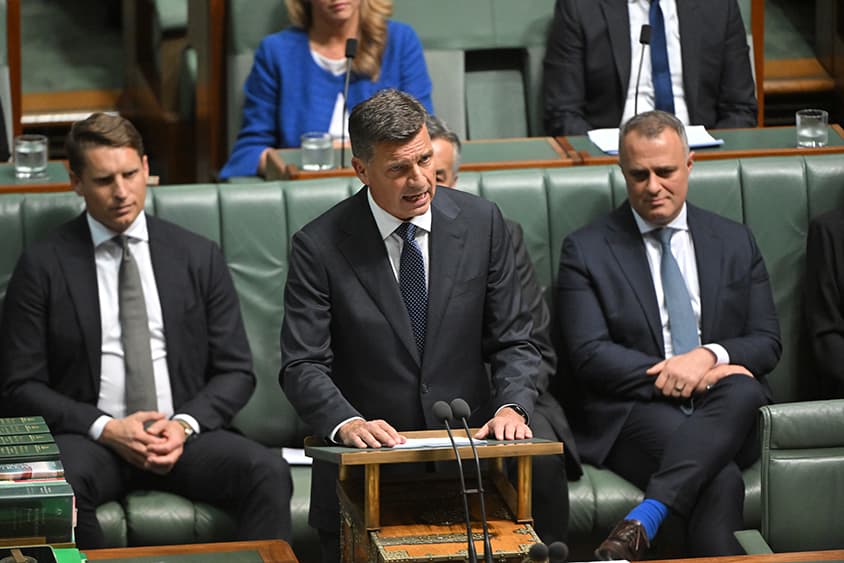
Photo: AAP Image/Mick Tsikas


In his budget reply speech, Angus Taylor waged a vicious attack on racialised people living in Australia, stoking resentment and hatred through misinformation about how welfare and taxation rules affect migrants.
It is convenient for people in power to use welfare recipients and migrants as scapegoats for problems they have not caused.
Taylor’s speech sought to weaponise, demonise and divide us because it is the only opportunity he sees to grab headlines.
He targeted migrants and welfare recipients, who exist at the intersection of the political class’s two favourite punching bags, because he is devoid of any other ideas.
This budget week has seen both Labor and the Coalition peddle divisive rhetoric designed to separate our communities into “deserving” and “undeserving”.
The chorus of responses defending migrants have done little to challenge the cruel and accepted wisdom that they should be treated as second class citizens, or counter the idea that welfare recipients don’t make important contributions to our communities.
Meanwhile, these debates over how someone’s visa status should affect the amount of tax they pay or what support they can access are taking place on stolen land that is occupied almost entirely by people descended from migrants who benefit from the dispossession of Aboriginal and Torres Strait Islander people.
Taylor’s use of the term ‘migrant’ is not neutral, it is intended to position racialised communities as a threat – including citizens and permanent residents who have lived here for many decades – despite white people from high income countries comprising a significant proportion of migration to Australia.
There is no dividing line between people born in Australia and those who weren’t. Migrants are our grandparents, colleagues, partners, friends. They are us. People who’ve been in Australia for years, on one temporary visa after another. People wondering if they will be infertile by the time they can access parenting supports. People trapped in abusive relationships and exploitative workplaces because they can’t get income support.
Migrants contribute endlessly to cultural and economic life in our communities while receiving little in return.
In his vile attempt to mislead people into believing that migrants receive unfairly generous tax treatment or Centrelink benefits, Taylor has highlighted the shockingly threadbare nature of the social safety net that he demonised.
The list of exclusions and exceptions written into welfare and tax rules to ensure non-citizens and migrants are treated unfairly is too long to count.
The minuscule number of refugees who are able to access a Centrelink payment are paid at a lower rate than JobSeeker. Even citizens cannot access the disability support pension if they have lived in Australia for less than 10 years – regardless of whether their disability was acquired here. Politicians of both stripes are so committed to ensuring that migrants are treated unequally in our welfare system that they are willing to deport whole families if they have a disabled child, even when that child was born in Australia.
All of these restrictions should be abandoned.
The problems we face were created by Angus Taylor and his ilk on both sides of politics. They pretend the financial distress and insecurity so many of us experience are imported rather than the intended outcome of decisions made in parliament. Regardless of our citizenship or visa status, those of us suffering do so because of faulty and cruel macroeconomics, not because migrants have jobs.
New homes are built at a higher rate than our population grows. 1 million homes are empty or not used as a primary residence. The RBA wants 4–5% of us to be unemployed at all times, and is currently seeking to increase the number of people without a job. People with mortgages are being financially punished as banks make billions in profits to make this happen, and investors who hoard homes relentlessly increase rents regardless of what policies are put in place.
Politicians depend on creating a false sense of scarcity so that anyone who feels that a home, a job, quality healthcare, or just a decent life is out of reach might be willing to misdirect blame for rules that consistently favour the rich over the rest of us. They do this to deflect from the fact that they created these rules, and because they fear us working collectively to end their domination of our lives.
Everyone has the same fundamental right to housing, healthcare and a social safety net that ensure we all can live a decent life. No matter who you are, if you live in Australia, you deserve to be able to access high quality social supports on an equal basis with everyone in the community. It’s the people hoarding wealth who stand between us and the future we all deserve.
The Antipoverty Centre is led by and for people with direct, contemporary experience of the welfare system and unemployment.
Advertisement