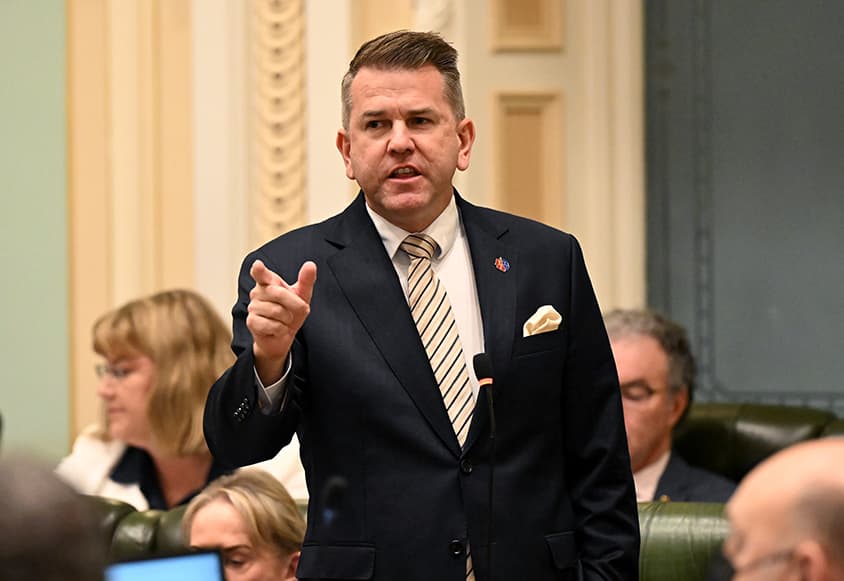
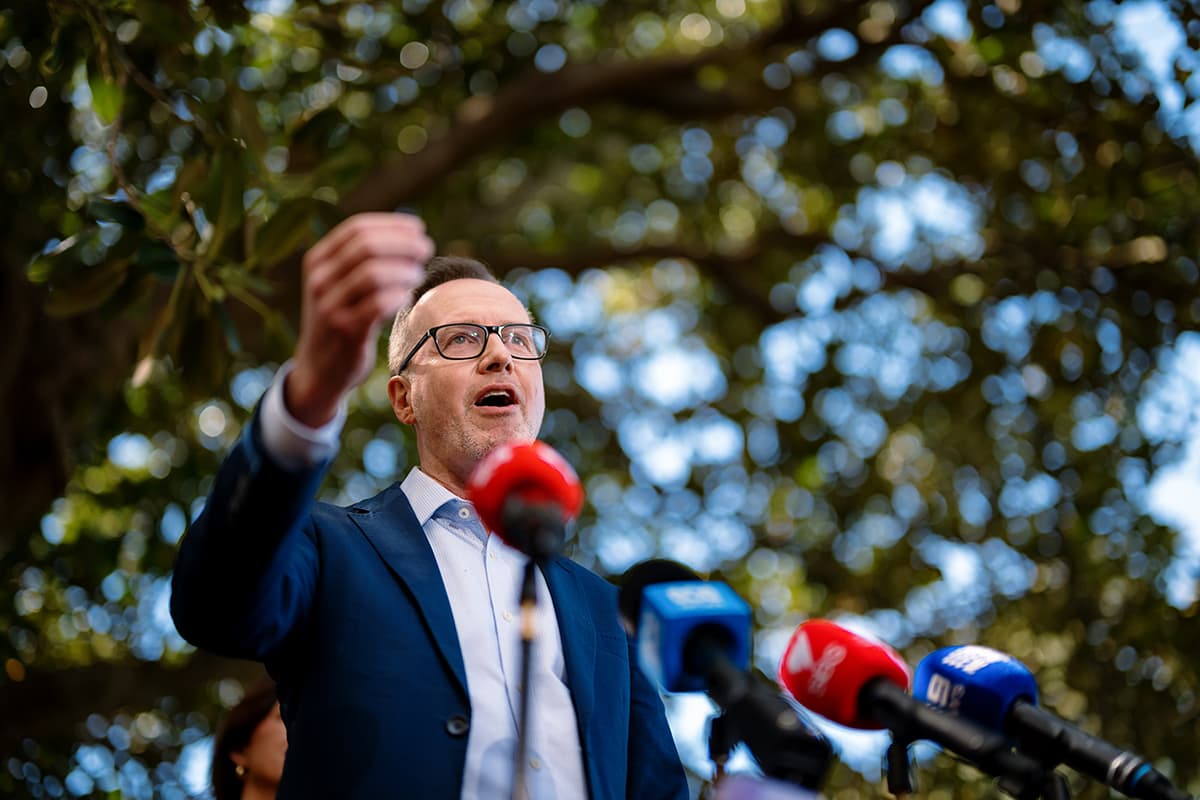
Recently, in the Queensland Parliament, LNP Deputy Premier Jarrod Bleijie invoked parliamentary privilege to identify Labor MPs who, he speculated, may have had relationships they did not properly disclose.
The comments were in response to Labor raising conflict of interest concerns about a relationship between two LNP ministers, Tim Mander and Amanda Camm.
I’m less concerned with the relationships than with what the exchange says about Parliament, conflicts of interest and freedom of speech.
Parliamentary privilege
Politicians are able to say things in Parliament that would expose them to legal consequences if they said them anywhere else. The privilege allows politicians to expose possible corruption or abuse of power, without risk of persecution under defamation, contempt of court or secrecy laws.
Tasmanian MP Andrew Wilkie tabled internal documents from the Hillsong church that “he alleges reveal the church breaking ‘numerous laws’ in Australia and around the world”.
In some circumstances, other people can make use of this privilege too – for example, someone giving evidence before a parliamentary committee.
Parliamentary privilege protected a witness who alleged that the Chancellor of the ANU, Julie Bishop, humiliated and bullied her.
It allowed the inquiry into gambling harm to hear from victims who admitted to gambling while underage or using stolen credit cards, without these admissions being used against them in a criminal prosecution.
Parliamentary privilege has controversial uses.
In his first speech to Parliament, Senator Derryn Hinch used privilege to name child sex offenders, whose names had been suppressed by the courts (potentially to avoid identifying their victims).
This year, a NSW state MP read out a 50-year-old murder confession from a 17-year-old boy that police dismissed at the time. The interview is inadmissible in court because it was conducted under conditions that today’s child interview protection laws do not allow.
Free speech for me, but not for thee
While parliamentary privilege is an important protection, it is hypocritical for politicians to use it to speak without consequence while suppressing the free speech of others.
Around Australia, politicians have raised criminal penalties for peaceful protest, failed to protect whistleblowers from prosecution and sued alleged victims for defamation – while personally enjoying free speech rights unlike those enjoyed by anyone else.
Mr Bleijie’s own Liberal–National Government has banned pro-Palestine statements “From the river to the sea” and “Globalise the intifada”, leading to legal threats against artists and the prosecution of protesters.
Conflicts of interest
Mr Bleijie linked his claims to Labor’s questions about potential conflicts of interest among ministers, saying “that is the standard the Labor Party now sets”.
The standard is set by the ministerial code of conduct. If Mr Bleijie had a reasonable suspicion that Labor ministers may be in breach of the code, it would have been better to report it at the time, than wait until there were unrelated conflict of interest concerns with LNP ministers.
Parliamentary privilege is a powerful tool. It can expose scandals, misconduct and official secrets. But it escapes the restrictions that all other Australians are subject to, like defamation, hate speech and contempt of court. These protect people, albeit imperfectly, from false and inflammatory claims. As a discretionary power placed under the control of the Parliament, parliamentary privilege depends on politicians (and committee witnesses) using it in good faith.