

Rent doesn't come with a youth discount. Why does income support?
There's a strange rule built into our social security system: young adults get $150 less money to live on each fortnight simply because of their age.
The Allan Government and the AEU are presenting the proposed Victorian Government Schools Agreement as a landmark deal for public education. The headlines have focused heavily on wages, with claims that Victorian teachers could soon become the best paid in the country. However, emerging details suggest many of the workload, staffing issues and conditions facing teachers remain largely untouched.

Tue 9 Jun 2026 11.15 AEST
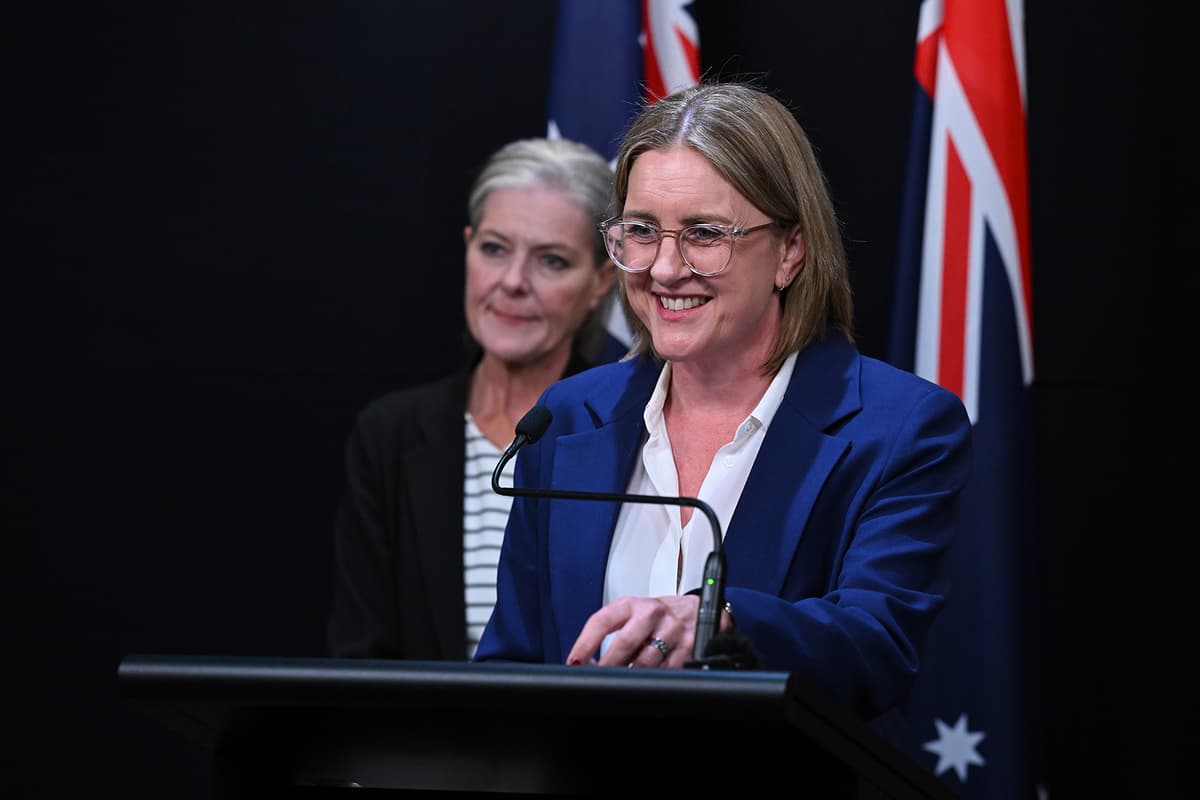
Photo: AAP Image/James Ross
The Allan Government and the Australian Education Union are presenting the proposed Victorian Government Schools Agreement (VGSA) as a landmark deal for public education.
Under the proposed deal, teachers, education staff and principals would receive compounded wage increases of between 28 and 32 per cent over four years, with a member vote expected in mid-June.
The headlines have focused heavily on wages, with claims that Victorian teachers could soon become the best paid in the country. However, emerging details suggest many of the workload, staffing issues and conditions facing teachers remain largely untouched.
Documents circulating over the last few weeks, comparing the union’s original log of claims against the in-principle agreement, reveal significant gaps between what educators were told they were fighting for and what has ultimately been secured.
The original claims included reforms around enforceable workloads, lower face-to-face teaching hours, reduced class sizes, increased staffing ratios, guaranteed school-level funding, stronger protections for ongoing employment, paid lunch breaks for education support staff and increased planning time.
Yet many of these measures appear absent from the in-principle agreement.
That matters because teachers and education support staff deserve better pay after years of real wage decline. However, pay alone does not solve the conditions driving staff exhaustion, shortages and attrition across Victorian schools.
Teachers are not leaving because they dislike teaching. They are leaving because the work has literally become unsustainable, and that should worry all of us.
The reality in many schools is that staff are managing growing administrative burdens, behavioural challenges, workforce shortages and increasing expectations from parents and the government, all while trying to deliver quality teaching.
Without meaningful structural reform, a pay-focused agreement risks functioning more as a band-aid than a long-term solution.
One of the more significant concerns raised by educators is the absence of enforceable funding guarantees.
Schools have long argued that budgets simply do not stretch far enough.
In practice, this often means staff shortages are absorbed internally, classes are combined, specialist support is delayed, and education support staff work through breaks.
It is clear that several of the profession’s biggest workload concerns appear largely unresolved.
The deeper issue here is not whether educators deserve higher pay; they absolutely do.
It’s whether governments are continuing to treat the education workforce crisis primarily as a remuneration problem, when it has fundamentally become a sustainability problem.
Across Australia, schools are facing growing shortages not simply because salaries are uncompetitive, but because the daily realities of the profession have become increasingly difficult.
The danger for governments is that agreements framed publicly as historic wins may ultimately fail to stabilise the workforce if the day-to-day realities inside schools remain unchanged.
This moment should also prompt a broader conversation that ultimately leads to meaningful reform.
Australia still lacks a coherent national approach to teacher remuneration, registration, workload standards and workforce sustainability.
Instead, industrial negotiations continue state-by-state, often producing fragmented systems where pay, conditions and professional expectations vary significantly across borders.
A teacher in Wodonga should not have to work in Albury to get better conditions, while schools should not be forced into perpetual staffing competition with neighbouring states.
Rather than the narrative being that one state has the “best paid teachers”, governments should come together to build a nationally consistent framework that addresses both remuneration and sustainable working conditions.
The profession is not simply asking to be paid more.
It is asking for the conditions required to keep teaching, for children and young people to be best positioned for learning, and for both to be sustainable for a long period of time.
Ben Sacco is an author and Managing Director of Education Economy.
Advertisement

Prominent economist Dr Richard Denniss has warned a parliamentary inquiry that Australia is unprepared for the mass unemployment that AI companies are banking on to drive their profits.
There's a strange rule built into our social security system: young adults get $150 less money to live on each fortnight simply because of their age.


