

One of the oldest tropes in journalism is that it should be balanced; that journalists have a responsibility to present all sides of a given issue with equal weight. This view also holds that appearing to be critical of one side and sympathetic to another amounts to “bias”.
That notion of balance sounds ideal. After all, journalists should be neutral observers who favour nobody, so if anybody feels as though their side is not presented with equal measure, the journalist has somehow failed.
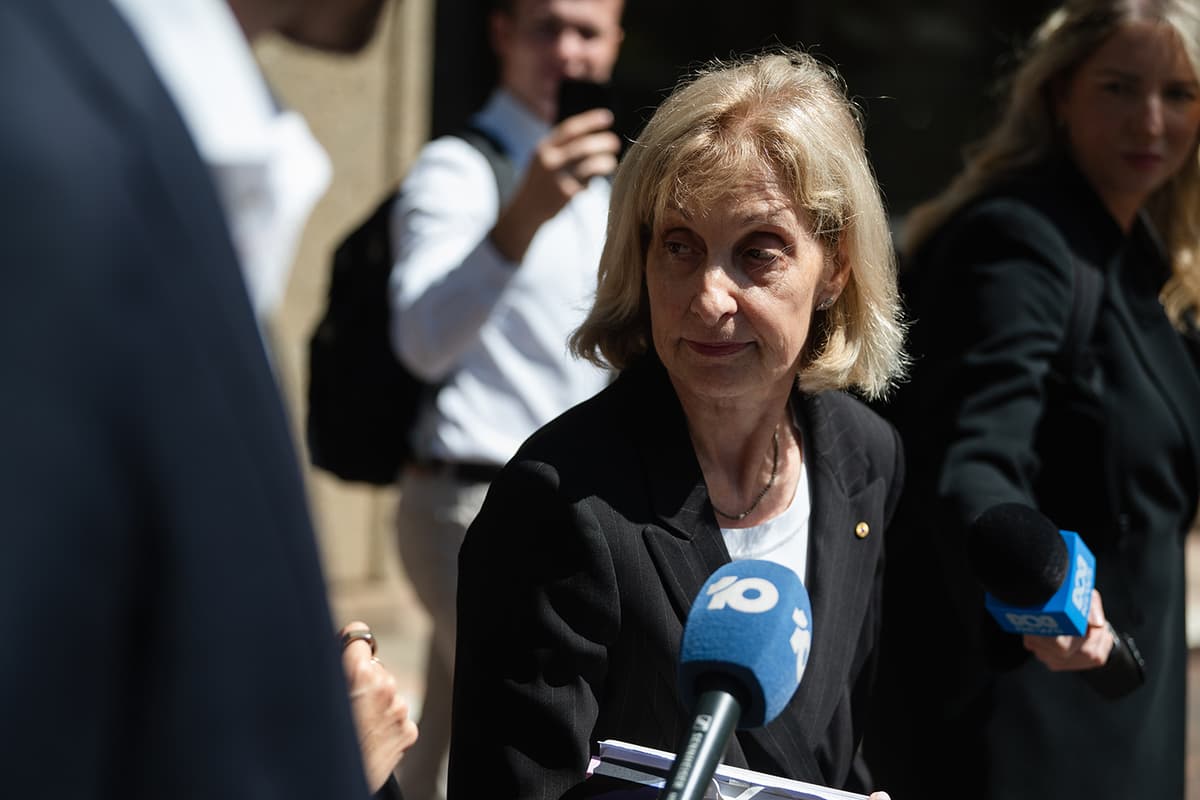
That failure was what Jillian Segal accused the ABC of in her evidence to the Royal Commission into Antisemitism and Social Cohesion last week. In her evidence, the antisemitism envoy lamented that the ABC’s reporting on Gaza “created an impression of great negativity about Israel”.
“It’s the perception of the Jewish community feeling constantly that they are being faced with reporting about the Middle East, about Gaza, and about Israel in a way that paints Israel constantly in a negative light,” she said.
For the country’s supporters, that is understandable. As Segal went on to point out, there has been a “disproportionate” number of stories critical of Israel.
And Liberal MP and prominent member of the Jewish community Julian Leeser told ABC Radio National:
I think the public broadcasters actually have to be prepared to address systemic bias against Israel in their reporting, and I think they need to subject themselves to greater transparency mechanisms as outlined by the envoy.
But the term “balance” implies finding equivalence between the two competing positions. Sometimes journalists cover stories where achieving balance amounts to a serious distortion of what is actually taking place.
The pitfalls of both-sideism
A standard, if lazy, tactic for avoiding accusations of bias is to give equal space to opponents in an issue, presenting them as equally valid.
If you give five minutes to a vaccine researcher, you must give the same time to a sceptic. It is something journalists sometimes dub “both-sideism”.
The media grappled with that challenge in covering climate change. In the early heated stages of the debate, news organisations would often place a climate sceptic next to a climate scientist in the name of “balance”.
By 2018, the BBC’s news director Fran Unsworth had had enough. She circulated a briefing note that acknowledged, “Climate change has been a difficult subject for the BBC, and we get coverage of it wrong too often”.
The briefing went on to say, “Manmade climate change exists: if the science proves it we should report it.” And in a section on balance, the note said:
to achieve impartiality, you do not need to include outright deniers of climate change in BBC coverage, in the same way you would not have someone denying that Manchester United won 2-0 last Saturday. The referee has spoken.“
As journalism academic Jonathan Foster of Sheffield University used to tell his students, “If someone tells you it’s raining and another tells you it’s dry, it’s not your job to quote them both. It’s your job to look out the f—ing window and find out which is true.”
Who has the power?
The conflicts between Israel and its neighbours (in Gaza, the West Bank, Lebanon and Iran) are not football matches, and journalists are not referees.
But any journalist thinking about how to fairly cover the crises is likely to spend far more time looking at the human cost of Israeli bombs and tanks, than the impact on Israeli civilians.
That is simply because the greater impact of the conflict is felt outside Israel’s borders.
Any reporting that suggests an equivalence of experience between Israelis suffering Hamas rockets, and the Palestinians in Gaza bearing the weight of the Israeli military assault would be plainly disingenuous. Hardliners on both sides are calling for annihilation of the other, but only one side has tanks, fighter jets and control of food, water and medical supplies over the border.
That raises another journalistic cliche: “holding power to account”. It is rooted in the idea that the media’s job is to expose the impact of power on those who have none.
Israel has indisputably been projecting its might well beyond its borders, and correspondents in the region who failed to cover the consequences on ordinary civilians would be rightly criticised.
None of this is to suggest the experience of Israelis or the government’s arguments should be ignored.
But in a world of competing perspectives, the job of journalists is not to make everyone happy. Their job is to accurately and fairly represent the views of everyone involved and on that score, the ABC has been succeeding.
Imperfect, but largely accurate
The national broadcaster has not been perfect of course. The ombudsman found five breaches of editorial standards (out of more than seven thousand complaints).
Its own editorial director Gavin Fang acknowledged they were far too slow to correct a United Nations report that falsely claimed 14,000 children could die of starvation in Gaza within two days.
In her testimony to the Royal Commission, Jillian Segal conceded the government’s broadcast regulator, the Australian Communications and Media Authority, had not “found a great deal of inaccuracy” in the ABC’s reporting.
But she argued she’s trying to achieve “the more complex, nuanced issues of prioritisation, impartiality and objectivity and balance”.
“They could run positive stories about other things Israel is doing,” she said. “The amazing startup nation, things like that. They very rarely do that. There is no attempt at that part of the agenda.”
Perhaps she is right. But positive stories explicitly designed to cancel out the negative start to look like propaganda. And that is something journalists should never accept.
Peter Greste is Professor of Journalism and Communications at Macquarie University.
This article is republished from The Conversation under a Creative Commons license. Read the original article.