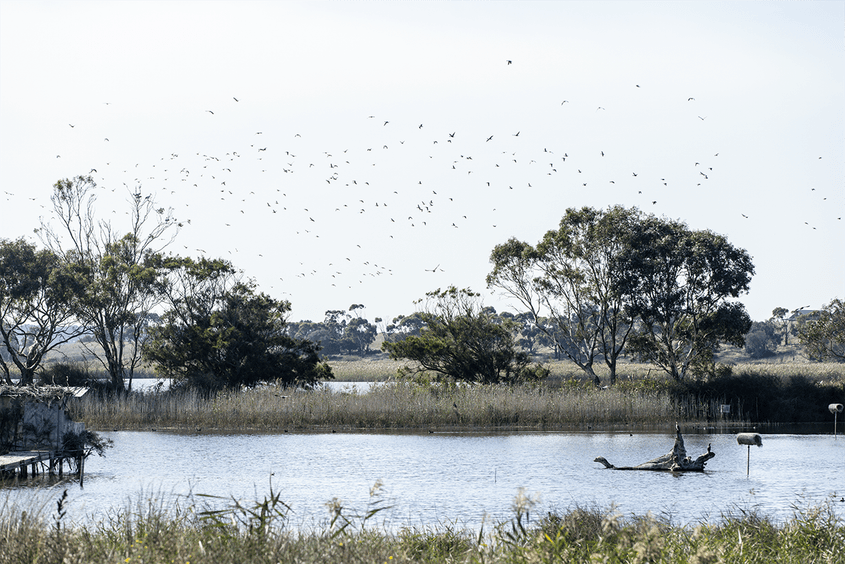
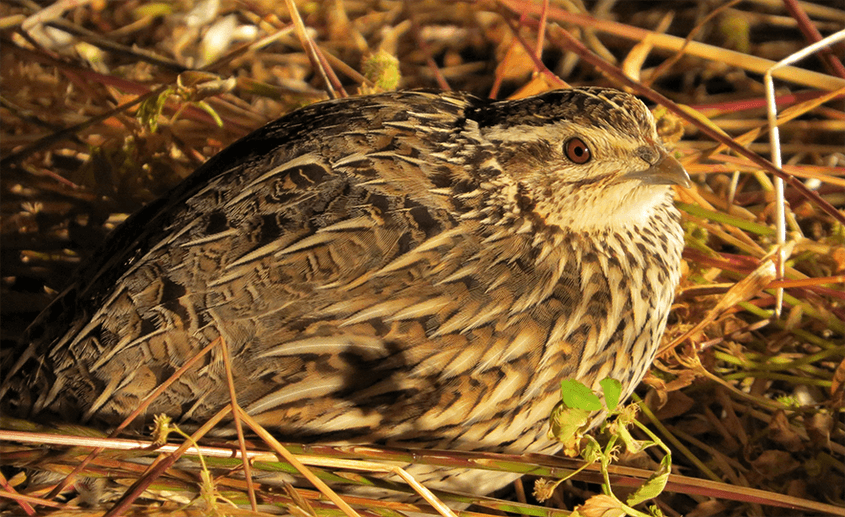
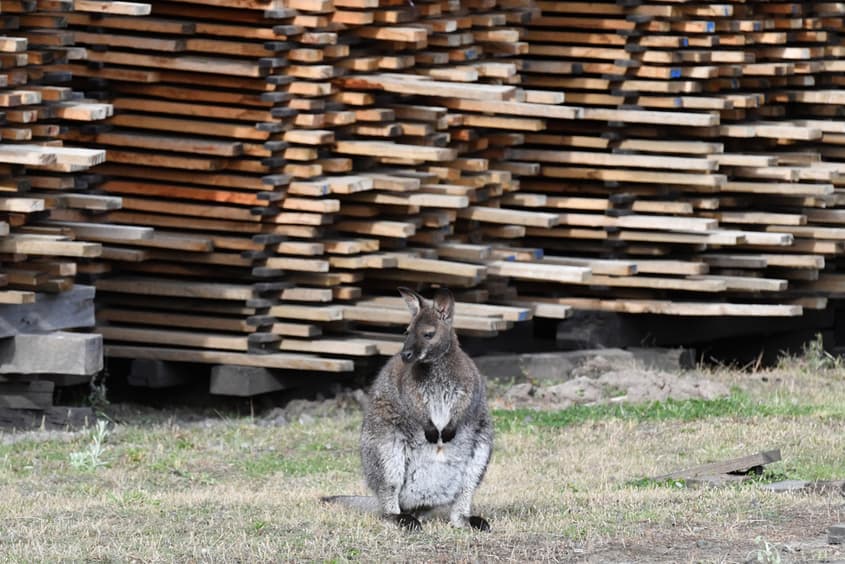
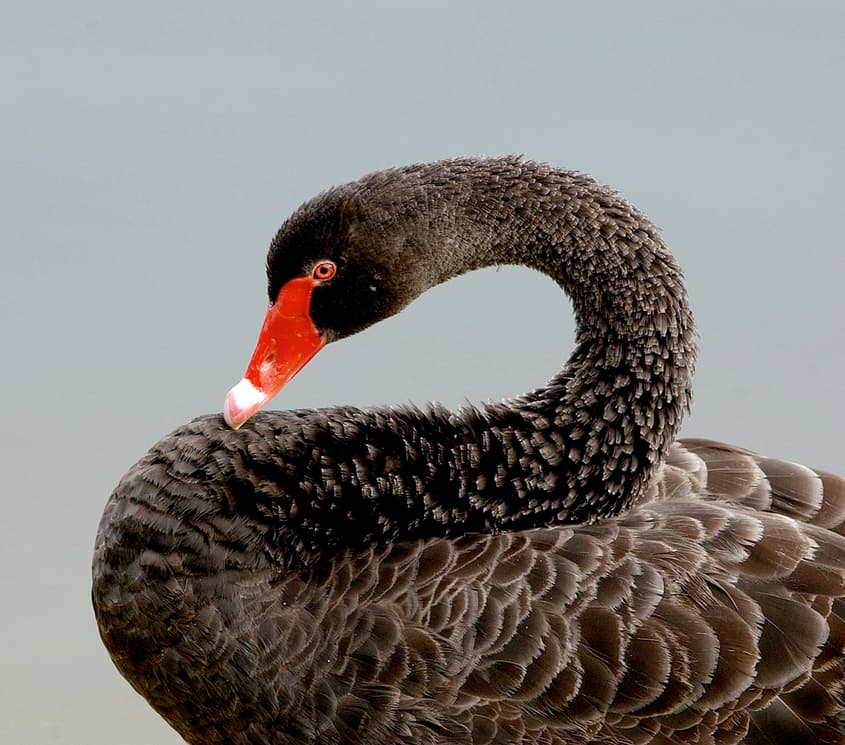
At thirty minutes past sunset on Monday 8 June, duck hunting season in Victoria officially came to a close.
For Victoria’s native birds, this comes as a much-needed reprieve – I say native birds plural because it wasn’t just ducks that were part of the hunt.
Galahs are iconic native birds, loved by locals and birdwatchers alike for their playful antics. They form lifelong pair bonds, and they are protected wildlife in Victoria. Yet, in the late afternoon on 13 May, at Loch Garry in north-central Victoria, someone was shooting them out of the sky.
Witnesses watched as the little pink birds were retrieved by a black dog. The dog’s owner was apparently sat beside an esky full of drinks, firearm in hand.
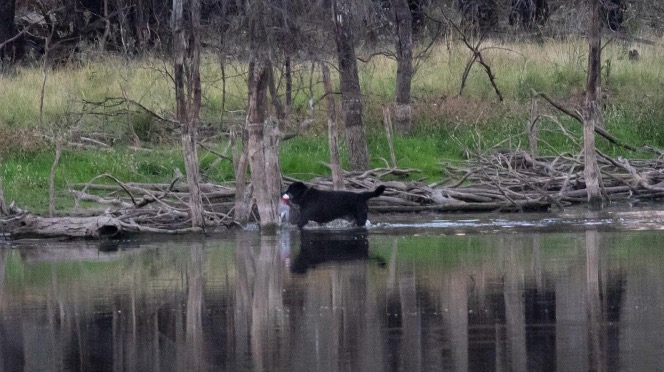
Source: Kirsty Ramadan
When confronted by a distressed birdwatcher, the man claimed to be shooting ducks. But the galahs at his feet, and in the dog’s mouth, suggested otherwise.
Unfortunately, no authorities were anywhere nearby to investigate the matter; it was left to locals to document the evidence.
The real protected species
Locals have repeatedly asked for Loch Garry and other Victorian wetlands to be closed to shooting due to the presence of endangered white-bellied sea-eagles. Under government guidelines, the presence of just two of these birds should trigger protection. Yet, no action was taken.
A similar story played out at Lake Corringle in East Gippsland, where locals reported breeding behaviour by white-bellied sea eagles. According to those same locals, authorities didn’t attend to verify the reports, and the lake remained open to shooters.
Victoria’s deeply flawed conservation “trigger” requires 1% of a threatened species population to be present before action is considered by Victoria’s Department of Energy, Environment and Climate Action (DEECA). Apparently, endangered wildlife must gather en masse before the government cares.
For the 2026 duck shooting season, only eleven waterways were closed due to the presence of threatened species — the lowest number in years. That’s not because wildlife disappeared, but because authorities either failed to monitor wetlands, or ignored public reports.
The compliance myth
Given the vast expanse of hunting area in Victoria, not even the army would be able to adequately monitor it.
Despite millions of dollars in public funding, there are nowhere near enough officers to police the thousands of waterways opened to shooters each year. Until recently, there were just nine game management officers in the state.
While regulators and hunting groups spruik “responsible hunting”, people living near these unmarked shooting zones know the reality: illegal behaviour is common; enforcement is rare.
In 2023, Regional Victorians Opposed to Duck Shooting Inc. (RVOTDS) conducted a survey of 821 people who lived near or had visited Victoria’s waterways. More than a quarter of respondents reported witnessing illegal hunting activity. Of those who reported it, only 18% believed authorities handled the matter appropriately.
In the Game Management Authority’s (GMA) 2023 telephone survey of duck shooters, 1.2% of active shooters admitted breaching bag limits. If that survey is representative of the whole, it would mean that, of the estimated 14,118 active duck shooters that year, 170 of them breached their bag limits. In 2024, that number rose to 2.2% of respondents, which would equate to 285 shooters who breached bag limits.
Yet the regulator’s public “compliance” reports fail to capture any comparable statistics, seeming little more than a sanitised fiction. It appears the regulator is more interested in prosecuting rescuers of wounded birds and posting their details and pictures on the GMA’s public Facebook page than tackling illegal hunter conduct.
The galah shooting incident documented above is indicative of systemic dysfunction. When contacted by witnesses, Victoria Police apparently told them it was a matter for the DEECA, Game Management Authority (GMA) and the Firearms Licencing Division. DEECA said they could only investigate the alleged galah shooting, but not any supposed firearm or hunting offences. The GMA said they wouldn’t investigate because DEECA was already involved. Licensing said to go back to the Police.
If it weren’t so serious, it would be laughable.
A dying pastime propped up by taxpayers
Despite relentless government support, recreational killing is losing public appeal. The latest Victorian government data shows hunter numbers falling across every licence category (deer, duck and quail). Even with a full season, duck shooter participation declined again. And according to the regulator’s surveys, a large percentage of these licenced hunters don’t even go out hunting.
So, why should vast areas of public land be effectively handed over to a tiny fraction of the population for months each year – especially when it excludes safer, more popular and more economically valuable activities like birdwatching, bushwalking and nature tourism?
How is giving access to less than half of a percent of Victoria’s population, who shoot native birds for fun, access to over half of the state’s public area for a quarter of the year at all proportionate?
Yet Victoria continues pouring public money into the industry which is not only unpopular, but known to be cruel.
At a time when consumers, tourists and global markets increasingly expect ethical animal welfare standards, Victoria risks both its reputation and economy by continuing to pander to a shrinking hunting lobby.
Have you asked your local members of parliament or candidates what they are doing about all this?
It’s an election year. Vote wisely.