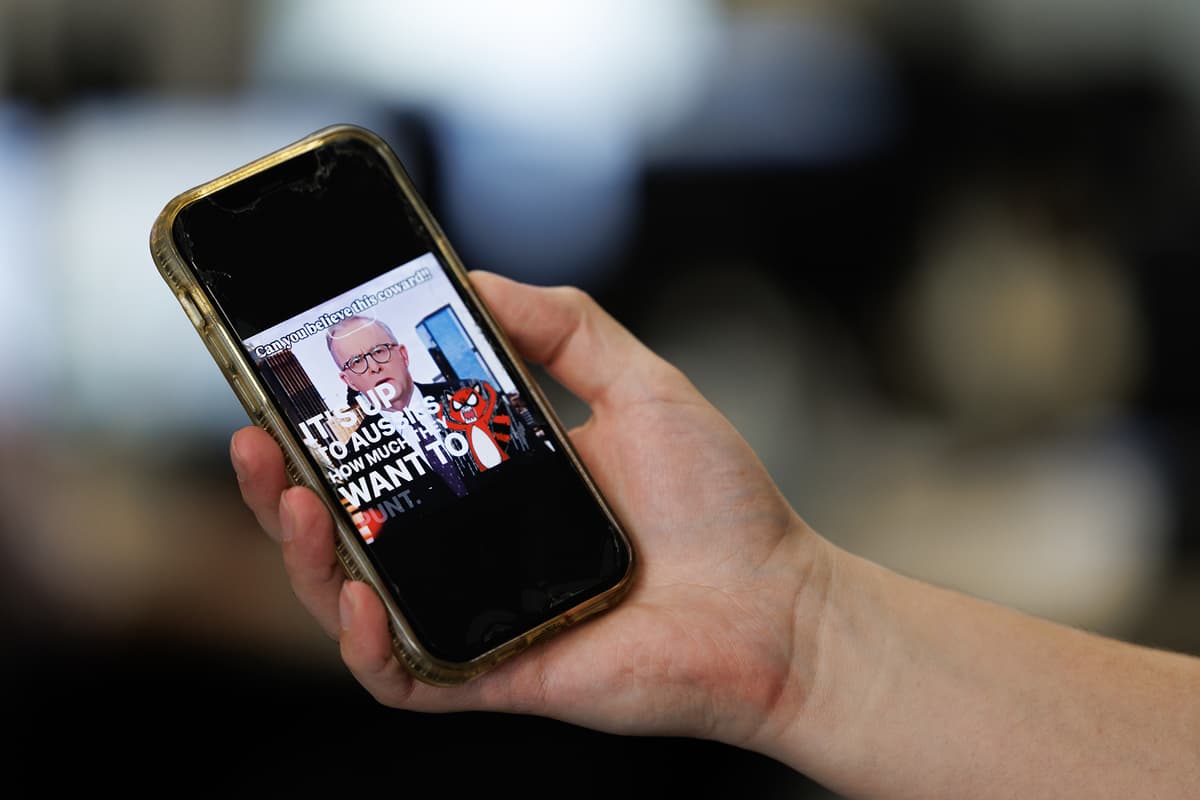
Early next year, NSW is due for a state election, despite having no protections against political lies and misinformation – even as AI-generated deepfakes become more convincing and easier to create.
In NSW, it’s perfectly legal to lie in a political ad. That has politicians and citizens rightfully worried about whether the March election could be marred by misinformation and deceit.
The last NSW election was in early 2023, just months after ChatGPT was released and before the use of Artificial Intelligence “large language models” became ubiquitous.
Since then, foreign bot farms have used deepfakes to mislead Australians and whip up division and hatred. After Islamic State extremists murdered 15 people at Bondi Beach in December, Antisemitic and Islamophobic misinformation circulated. And during the 2025 federal election campaign, a deepfake of Peter Dutton speaking Mandarin and proposing an Aboriginal flag ban circulated on Chinese social media app RedNote.
The risk of political lies is as old as politics itself, but it has never been so easy to create convincing misinformation, including political advertising.
Truth in political advertising laws would put up guardrails against misinformation that comes in the form of electoral matter – not just TV, radio, and newspaper ads, but online advertising and social media as well.
Truth in politics laws have been proven to work in practice. South Australia has had truth in political advertising laws for 40 years, since the mid-1980s, and while they do not stop all lies and deception, they do observably lift the quality of debate.
Nor are NSW residents content to wait for politicians to act. Over 7,000 have already signed a petition calling on the NSW Parliament to legislate truth in political advertising laws before the March 2027 election.
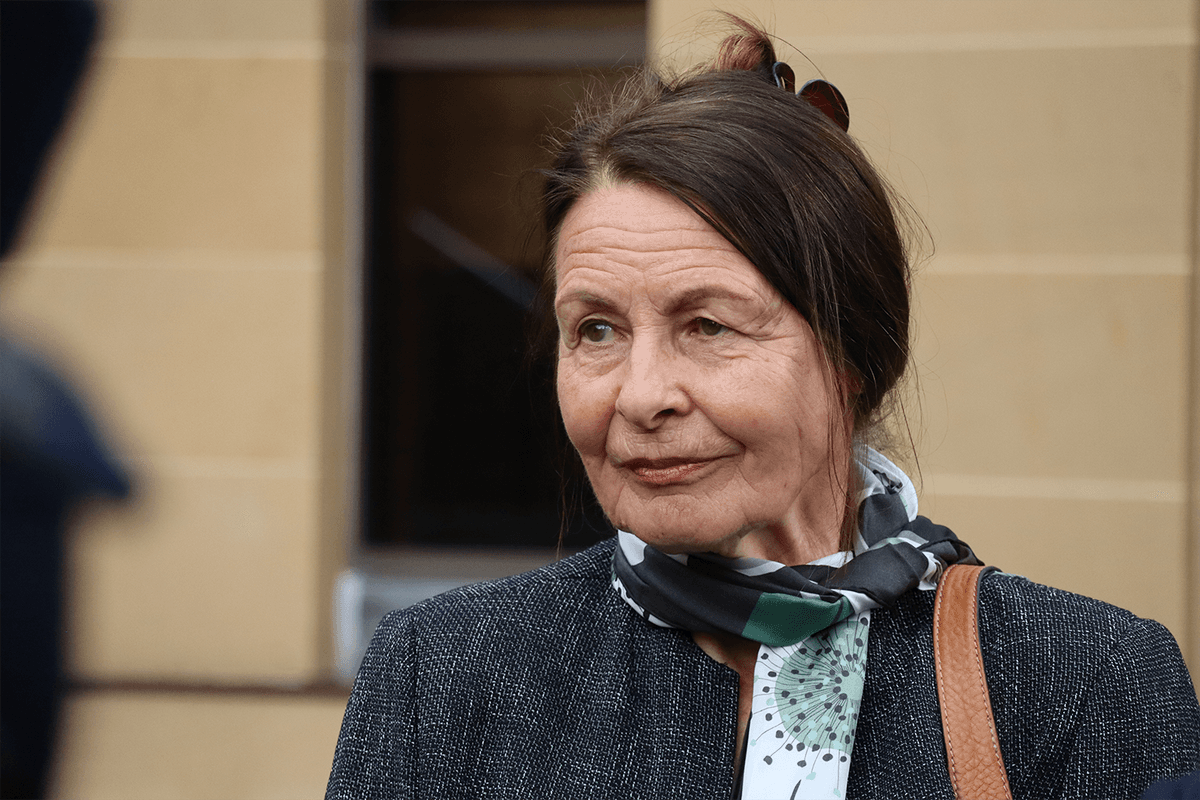
The petition, led by concerned citizen and lead petitioner Michelle Millner, and supported by the Australia Institute, is an official petition registered with the NSW Parliament. If it reaches 20,000 signatures by the end of August, the NSW Parliament is required to debate it.
A debate guarantees that major party politicians cannot ignore the issue.
The numbers are already there if the Minns Labor Government wanted to give NSW what South Australia has had for four decades: truth in politics.
The petition is sponsored by independent MP for Pittwater Jacqui Scruby, and she is backed by an impressive lineup of crossbenchers: Alex Greenwich, independent MP for Sydney; Kobi Shetty, Greens MP for Balmain; Phil Donato, independent MP for Orange; Dr Joe McGirr, independent MP for Wagga Wagga and Michael Regan MP, independent member for Wakehurst.
These crossbenchers run the gamut from conservative to progressive and from inner-city to regional and rural. But when they lent their support, a common thread emerged: concern over the rise of AI-generated disinformation and deepfakes.
Alex Greenwich warned of “misinformation and ‘alternative facts’ being shared far and wide, including through AI”; Kobi Shetty identified that “the emergence of AI” left people simply not knowing what to believe; and Phil Donato said that “rise of AI” meant it was more important than ever that political advertising is factually correct and accurate.
It would be a mistake to ignore these warnings.
Misinformation represents a grave threat to democracy itself, and so it makes sense to use petitioning – a tool closely intertwined with democracy – to advocate against it.
Petitioning has a long history. The 1908 Procedure of the House of Commons describes petitions as: ‘the oldest of all parliamentary forms’.
Centuries before most citizens won the right to vote, the English and then the British had the right to petition their parliament to have grievances addressed. Petitioning dates back to at least the 13th Century and the reign of King Edward I.
Petitions have also taken on a distinctly Australian character. The Yolngu Bark petitions to the Australian Parliament in the 1960s brought about a reckoning in how First Nations Australians were treated by the Menzies Government.
While a petition can be presented to any parliament, NSW is unusual in guaranteeing that if a petition gets 20,000 or more signatures, it will be debated.
It is fitting that petitioning is alive and well in NSW, because it was in that colony that Australia recorded its first petition in 1829, almost two hundred years ago. There have been many thousands of petitions in the intervening years.
In NSW, petitions have led to action on teaching consent in schools and keeping compensation for victims of violent crimes.
Politicians face the electorate every three or four years. Between elections, petitions force them to pay attention. Over seven thousand people in NSW have already called for truth in political advertising laws, to protect next year’s state election from lies and misinformation.
Petitioning is a show of concern and public mobilisation, with centuries-old democratic roots.
Politicians ignore it at their own peril.