The first oil crises in 1973 and 1979 set in place some rapid oil policy changes, but now the last two crises in the 2000s are showing that these short-term approaches are no longer relevant. We need a better plan.
The Prime Minister has personally guaranteed more of the remaining diesel and petrol would come to Australia, and now he supports a new oil refinery. But this is all propping up a dying resource and is likely to be a total waste of $15b for a refinery, let alone the desperate shepherding of Asian oil products into our transport system.
The Fourth oil crisis is now slipping into a long-term disaster for oil security as both the Strait of Hormuz and the Strait of Malacca are blocked and no clear way to avoid the continued war is clear. After jumping up and down for months, the stock market and oil price are screaming for a better long-term solution to be accelerated.
There are two ways forward that can be pursued: electrification and biofuels. They have both been on the agenda for all of these oil crises, but the good news is that they are both becoming commercial in both our cities and rural/regional areas.
Electrification
The global net zero transition has a supply chain, and it runs through China.
That is not a geopolitical talking point — it is the operating reality of the fastest energy shift in human history. Solar and batteries are dramatically setting up the next era in energy and geopolitics (Figure 1).
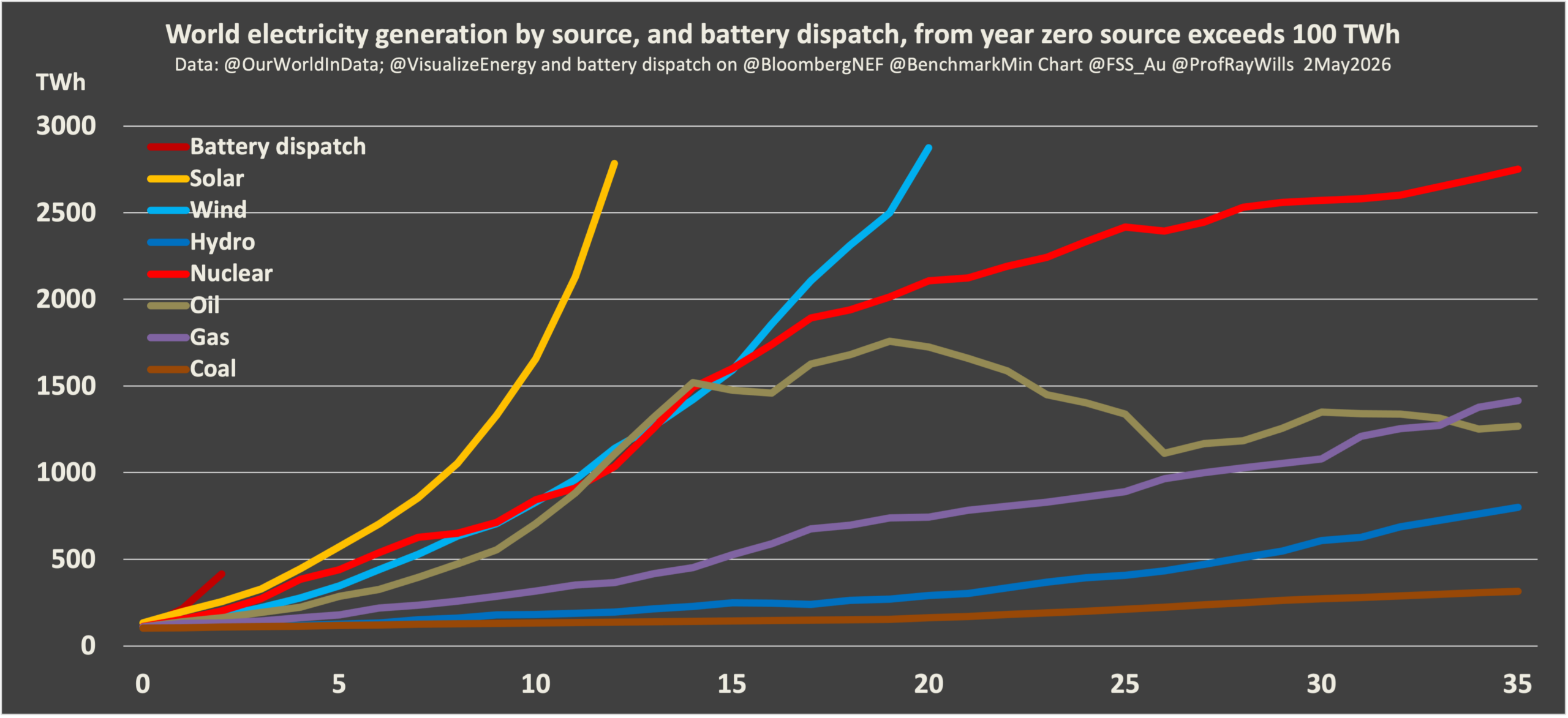
Figure 1: The solar and battery revolution is happening faster than any other period of history.
The geopolitics of this rapid change is based on the role of China, which now produces around 80% of the world’s solar panels, 80% of lithium-ion battery cells, 70% of EVs, and more than 90% of heavy electric trucks, as well as other green tech. This acceleration in clean tech is following Wright’s Law, with dramatic global impact as shown (Figure 2).
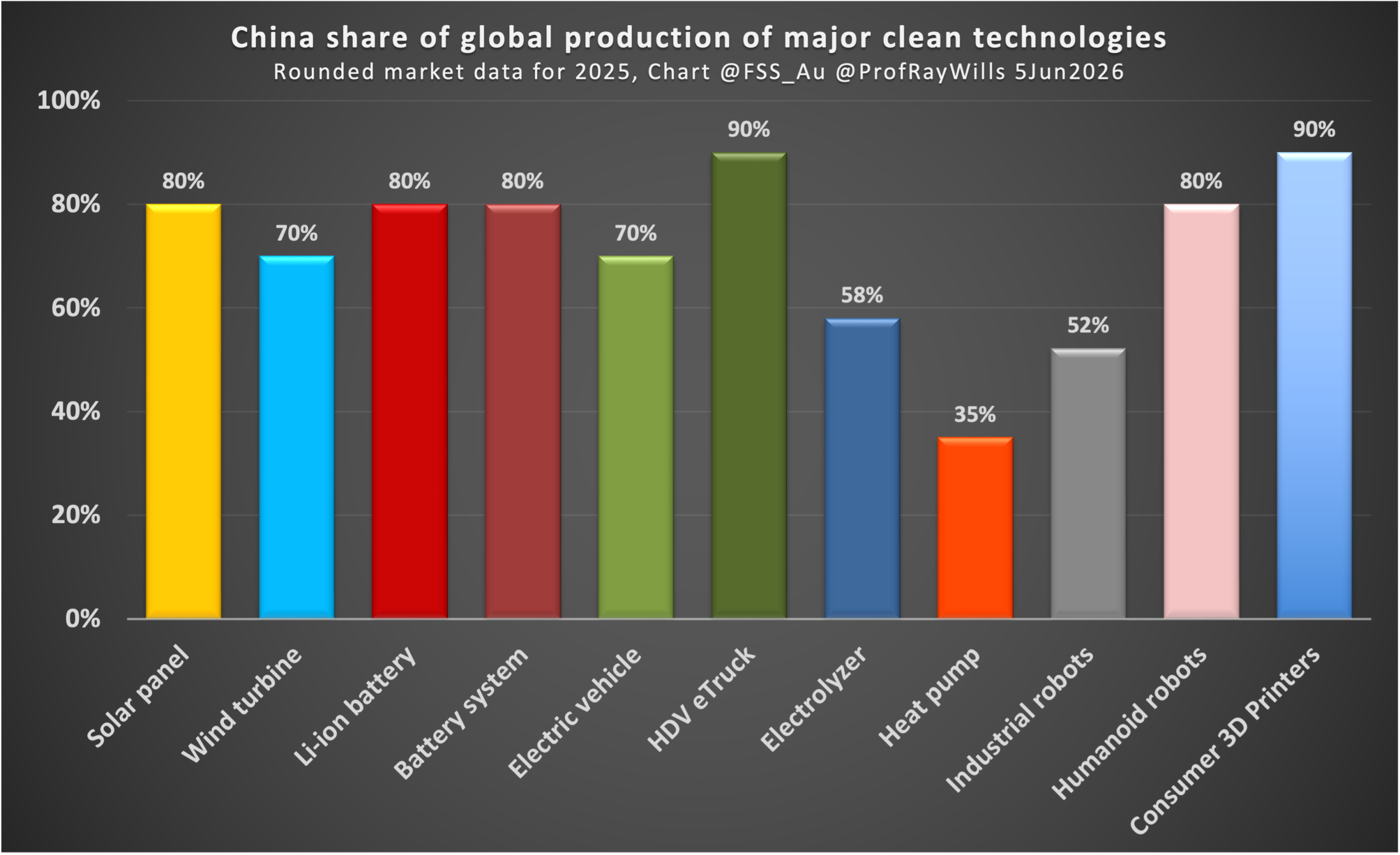
Figure 2: China’s dominance in share of global green tech manufacturing.
Between 2019 and 2025, Chinese companies accounted for 55% of the world’s total $1.1 trillion in clean energy manufacturing investment. In March 2026 alone, China’s exports of solar, batteries and EVs reached a record $21.9 billion — up 70% on the same month the year before — as attacks on Iran and closure of the Strait of Hormuz triggered the world’s fourth oil crisis and drove a global scramble for energy alternatives.
The global EV fleet displaced 1.8 million barrels of oil per day in 2025, equivalent to 13% of US crude production (Figure 3). This process cannot be discounted, as it will rapidly replace any of the old approaches to transport like a new oil refinery or new guarantees from surrounding Asian refineries.
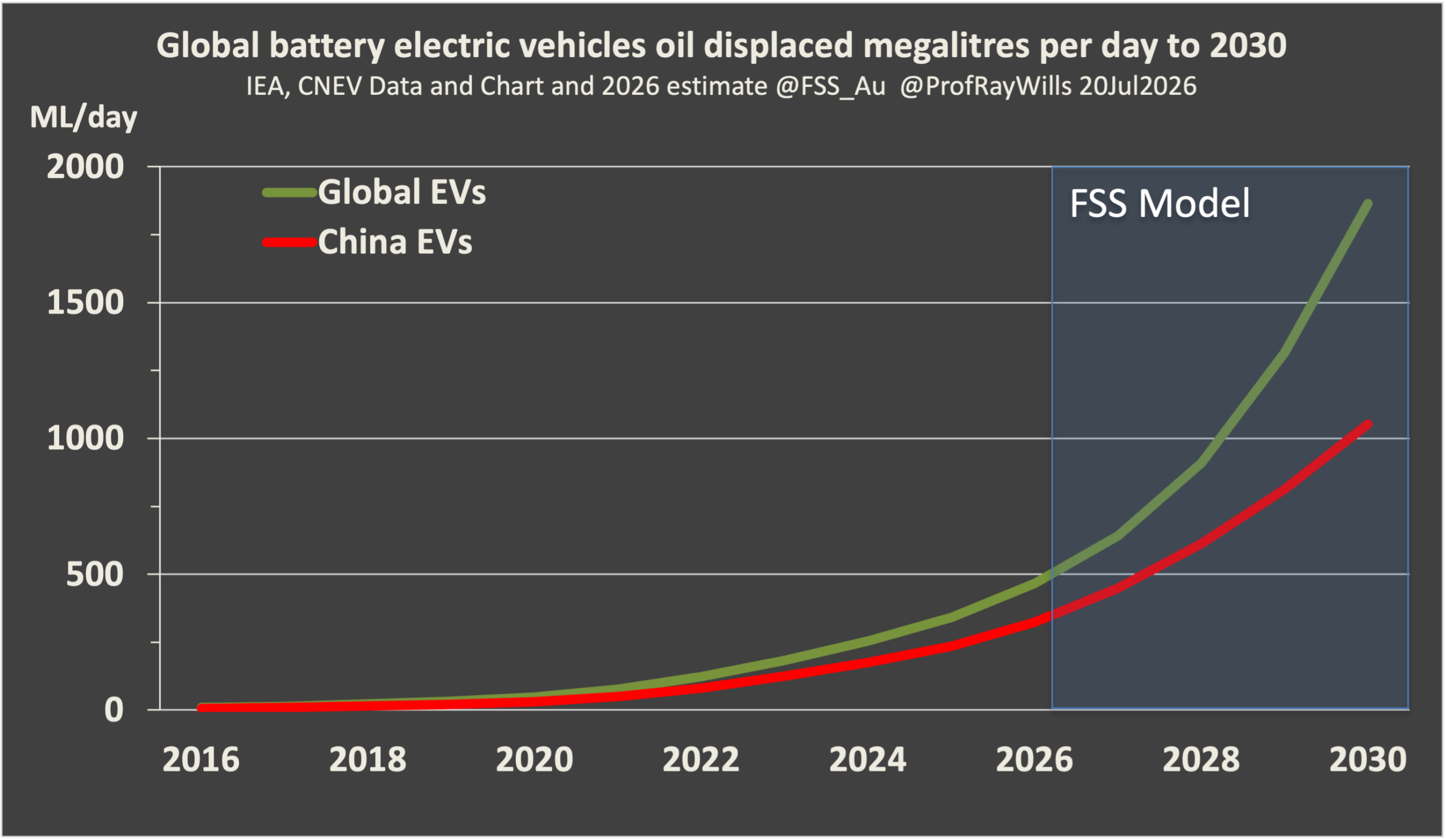
Figure 3 – Estimated oil displaced by electric vehicles to 2025, projected to 2030.
Australia is very well placed to ensure partnership with China as they mass produce all the necessary clean tech for our transition using our iron ore and critical minerals.
Biofuels
Sustainable biofuels and renewable liquid fuels still have an important role, especially in hard-to-electrify and transitional applications such as existing tractors, harvesters, heavy machinery, remote operations, forestry, fisheries and some long-duty transport tasks. But they should be treated as a bridge and a targeted solution, not as a substitute for serious work on electrification wherever electric options can do the job more efficiently and at lower long-term cost.
How do we shift government processes in this transition?
There are real data issues that can be easily fixed. We will need to accelerate the transition by ensuring equipment is fit for purpose and is working well everywhere it is used though proper government-led data collection on the new technologies and on new training of people in the new jobs.
A fuel excise started in 1929 to help the new world of oil-based productivity, especially in rural areas, to help build roads. From 1982, it was directed to assist primary producers from agriculture and mining to cushion their planning and production phases. The next phase of transport and productivity needs to revise this cushion.
Since 2010, Australia’s liquid fuel consumption has shifted dramatically. Petrol use has slowly declined as passenger vehicle efficiency improved, and more recently as EV uptake began. Diesel, by contrast, has nearly doubled from levels comparable to petrol in 2010 to 2026 (Figure 4).
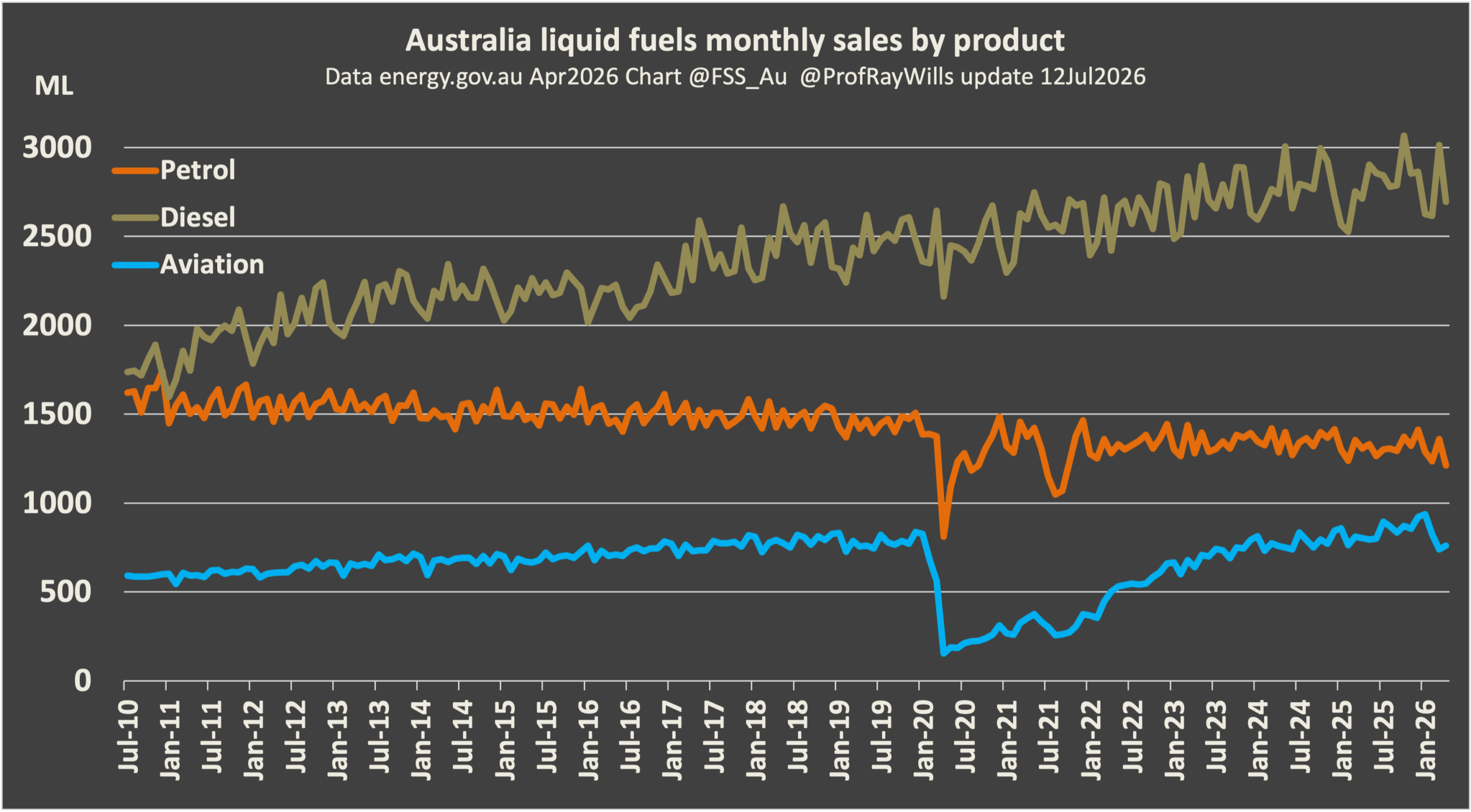
Figure 4. Australian liquid fuels monthly sales by product.
This diesel surge reflects growth in freight, heavy vehicles, and, most particularly, mining. The Fuel Tax Credits Scheme is now one of Australia’s largest fossil fuel subsidies, with recent projections putting its annual cost at around $11.2 billion by 2026–27, up from roughly $9.5 billion in 2023–24. Mining is by far the largest beneficiary, claiming about $5 billion a year in diesel rebates according to IEEFA’s January 2026 analysis, including more than $1 billion for coal mining alone, while agriculture receives only a fraction of the total.
What began as practical support for farmers using off‑road fuel has become a standing subsidy for some of the country’s largest and most profitable extractive industries.
Meanwhile, fuel excise revenue has long since been absorbed into general revenue, but the rebate survives as a legacy concession whose original logic has collapsed: it no longer protects farmers from paying for roads they do not use so much as it underwrites diesel dependence in mining, freight and other heavy industry.
Furthermore, aviation fuel pays almost no excise – just 3.556 cents per litre to fund the Civil Aviation Safety Authority, compared to the pre‑April 2026 fuel excise rate of 52.6 cents per litre on petrol and diesel, before the temporary excise relief introduced from 1 April 2026.
In May 2026, the federal government’s budget announced an Australian Fuel Security and Resilience package worth more than $10 billion, centred on a permanent government‑owned fuel reserve of around one billion litres of diesel and aviation fuel, plus a 10‑day increase in minimum stockholding obligations for all fuels. This came only weeks after the government released about five days of diesel and seven days of petrol from emergency reserves in response to supply disruption, a reminder that Australia’s fuel security problem is not theoretical but immediate.
Aviation thus receives not only concessional excise treatment but also priority access to publicly funded strategic storage, while taxpayers are asked to socialise the cost of securing fuels who’s long‑term use must, on any credible climate pathway, decline sharply. The Budget response is therefore to buy and store more fuel, not yet to reduce structural dependence on it.
We have to rethink the diesel rebate in a world that now sees we need to reduce dependence on such insecure fuels as oil and gas.
How do we then look to the future and reorient such large taxes?
GDP grows, energy use doesn’t
The diesel rebate helps primary producers to use more of this fuel. Hence the Federal Government has started a series of interventions to ensure we get more oil. But the problem with “we need more fuel” arguments is that Australia’s economy is decisively decoupling from energy consumption. Between 2010-11 and 2022-23, energy intensity across the Australian economy decreased by over 17%. GDP has grown from around $1,500 billion in 2010 to over $2,500 billion today, while total energy consumption has remained essentially flat.
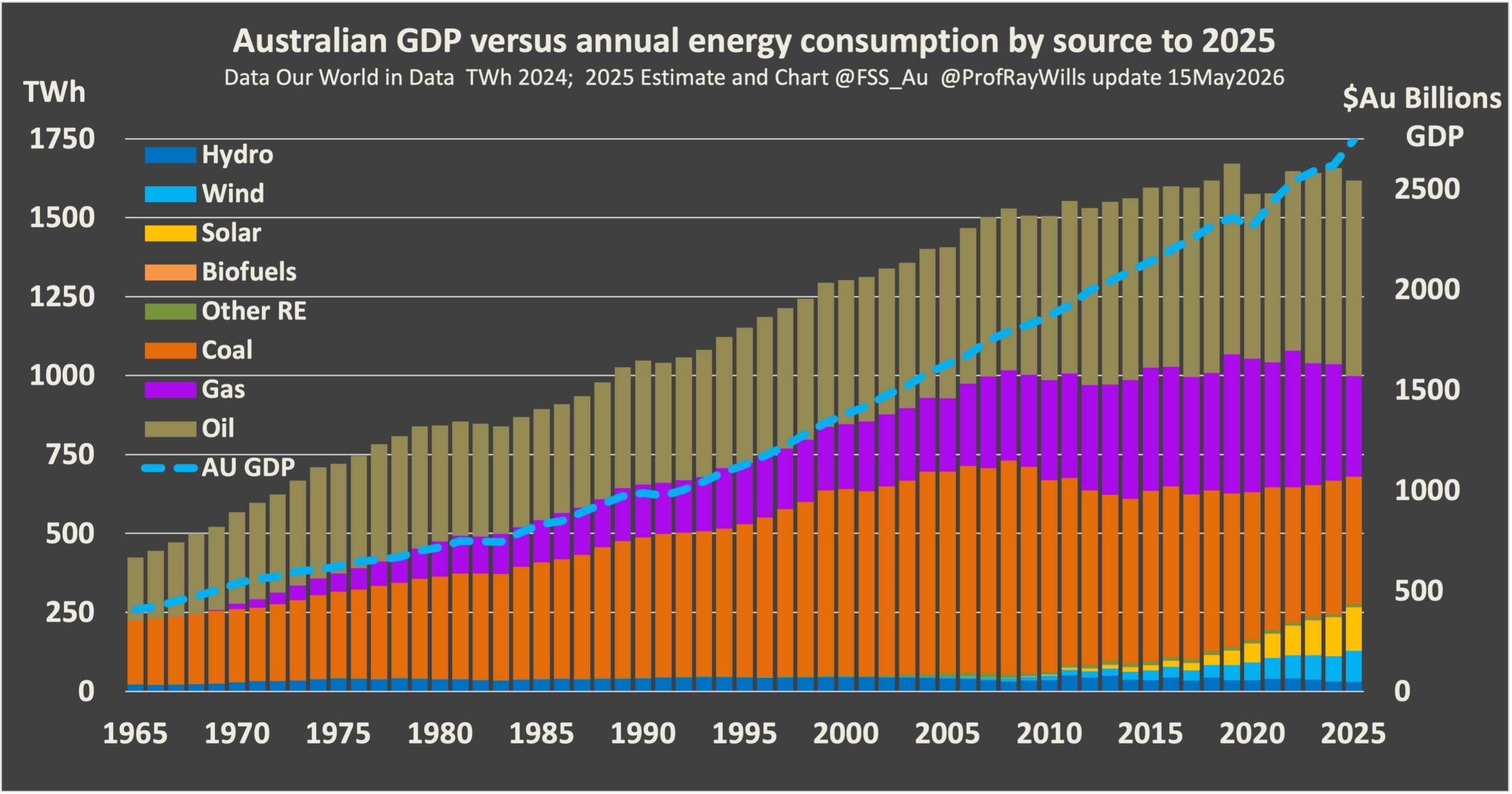
Figure 5. Australian GDP versus annual energy consumption to 2025.
Oil consumption has plateaued since the early 2000s, even as GDP doubled. This is not theoretical future potential – it is empirical reality. Australia is already producing more economic output per unit of energy, and the fastest energy transition in human history is accelerating that trend.
We should be trying to hasten the shift away from oil, not maintaining a subsidy for it.
Resource rent and regulatory capture
Australia has long struggled to capture a fair share of revenue from finite mineral wealth. Our petroleum resource rent tax remains notoriously weak. Mining lobbyists argue that tougher taxes will drive investment offshore, but when Australia holds some of the world’s highest-grade iron ore, coal, and critical minerals, the tax regime would have to be extraordinarily punitive to make extraction of Australia’s resources uneconomic.
The fuel rebate is textbook regulatory capture. What began as targeted support for a struggling agricultural sector during the painful deregulation of the 1980s has morphed into a multi-billion-dollar subsidy for some of the nation’s most profitable corporations – a free ride worth nearly $5 billion per year.
The fourth oil crisis opportunity
We are now in the fourth major oil crisis. But unlike 1973, 1979, or 2008, this one arrived when viable alternatives exist at scale. As we argued a couple of months ago, “this fuel crisis could last for a while. It’s time for a new approach to fuel use: end it“.
Wind, solar, batteries, and electric vehicles are now cheaper than fossil alternatives and faster to deploy. EVs are already displacing over 4 million barrels of oil per day globally. We’ve already argued that batteries – both stationary and in EV fleets – can become the new strategic fuel reserve, offering energy security far more cheaply and flexibly than legacy liquid fuel stockpiles. Build the reserve out of batteries instead — in the grid, in businesses, in homes and in the vehicles themselves — and the money works every day rather than sitting in a tank waiting for the next war.
Australia does not need one more refinery. It needs one less reason to want one. The new non-petrol options are real and ready.
Peter Newman is Professor of Sustainability at Curtin University, and has been part of IPCC for the past 15 years. His book Net Zero Cities with Sustainability: A Practitioner’s Approach, is from Edward Elgar.
Professor Ray Wills is a highly qualified and experienced researcher, academic, consultant, and futurist with a focus on sustainability and technology