GDP is not what you think it is, which is no accident
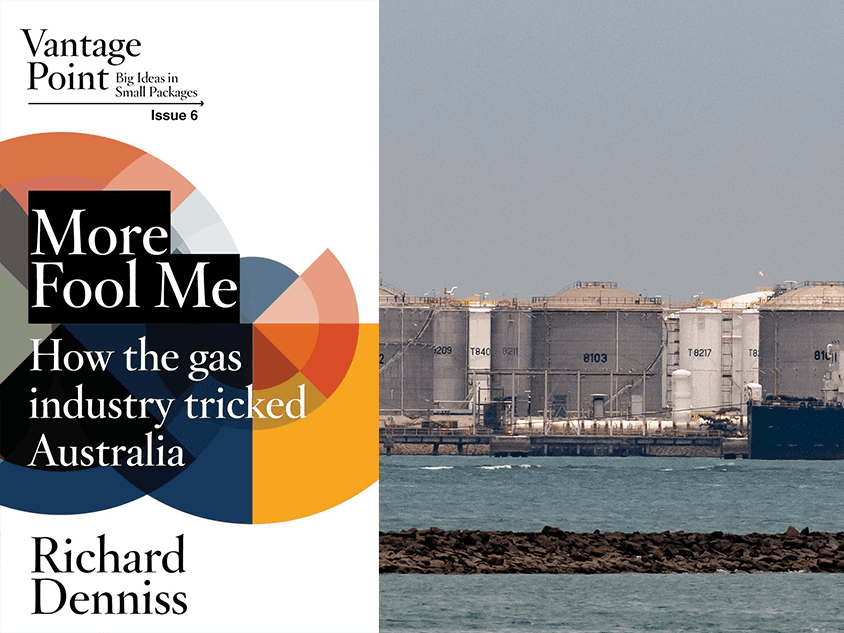
This is an edited extract of More Fool Me (Vantage Point Issue 6) by Richard Denniss, published by The Australia Institute. Available from the 4th of August.
Banning gambling ads is a great example of something we don't see often enough: stopping harm before it happens, rather than spending to patch up the damage afterwards. As a result, we spend an enormous amount of time and public money focusing on fixing problems after the fact, but far less time asking: why do we permit, or even subsidise, the activities causing these problems in the first place?

Fri 7 Aug 2026 15.13 AEST
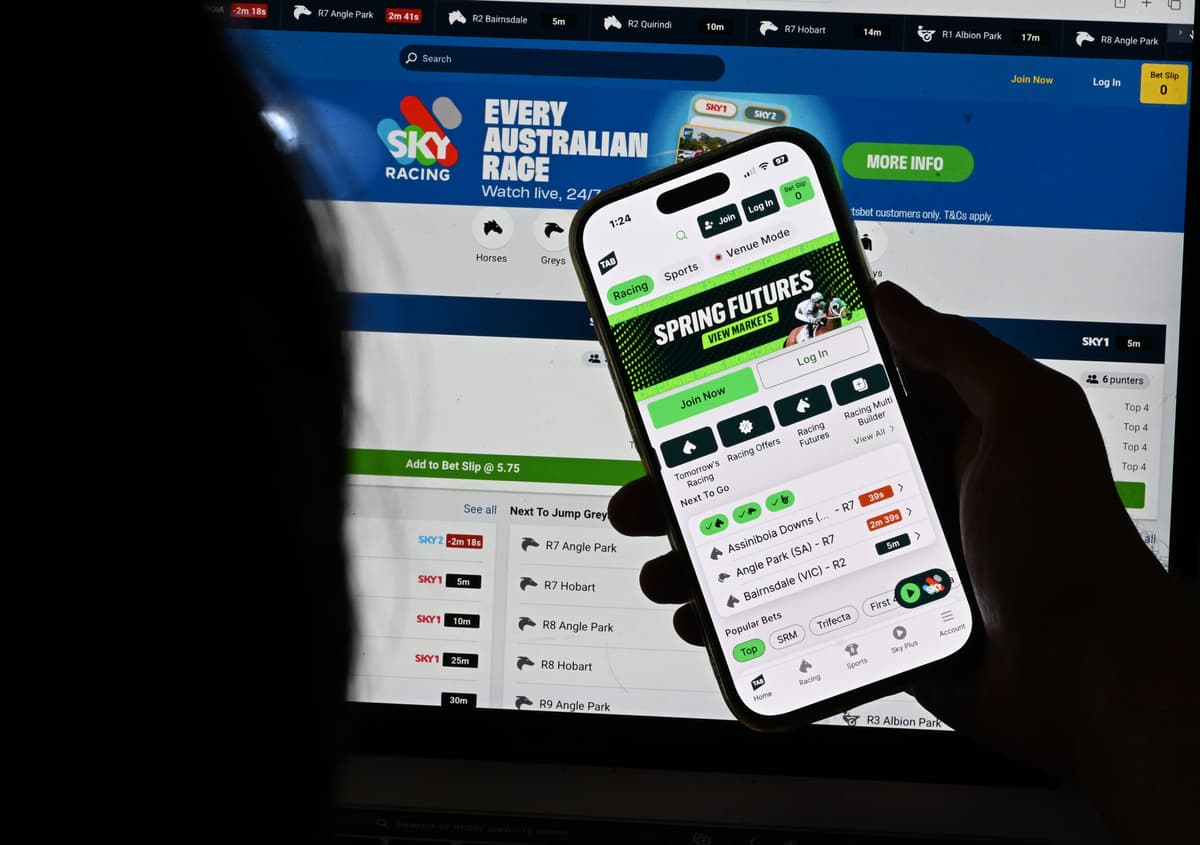
Photo: AAP Image/Darren England
Gambling advertising is a hot topic in Australia right now, with a range of groups and political players calling for more to be done to stop ads popping up on our screens. Taking action to stop an activity known to be causing so much harm to so many Australians and their families is not really in question: the push and pull between the parties is more about how much action to take and how firm the government needs to be.
Banning gambling ads is a great example of something we don’t see often enough: harm prevention, rather than spending to patch up the damage afterwards. As a result, we spend an enormous amount of time and public money focusing on fixing problems after the fact, but far less time asking: why do we permit, or even subsidise, the activities causing these problems in the first place?
Think about the cost of extreme weather events, ‘events, which are estimated to grow by 5.13 percent each year (before inflation) and reach $35.24 billion (in 2022 dollars) by 2050’.
Chemical pollution remains a problem today: the Centre for Policy Development (CPD) reports that if pollutants had ‘been regulated early, the enormous cost of clean-up – and the impacts on human health – could have been prevented’. Instead, the CPD explains that the ‘cost of remediating Australia’s approximately 160,000 contaminated sites is impossible to quantify, but a thorough clean-up would almost certainly amount to hundreds of billions of dollars’.
Turning to social and economic policy, the two are deeply connected. A lot of social policy is, if we are honest, necessary because economic policy doesn’t share our wealth and resources effectively. For example, because of child poverty, various Australian governments spend at least $16 billion annually on government services like child protection, health, legal systems, homelessness support, and education, plus the need for Jobseeker and Family Tax Benefit in later life.
We treat the symptoms rather than addressing the causes.
And yet, preventing harm is 3-4 times more cost-effective than treating it later. Avoiding the damage in the first place would deliver benefits for communities and the natural world; it would also reduce avoidable public expenditure. So why does so much policy discussion swirl around spending to repair and remediate, rather than stopping the harm before it starts?
Part of the answer is that conversations about prevention tend to stop short of the economy itself. We talk about early intervention and investment spending, which is all well and good. But that framing misses a crucial third pillar: stopping harmful activities from happening at all, or before their impact gets even worse.
Right now, many laws, taxes, and subsidies still permit or actively encourage activities known to cause harm.
So what would it look like to change this? Governments would need to move beyond just adapting to shocks, and become more proactive about preventing harm.
The first task is to identify activities that are currently permitted but are proven to:
Then legislators need to act, using tools such as bans, phase-outs, tax hikes, subsidy removals, tighter licensing, restrictions and limits, or withdrawing other forms of government support.
Crucially, this must be accompanied by transition plans and support to avoid unfair burdens or unintended hardship for affected groups. The point is not to punish people, but to stop the harm. Alongside nurturing the new, the task is to let go of the old and no longer necessary.
There’s a fairness dimension here too. Policy often starts by recognising that broad, structural factors shape people’s lives, but all too quickly turns towards the individual: telling them to change their behaviour instead. It might be easier to tell people to make better choices, rather than to tackle the systems and fix the environment around them, but that doesn’t make it OK to ignore that task.
It’s also about fair competition. If a practice is profitable only because its costs are dumped on the public, that’s not a level playing field. When a business is profitable only because the public bears the cost of the damage it creates, that’s not efficiency or genius entrepreneurship: it’s a subsidy. The International Monetary Fund calls these ‘implicit subsidies’, and they represent a massive hidden cost to government and society.
The biggest quality-of-life improvements often come not from new spending, but from deciding that certain harmful practices are no longer acceptable. And around the world, there are already examples showing how effective this can be:
If efforts to stop the bad were to become more deliberate than simply sporadic, debate would move from the Treasurer’s calculator to the auditor’s assessment, and ultimately to the legislator’s pen. We’d spend less time and money fixing preventable damage, and more time building an economy that doesn’t create the damage in the first place. The gambling advertising debate shows that when the case is clear enough, stopping the harm becomes common sense. Imagine if we applied that same common sense across the board.
Dr Katherine Trebeck is the Economic Change Lead at non-profit The Next Economy
The ideas that have informed this piece were first mooted at an event hosted by NESTA Scotland at the Edinburgh Futures Institute in early 2026.
Advertisement
This is an edited extract of More Fool Me (Vantage Point Issue 6) by Richard Denniss, published by The Australia Institute. Available from the 4th of August.
The Reserve Bank of Australia (RBA) has released results of their survey, finding that most Australians believe higher interest rates increase inflation. This has no doubt, led to some tut-tutting from the boffins at the RBA, as they lamented the state of economic literacy in Australia today.