The Liberal–National Opposition is in a difficult parliamentary position. Still smarting from the worst result in Liberal Party history, they are not a live threat as an alternative government to a Labor Party that holds almost two in every three seats.
Nor has the party distinguished itself on policy. As Amy Remeikis points out, the Coalition spent this sitting fortnight attacking the Prime Minister’s comments about women because little distinguishes Liberal and Labor on NDIS cuts, fossil fuels, gambling and defence. There’s no hay to be made from furious agreement.
But there is hope for the Opposition. A party does not have to be the alternative government to shape the political agenda. This year, independent David Pocock has elevated a gas export tax to a national debate. During the Coalition years, the Greens and independents pursued an anti-corruption commission through the Senate even though it had no hope of passing the House of Representatives. That laid the groundwork for Labor’s National Anti-Corruption Commission.
State crossbenchers and oppositions forced the disclosure of Cabinet decisions in Tasmania and timely disclosure of government reports in Victoria. The Coalition and Greens could do the same in the federal Senate.
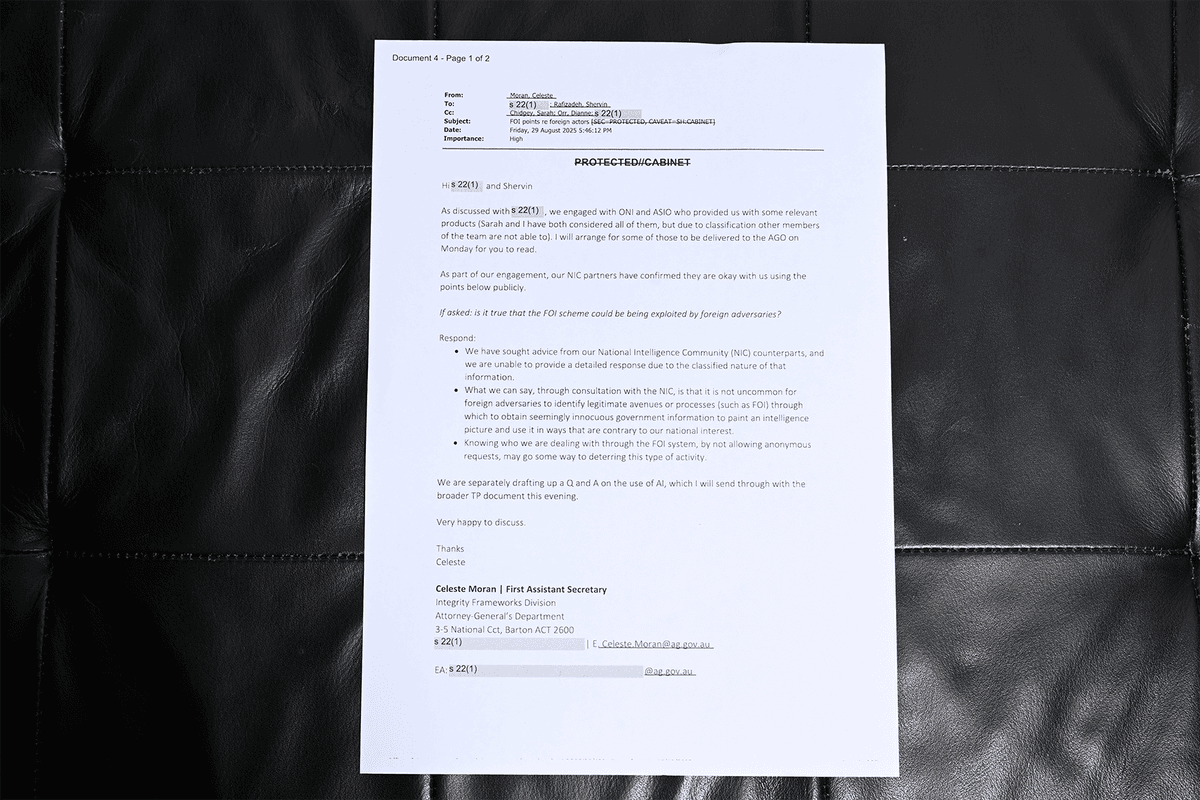
And while integrity has not been the Coalition’s strong point, the Labor Government has disappointed in that department too – with an anti-corruption commission that has never held a public hearing and a Freedom of Information system that costs more than ever to give the public as little information as possible.
The Coalition has already created trouble for the Labor Government on transparency issues. Last year Attorney-General Michelle Rowland introduced harsh restrictions on Australians’ right to information. With the Greens and independents, the Coalition voted down these changes.
This was something of a surprise. Often, oppositions will wave through changes that increase the power and autonomy of the government, because the opposition expects soon to become the government. The Coalition’s rejection of government secrecy suggests that they see themselves as so far from government that they have more to gain than lose from transparency.
Another hint of the compact between major parties falling apart came last year when Coalition, Greens and independent senators voted to lengthen Question Time.
Labor threatened in turn to cut pay for Liberal–National MPs in the House of Representatives by taking away their deputy chair positions.
What do deputy chairs in the lower house have to do with a motion in the upper house?
Only that Labor controls the lower house, so that’s where it can make the Opposition feel pain. Just as oppositions often vote with government, governments often give oppositions special privileges (and therefore higher pay) because one day the boot will be on the other foot.
Each major party shares with the other – until one party breaks the arrangement.
The Coalition backed down and Senate Question Time was shortened again – but the seed was planted.