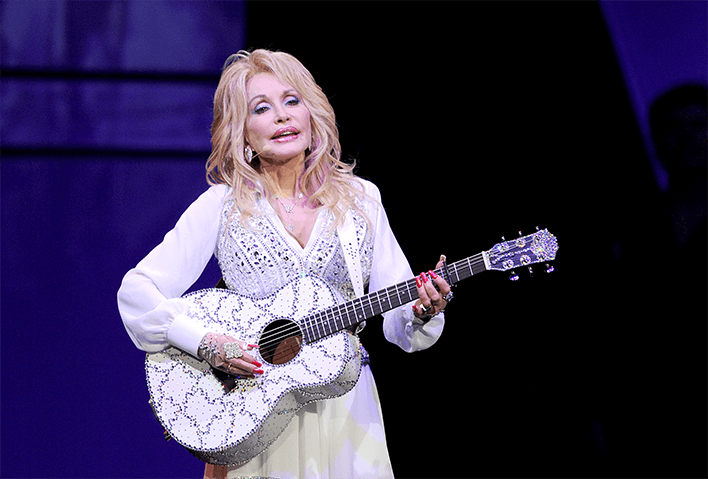
In April 2026, Dolly Parton was found to be the most popular person in America.
Her death, announced on Wednesday, was greeted with global grief, one of the rarest forms of collective expressions we have left.
Parton was famously not-political. It’s how she managed to be so political. She refused to become bogged down in terms or fights over identity politics, while she quietly got on with the work of making change.
Parton could have been a billionaire. She wasn’t because she spent her money where it mattered. Her Imagination Library donated 332 million books to children globally.
She bought a theme park in Pigeon Forge, Tennessee, where she was raised and became one of the county’s biggest employers, generating $1.8 billion for the local economy and employing more than 23,000 people since it’s launch. She used her money to improve the education of Tennessee children, having a marked impact on the school drop out rate.
She funded art and vaccines. She used her Christianity not as a weapon, but as a shield for the vulnerable and less fortunate. She preached, and practised, non-judgment, while lifting up the LGBTIQ community, women, the poor, the working class, and those who would make her a joke.
In refusing to be bogged down in politics, and living a life of meaning, guided by a belief in equal human dignity, Parton was able to sneak politics past those who gate-keep it. She, more than any of the bloviated microphone cravers, practised politics the right way. It’s understandable that the loss of such a human, at a time when they already seem in such short supply, feels personal. For many, it is.
I was raised in a family that made a joke of Dolly. She was reduced, as women often are, to her attributes, natural or not. She was only hair, boobs and rhinestones to many in my community, an object of derision and mirth. It was from watching and learning from Dolly that I learned how to subvert criticism, and how to be unapologetically yourself.
Yes, Dolly would say, call me a dumb blonde. I know I’m not dumb, or really blonde. No one knew how expensive it was to look that cheap.
She didn’t care what people thought of the artifice on the outside, because she was real where it counted. She had based her look on the “town tramp” she said, because she saw a woman who refused to be shut in the box her Smokey Mountain community built for women.
She fought against that future, not just with her music, but with her image.