

The next round of negotiations will take place as a powerful El Niño intensifies those risks. In Papua New Guinea, water sources are already drying up, crops are failing, and food prices are rising. These impacts are arriving while the diplomatic calendar rolls ever forward.

Fri 9 Oct 2026 13.18 AEDT
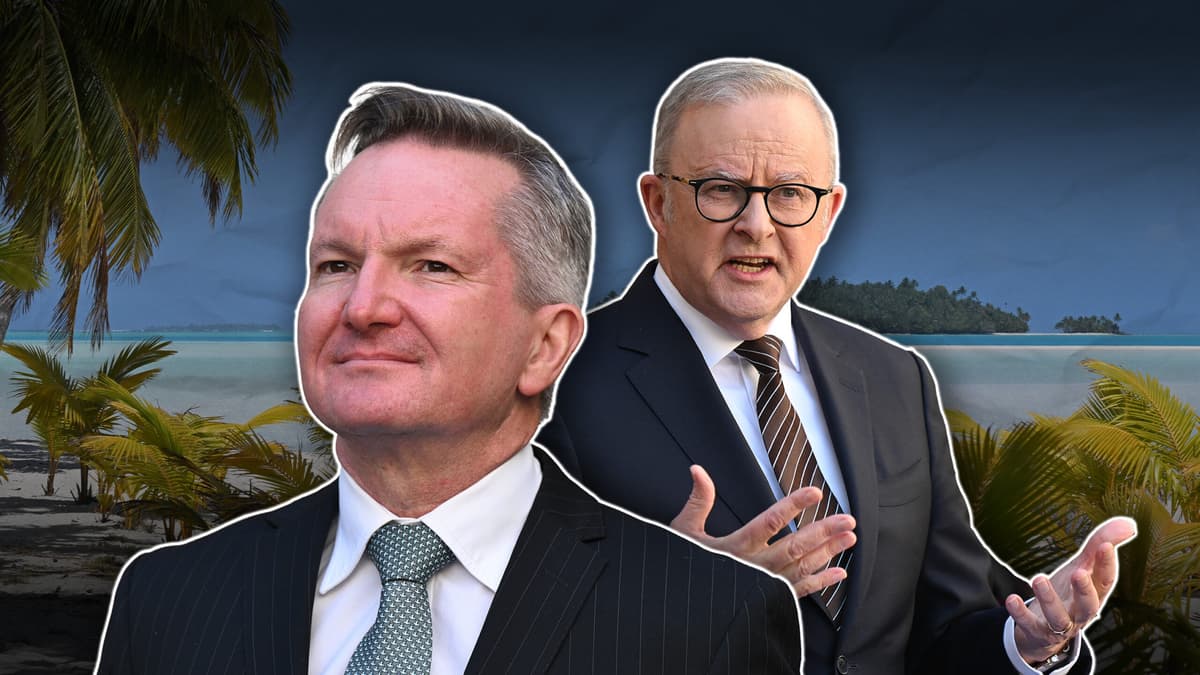
Photo: AAP Image/Susie Dodds, Pictures: Lukas Coch, Mick Tsikas
The annual Stanley Awards, Australia’s premier awards for cartoonists, has announced its long list for best climate cartoon honours. Born out of a boycott of fossil fuel sponsorship, from this year the prize is named in honour of Jon Kudelka, whose principled stand in 2023 inspired fellow cartoonists to withdraw from the Walkley Awards.
As the pre-COP climate meeting in Fiji draws to a close, Primanavia’s opening performance of “Welcome to our Home” is still ringing in my ears.
The award-winning choir brought delegates to their feet during the opening ceremony, as their voices soared through the conference hall. There was generosity in their singing, and an extraordinary warmth.
It was such a kind welcome, offered by people whose region faces so much danger.
Over the following days, that welcome was accompanied by warnings that were difficult to hear. And surely more difficult to keep delivering.
Dr Sindra Sharma, with the Pacific Islands Climate Action Network, described that burden in one of the conference panels.
She said she had struggled to come that morning. As a scientist, she explained, she was repeatedly asked to talk about the 1.5-degree warming limit while confronting the reality that the world is on path to crossing it.
At times, her voice wavered.
“When we come to places like this and we have to keep talking about the urgency and about what we need to do, it feels like no one’s listening.”
She spoke about “overshoot”, the increasingly familiar language used to describe exceeding the temperature limit before eventually, maybe, bringing warming back down.
For Sharma, that language carried a brutal message.
“We are told that we are expendable. That we don’t really matter. We’re the sacrifice zone.”
Human-caused warming reached an estimated 1.37 degrees in 2025. At current emissions levels, the central estimate of the remaining carbon budget for 1.5 degrees would be exhausted in roughly three years. These are conditional projections, but the conditions will persist unless governments change them.
In Sharma’s account, “overshoot” means asking communities to endure losses that a later reduction in temperature cannot undo. A homeland is not something you can promise to replace when the global temperature graph eventually turns down.
What stayed with me was the effort involved in explaining this again. Knowing the science. Knowing what it means for your region. Finding the words to make other people understand.
In that room, this time at least, people were listening. The question now is, what will follow?
Too few leaders from outside the Pacific accepted the invitation to hear these warnings themselves. Only two non-Pacific heads of government attended the leaders’ event in Tuvalu, although around 50 countries were represented at the wider meeting in Fiji.
Their absence deserves scrutiny. But, importantly, the people responsible for leading COP31 were here: Türkiye’s President-Designate, Murat Kurum, and Australia’s Climate Minister Chris Bowen, who will lead the negotiations.
After visiting Tuvalu, Kurum said seeing the effects of rising seas had made the situation unmistakably clear.
“When you see Tuvalu by your eyes, you see everything very clearly. Very evidently.”
Words alone were not enough, he said. If COP31 could not deliver the necessary action, “we shouldn’t come back here, and we cannot look at the faces of those people here anymore”.
That is a serious promise. We should hold him to it.
Quality research, analysis, explainers and factchecks from experts you can trust.
Bowen, too, spoke plainly about the reality and the risks that Pacific people and governments are confronting.
“This is no longer a forecast. It’s no longer a prediction… We are living climate change,” he said.
The next round of negotiations will take place as a powerful El Niño intensifies those risks. In Papua New Guinea, water sources are already drying up, crops are failing, and food prices are rising. These impacts are arriving while the diplomatic calendar rolls ever forward.
There were outcomes here worth acknowledging. Leaders adopted the Taku Pakasoa Declaration, calling on countries to reaffirm their commitment to transitioning away from fossil fuels, while also recognising the increasing danger of irreversible loss and damage with every fraction of warming.
Those words matter. But their value will only grow if they change what governments are prepared to do.
And that is something I keep wondering. What survives the journey home?
Does the urgency expressed in the Pacific follow ministers into cabinet rooms and departmental briefings? Does hearing someone describe her community as a sacrifice zone change what a government is prepared to approve?
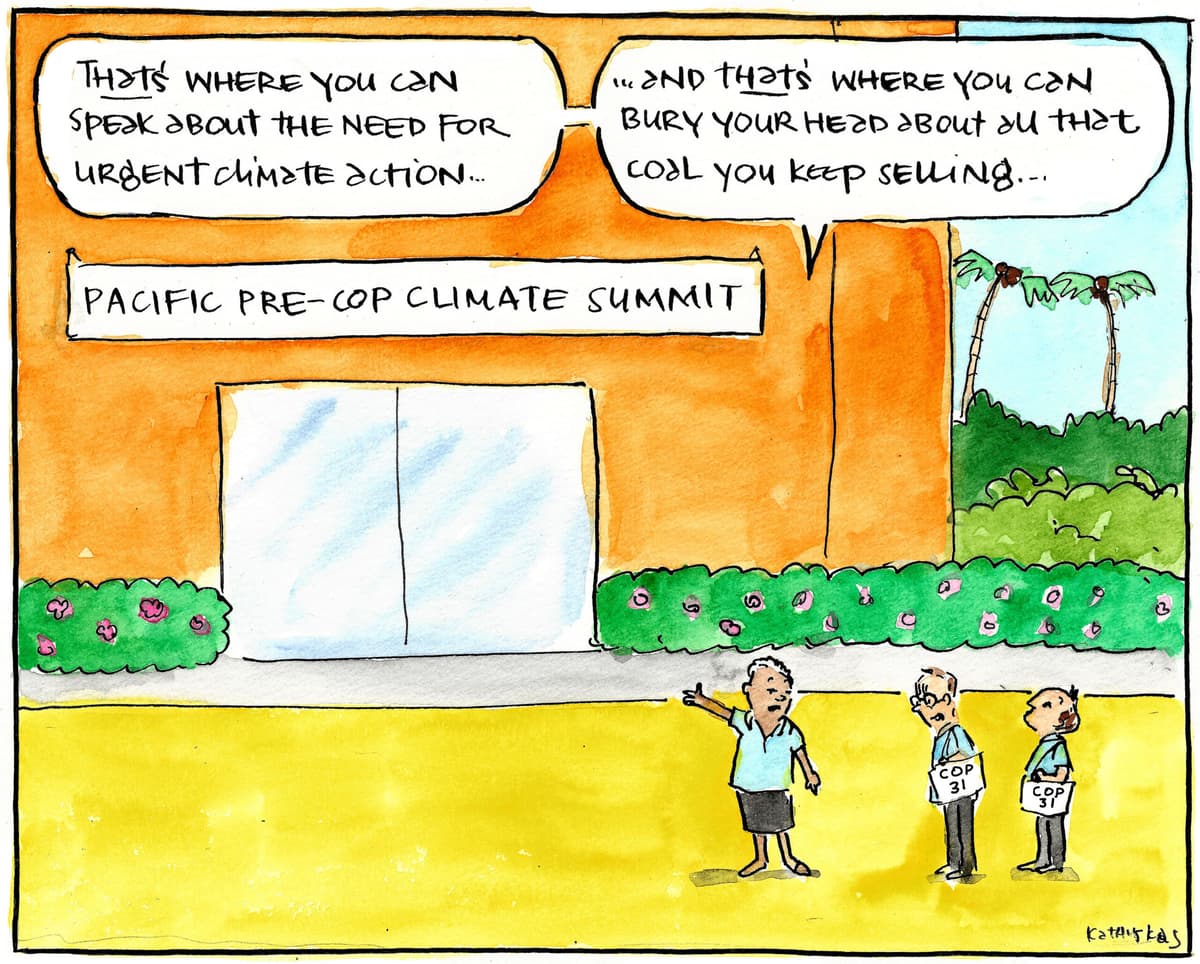
Back in Australia, the Hunter Valley Operations coal mine extension is the next big test for the Federal Government. Will it approve this mine, allowing it to keep polluting out to 2045, or will it heed the call to save the homes of the people in Tuvalu?
The transition away from fossil fuels must reach the places where those decisions are made, or it will remain a slogan. An end to new coal and gas projects would be a credible place to start.
The demand for meaningful action will continue beyond COP31. Next year, Tuvalu will host the second international conference on Transitioning Away from Fossil Fuels (TAFF), co-hosted with Ireland. Its stated ambition is to turn the pathways discussed at the first conference into practical action, addressing the barriers that prevent countries from making the transition.
The people living with the consequences of fossil-fuel dependence are helping build the process to end it. Countries such as Australia should arrive prepared to contribute to that work.
Former President of the island state of Kiribati, His Excellency Anote Tong, spoke this week about having lost faith in the effectiveness of the COP process. He stayed away from the meetings for several years.
But he has returned.
“I decided that we cannot give up. There is too much at stake,” he told me.
It is his view that we should not let doubt about the process become a reason to walk away.
Sharma had struggled to come to the panel. Tong had stayed away from the talks. Yet both were there, still asking governments to act.
Their persistence should not become something ministers admire before returning to business as usual. It places an obligation on the people who have the power to make better decisions.
As I leave Fiji, the welcome from Primanavia is still ringing in my ears. So is Sharma’s warning, and Tong’s explanation for coming back.
The people who offered that welcome should not have to keep pleading for their future.
And the governments that accepted it must now act.
Noah Schultz-Byard is the Director of Strategic Partnerships at the Australia Institute.


