Our new report from UNSW Canberra, Women in Trucking, examines how women enter and stay in an industry where they make up about 6 per cent of drivers. Using a mixed-methods design, we interviewed 20 participants, including women drivers, trainers, advocates, and industry representatives, and conducted a national survey on truck driver safety and training.

Mon 2 Nov 2026 09.13 AEDT
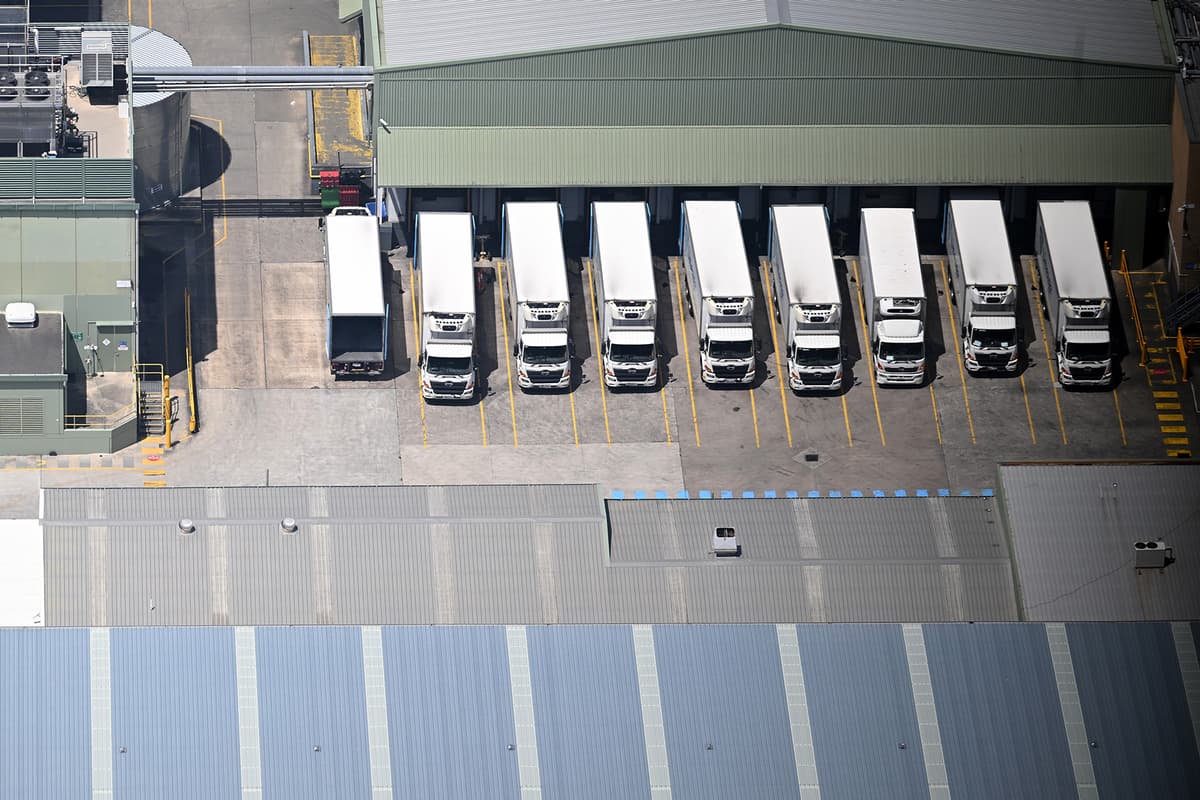
Photo: AAP Image/Dean Lewins


“There were times when, yeah, I literally held eight hours a day,” one truck driver told us. Her deliveries took her across Sydney, from one site to another, and none had a toilet she could use. When she finally got back, her boss wanted to know why the run had taken so long.
Another driver described her routine for pulling up for the night. She draws the curtains, locks the doors, and rigs the lights to come on if anyone opens the truck. “Then I use a bucket at nighttime to go to the toilet, so I don’t have to get out of my truck.”
These are not unusual stories. Women drivers told us they plan their routes, and even how much they drink, around where they can safely stop. The infrastructure itself sends a message about who belongs in the trucking industry.
Our new report from UNSW Canberra, Women in Trucking, examines how women enter and stay in an industry where they make up about 6 per cent of drivers. Using a mixed-methods design, we interviewed 20 participants, including women drivers, trainers, advocates, and industry representatives, and conducted a national survey on truck driver safety and training.
Toilets were often where these conversations started, but they opened onto bigger questions about inclusion in the industry, who is let in, and who is made to feel they belong.
On the surface, the industry’s doors are open. Half of the drivers we surveyed strongly agreed that there is opportunity for women in trucking. However, only a third strongly agreed that women are welcome.
The women we interviewed described that difference in detail, and while their experiences varied widely as the work in the industry is as diverse as it is geographically dispersed. One driver said some companies “don’t want females, simple as that”.
Another said everything depends on leadership: “Just one ops manager can sour the whole experience.”
What was common was the need to keep proving themselves. About three in four survey respondents thought a woman’s technical competence was likely to be questioned.
Under that kind of scrutiny, speaking up carries a cost. Seven in ten drivers we surveyed thought a woman in this job was likely to face sexual harassment. Half thought an incident was unlikely to be reported, and the most common answer to “who would you report it to?” was “don’t know”. As one driver put it, raising concerns “just gives an employer a reason not to have you there”.
Quality research, analysis, explainers and factchecks from experts you can trust.
So many women manage on their own. They carry their own soap and sanitary supplies, build overnight safety routines, check in with each other and find informal mentors.
Better facilities is not favouring women. They benefit all drivers. In open-ended survey comments, one in five male respondents raised poor facilities as a significant problem. One woman described asking for a toilet and handwashing station at a remote roadside worksite: “No one cared until I said something and then they thought, oh, that’s a really good idea… now everyone uses it because it’s there.”
“As more women have entered the industry, I feel like facilities have got better,” one driver said. Every woman who stays makes it a little easier for the next. But that progress is slow and uneven, and it cannot rest on individual women speaking up, often at personal cost.
Structural problems need structural supports. Our report points to where to start:
Fix the toilets, and you improve the job for everyone who drives. Add more women and the culture begins to shift. But those shifts will only last if the structures around them change too. Until then, too many women will keep holding on.
Dr Briony Lipton is a researcher in the Future of Work and Society Research Group at UNSW Canberra and a co-author of Women in Trucking: Perceptions, Contributions and Experiences of Truck Drivers in Australia (2026), with Dr Catherine Deen, Associate Professor Sharron O’Neill and Dr Vindhya Weeratunga. The research was sponsored by TEACHO Ltd.

