Labor needs to offer more than universal childcare if it wants to increase the fertility rate and address the motherhood penalty—parents are overworked, burnt out, and want more time for what matters.

Wed 18 Nov 2026 01.00 AEDT
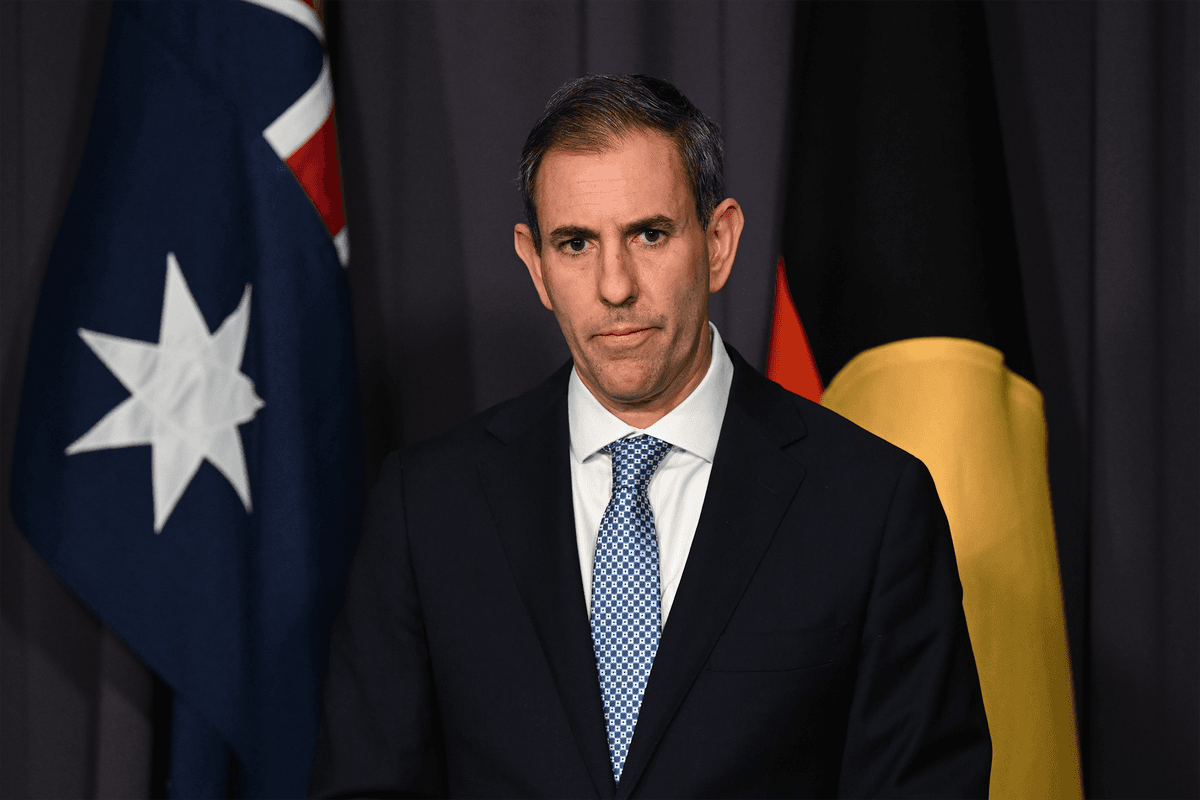
Photo: AAP Image/Lukas Coch


Recent figures from the Australian Bureau of Statistics show that while Australia’s total birth rate increased between 2024 and 2025, the fertility rate (births per woman) remains low.
This follows projections from the 2026 Intergenerational Report, released in September, which show that Australia’s fertility rate will fall further and faster than expected, intensifying debates about how governments should respond.
In response to the report, Treasurer Jim Chalmers rejected a new ‘baby bonus’, pointing to universal childcare as the best way to make it easier for people to have more children.
But more childcare won’t be a silver bullet for the economy or a panacea for overworked, burnt out, and financially strained families.
In her address to the National Press Club, Georgie Dent, Chief Executive Officer of parent advocacy organisation The Parenthood, brought widespread attention to the struggles Australian families face.
It was a sobering account of a broken system where parents and children are paying the price.
In her address, Dent detailed The Parenthood’s three policy proposals, which aim to make Australia ‘the best place in the world to be a parent’.
The organisation is calling for Paid Parental Leave to be increased to 52 weeks (shared between both parents in two-parent families), high-quality, affordable, and accessible early education and care (ECEC), and family-friendly workplaces.
But these demands are also not ambitious enough—and they miss the complexity of the challenges of modern parenting.
An extension of Paid Parental Leave would be welcome, but 52 weeks is still modest considering the intensity of care that one-year-old babies demand—not to mention the enormity of the life transition still unfolding at the one-year mark, especially for mothers.
High-quality childcare—at certain ages and in particular quantities—can deliver crucial benefits to children, especially those who are developmentally vulnerable. It is also highly valued as a way of increasing families’ support networks and allowing parents (especially mothers) to pursue other activities, including education and paid work, if they want to.
But policymakers often overextend this point, simplistically framing unpaid care as a barrier to workforce participation—rather than a public good itself—and positioning ECEC as a straightforward way of freeing up mothers’ working capacity. The economic benefits of a larger labour force are usually foregrounded, and cost and access are frequently cited as the main barriers to childcare use.
The full picture is more complicated. The most recent ABS data on barriers to workforce participation showed that, for female part-time workers and women not in the labour force, ‘preferred to look after children’ was reported far more frequently as a barrier than all the childcare specific reasons listed, including cost and access, combined.
Quality research, analysis, explainers and factchecks from experts you can trust.
Australia has made vital gains in women’s access to the workforce that we must not lose. At the same time, many mothers are now being forced to return to paid work after giving birth much sooner than they wish—often sleep-deprived and stretched thin—often taking on excessive workloads in combination with primary caregiving and most of the unpaid household labour.
A recent report by the United Nations Human Rights Commission on violence against mothers specifically describes the ‘pressure to return to [paid] work before they or their child are ready for separation’ as a form of serious psychological distress and trauma ‘amounting to violence’ for mothers.
The impacts of the ‘juggle’, which are compounded for marginalised and disadvantaged families, are real.
In March, an Instagram post by ABC Lifestyle landed badly with mothers. The post asked ‘working mothers’ how they were ‘juggling it all’ and to share ‘tips for getting it all done’.
The post was roundly denounced in almost 1,000 comments, with commenters criticising the way it framed this juggle as a private problem for mothers (not fathers) to solve rather than a systemic failure.
‘I don’t do it all,’ said one commenter. ‘I do what I can and hope for the best. Sometimes that means we eat off paper plates and disposable utensils [because] I don’t have the capacity to do the dishes.’
‘No one is making it work, our health, our children’s health, everyone’s mental health is deeply affected and we are suffering’, said another.
Another said they ‘like to collect autoimmune diseases as a hobby.’
As for tips, none mentioned meal prepping or carpooling: ‘Maybe we rage against the neoliberal agenda that forces us to be a part of a sick capitalist society that keeps us so busy we have no quality time for anything real,’ wrote one.
The gendered impacts of excessive paid and unpaid workloads are yet to be fully measured, but they must be acknowledged and urgently addressed.
Assuming childcare should be the central solution to Australia’s fertility decline and family pressures is far too narrow. We need much bolder childcare and family policy reform underpinned by feminist principles.
Dr Belinda Eslick is a researcher in feminist philosophy and gender studies at The University of Queensland.

