At stake in this election is something even more fundamental than transitioning from one centrist party to another in the offing. For this isn’t a case of a defeated John Brumby handing over the keys to Spring Street to Ted Baillieu, a Labor economic conservative, to a moderate liberal conservative. This shift, if it happens, will be something completely different.

Thu 19 Nov 2026 14.28 AEDT
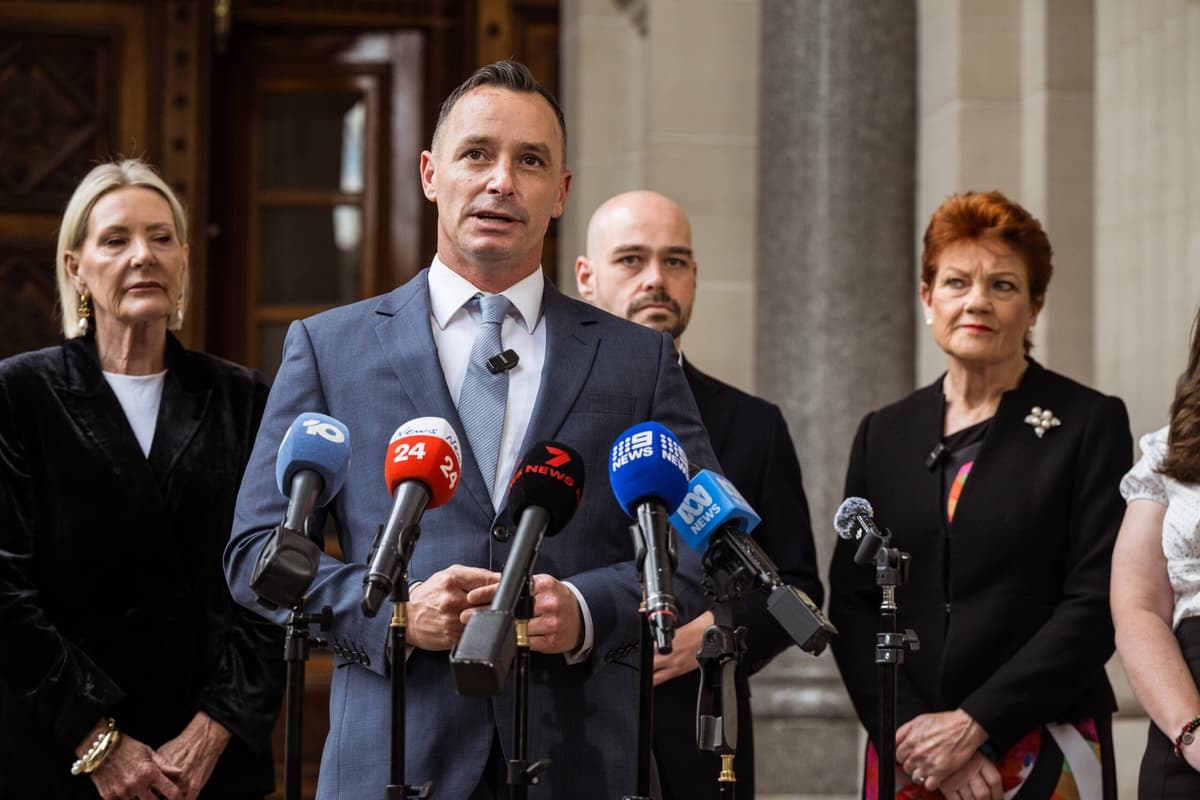
Photo: AAP Image/Christopher Hopkins


Voting in the Victorian election is now underway. The first genuine three-way contest in the state’s history. Labor has governed for 23 of the past 30 years. This staggering run means that, in a time of grievance, every problem associated with the state, from hospital waiting lists down to every pothole on its roads, can be laid, rightly or wrongfully, at the feet of the government. This malaise has befallen long-term governments throughout the federation’s history. It’s a reminder that in politics, just like in sport, time is undefeated.
Add to that the almost hourly reminders from the Big Build Royal Commission that billions of taxpayer dollars were wasted on a gorging of projects and positions by criminal-affiliated elements within the CFMEU, the picture couldn’t be grimmer for Ben Carroll and his government, but it could present an opportunity for the Greens amidst all the carnage.
Knowing the writing is on the wall, one Labor insider told me that the party is expected to hold onto a mere 25 seats after November 28, well short of the 45 required to form government and a long way south of the 54 the party holds now. Another insider claimed retaining 30, which would be seen as a victory of sorts.
At stake in this election is something even more fundamental than transitioning from one centrist party to another in the offing. For this isn’t a case of a defeated John Brumby handing over the keys to Spring Street to Ted Baillieu, a Labor economic conservative, to a moderate liberal conservative. This shift, if it happens, will be something completely different.
While some polls suggest that the Liberals and what’s left of the Nationals may be able to form government, there’s also a decent chance they may have to rely on One Nation to form minority rule. At the very least, One Nation are likely to have a significant presence in the Legislative Council and will have to be negotiated with to pass legislation.
Whether it’s majority or minority government, the populist right is likely to have a firm foothold in what has been considered the country’s most progressive state.
This would mean moving from successive generations of governments that have embraced multiculturalism and have worked with First Nations communities to a potential government beholden to a party that has a monocultural vision for Australia and the Great Replacement Theory at its core.
Warren Pickering, One Nation’s leader in Victoria, doesn’t even try to hide it anymore. The algorithms tell him he’s onto a winner. When confronted by ABC Melbourne’s Raf Epstein over comments made by a NSW One Nation candidate in which he megaphoned, “Make no mistake, we are being demographically replaced inside our own nation. If we don’t support Australian mothers having Australian children, we are going to pay for other cultures’ children to be brought up in our lands.”
Quality research, analysis, explainers and factchecks from experts you can trust.
Pickering scoffed at Epstein labelling the comments extreme, “He’s another bloke from another part of this country that has his own thoughts and opinions but shares the value set ultimately of this party. He understands what we are trying to achieve here.”
Despite the shellacking the MAGA movement copped in the recent midterms, it’s too late for populist right forces in this country to turn the ship around. The result will see a meaner, crueller form of governing and public discourse.
This dynamic will be nowhere starker than when Jess Wilson, if elected, follows through on her promise to tear up Australia’s one and only Treaty with First Nations people and the Crown. Having campaigned in favour of the referendum, the only state Liberal MP to do so, she and her party have now taken the result as reasoning to turn her back on First Nations Victorians and the two elections at which Treaty was put to the test and passed.
It demonstrates a moral flexibility that, sadly, we’ve become so accustomed to in the modern age of politics. Therefore, the real concern is how much will Wilson and her team are willing to give One Nation if they have to rely on them for supply. The anxiety in the Aboriginal community is that we will be seen as low-hanging fruit.
School curriculum will be changed to reflect a twisted version of history. The fear is that, in lieu of Treaty and in the haggling in the days that follow the election, there will be a scorched earth policy when it comes to Aboriginal affairs, just as the Queensland government has been accused of implementing what local Aboriginal leaders call “project invisibility”: the removal of First Nations people from boards, public leadership, the defunding of programs and the abandonment of their own treaty process.
What is traded away in the days after the election may well take decades to recover, if revived at all.
We have the right to change our government, but in doing so, we must ask if it is worth risking who we are in the process. This election is about more than potholes and promises. It is about whether we continue down the wretched road of othering people and the diversity they bring, in a state where diversity has been celebrated. Or are we standing on the precipice of chaos and about to see ourselves for the very first time?
Daniel James is a Yorta Yorta writer and broadcaster. He is co-editor of The Spencer Street End and co-host of the 7am podcast.

