Australia has a carbon price. It just doesn’t work. That’s the message of Phantom Forests and the Safeguard Mechanism, a new report from eight researchers at the ANU, UNSW, Oxford, Erasmus University, Haizea Analytics and the Centre for Environment & Integrity.

Thu 19 Nov 2026 10.07 AEDT
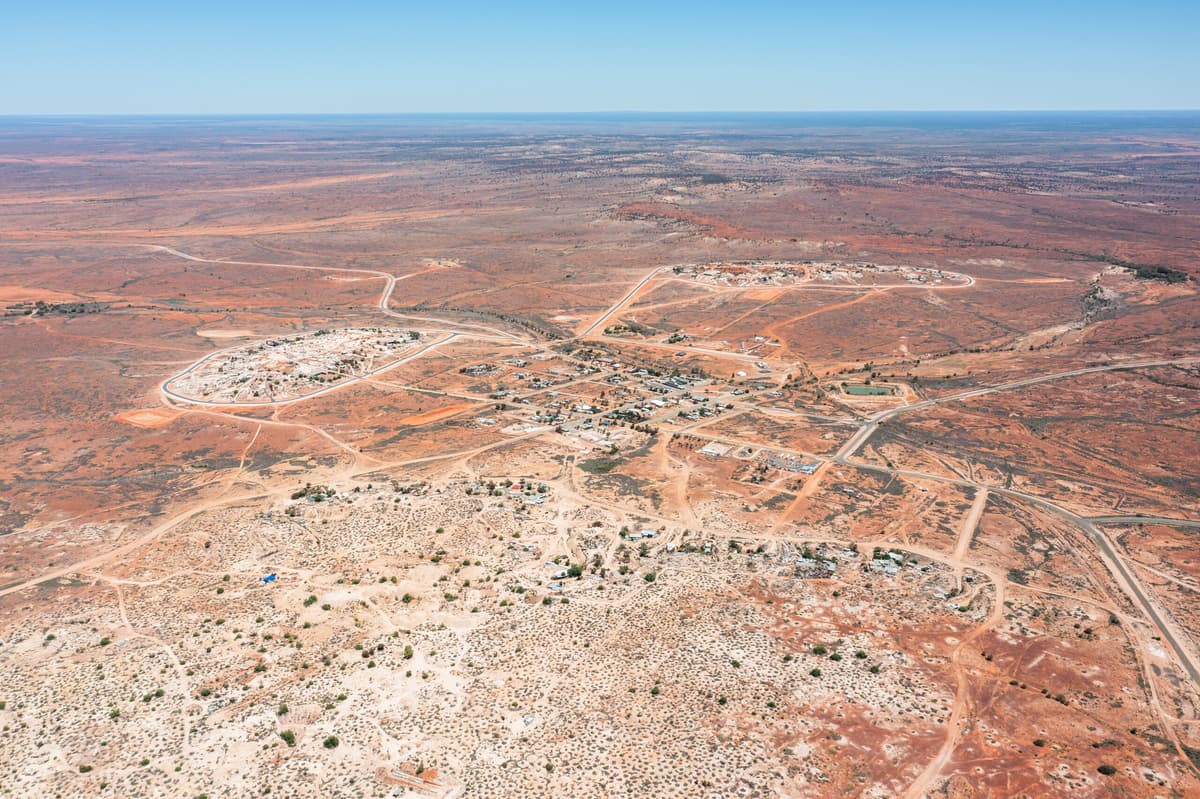
Photo: AAP Image/Stuart Walmsley


Australia has a carbon price. It just doesn’t work.
That’s the message of Phantom Forests and the Safeguard Mechanism, a new report from eight researchers at the ANU, UNSW, Oxford, Erasmus University, Haizea Analytics and the Centre for Environment & Integrity.
The Safeguard Mechanism is meant to cut emissions at our biggest industrial polluters. Gas and coal facilities make up 55% of the emissions it covers. Facilities over their allocated pollution limits must surrender either Australian Carbon Credit Units (ACCUs) or Safeguard Mechanism Credits (SMCs) to cover the excess. Unlike most other carbon pricing schemes, polluters can use unlimited credits to meet their pollution limits. The research shows the government is administering the ACCU scheme in a way that results in a large supply of cheap, low integrity credits. ACCU issuances are up 75% in a decade, and the price has sat below $40 for most of the last eight years. Today it’s about $38. That is roughly 40% of the minimum the World Bank’s High-Level Commission says we need to hold warming to 2°C, and yet Australia has committed to 1.5C of warming in the Paris Agreement
A low carbon price sends no signal or incentive to cut pollution. Why reduce emissions at the source when you can use cheap, unlimited carbon offsets?
The biggest source of credits is from projects registered under the human-induced regeneration (HIR) method. Last year it made up 40% of all ACCUs issued, and it’s heading for half. Projects have received more than 60 million credits, worth $1.5 billion to $2 billion. The Commonwealth alone has spent about $300 million.
HIR projects cover 38 million hectares, bigger than Japan. They claim to be regrowing forest on at least 7.4 million hectares. That’s bigger than Tasmania, and I live here, so I know that’s a lot of (potential) forest.
Most HIR projects are in the outback, on rangelands that were never cleared. The claim is that removing grazing allows permanent forests to regenerate. Decades of research show that’s not how it works.
When the government and industry criticised peer-reviewed analyses of HIR projects for using national-scale satellite imagery, the researchers got better imagery.
Across 50 projects, forest cover in the credited areas rose by six percentage points, and half of that rise also showed up on neighbouring land. In 2025, 37% of the credited areas had forest, but this should be 100% based on the number of ACCUs issued to the projects. Five researchers each assessed 3,000 squares of imagery, each containing 11 hectares. In 84% of cases, they saw no change, negative change or only a slight positive change.
The report authors conclude that government and industry claims that higher resolution imagery shows HIR projects are regenerating forests in line with expectations have no merit. They say the sorry saga is hard to explain without attributing serious maladministration. You can check the imagery yourself at carbonimagery.au.
These dodgy ACCU and carbon offset methods are now before the Parliament. The Senate Environment and Communications Committee is running an inquiry into the Carbon Credits and Other Legislation Amendment (Integrity and Transparency) Bill 2026.
Quality research, analysis, explainers and factchecks from experts you can trust.
The Bill amendments do a lot. It replaces the Emissions Reduction Assurance Committee with a new Carbon Abatement Integrity Committee. It also creates powers to address critical integrity risks in ACCU methods.
At the Committee’s hearing on 30 October, three authors of this report gave evidence. They backed it with a written summary and their full submission. You can read the full hearing transcript here
Their verdict was clear. They don’t believe the Bill will improve the scheme’s integrity, transparency, governance or administration. Their main concern is a method transition declaration process that they say seems designed to cover up the maladministration of the HIR method and keep failing projects earning credits.
Here’s why. HIR projects must reach forest cover across 90% of their credited area within 15 years. The researchers argue the government knows most won’t. They fear projects could be moved onto a new method and relieved of that rule, avoiding the hand-back of tens of millions of credits. That would also dodge scrutiny, they say, of the maladministration behind the unlawful registration of more than 400 HIR projects and the unlawful issuance of more than 60 million ACCUs for non-existent forest regeneration.
Their fixes are simple. Write the forest cover rule into the Act. Make transitioning projects meet it and the cleared land rule first. Where projects fail, make them hand back the credits. It’s the law as it stands. They also want the Bill’s plan to allow infinite crediting of emissions avoidance projects to be scrapped. That plan would cover carbon capture and storage and landfill gas.
The report goes further. It suggests considering excluding ACCUs from the Safeguard Mechanism, at least for now. Facilities would pay a transparent price per tonne of excess emissions into a decarbonisation fund. That money could finance real cuts in hard-to-abate industry, land, waste and agriculture. It would also give business what it keeps asking for: a price it can plan around.
The government built a carbon price and then undercut it with unlimited dodgy offsets it can’t defend. Polluters are happy. The atmosphere is not. The Senate now has the evidence. The Minister and the Regulator should stop defending HIR and start answering for it.
Louise Morris is the Head of Fossil Fuel Transition at The Australia Institute.
Editor’s note:
The authors of the Phantom Forests and the Safeguard Mechanism report are listed below:

