Every parliamentarian should support public accountability in return for taxpayer funding
Thu 26 Nov 2026 13.49 AEDT
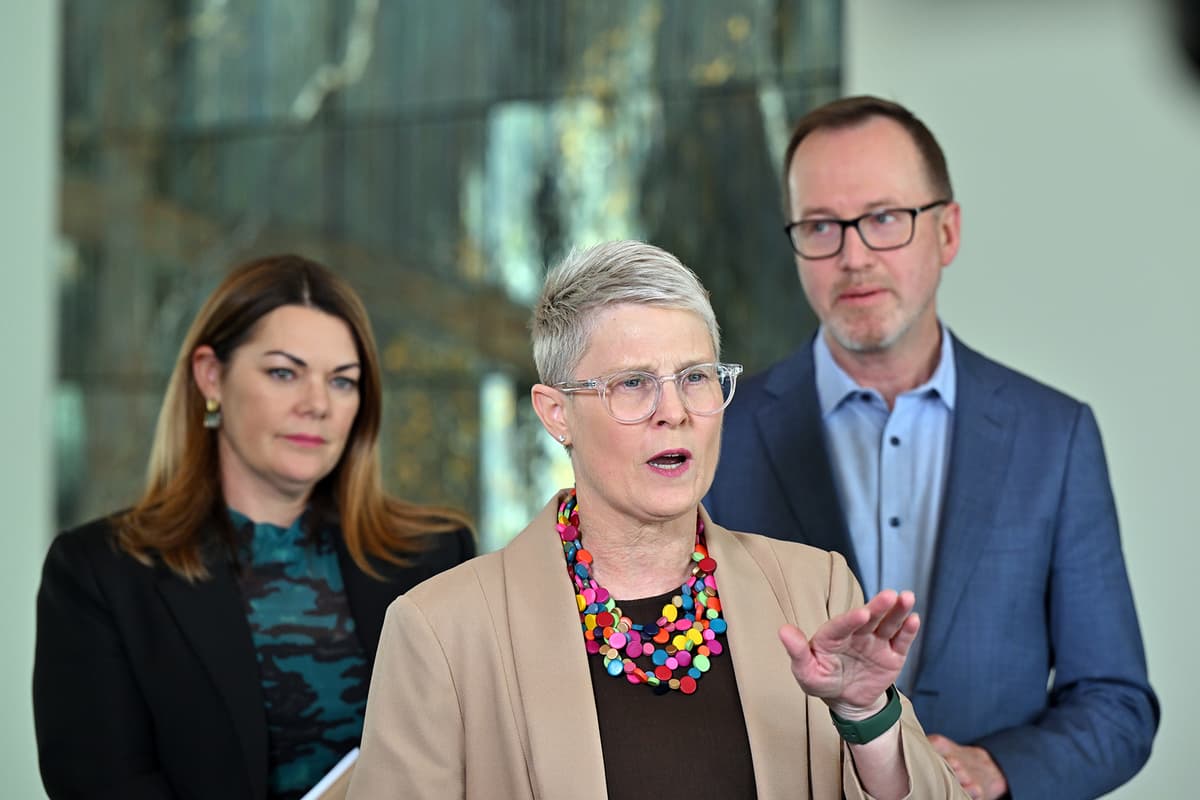
Photo: AAP Image/Mick Tsikas


When she was a little girl in Year 3, a courageous witness to the New South Wales parliamentary inquiry into Redeemer Baptist School recalled, she was punished for wearing coloured knickers underneath her compulsory black underwear. “It taught me that even the most private part of my life could be reported and punished,” the woman, now in her early twenties, reflected. “I learned to hide my emotions by hiding and crying in the bathroom.”
But punishment only went one way at Redeemer. When the girl was in Year 7 she was indecently assaulted multiple times on school grounds by an adult member of the community. The perpetrator confessed — and was excluded from playing drums in the church band. The victim had to continue to see and serve her attacker and began to suffer severe anxiety and bulimia in the following months.
Of all the disturbing questions that must be asked about Redeemer Baptist School, one of the most simple and straightforward is: why are you and I paying for it?
For while Redeemer Baptist is privately ruled by a small clique of men who exercise almost total control over the lives of those under their authority, it is funded just like a public school. Literally. Taxpayers provided over $8 million to the school in 2024, about $15,000 per student.
That exceeds the public funding per student received by nearby Carlingford West Public; it is only slightly less than the per student amount at Cumberland High, five minutes’ drive away.
Despite the shocking revelations about Redeemer, government funding to the school has not been affected. Even the news that the church does not pay its teachers has failed to stem the flow of taxpayer support. Categorising its staff as volunteers, not employees, the school provides only a measly stipend of around $2,000 a month. It is “incredible that a school which apparently employs no one is able to receive all that government funding,” the Secretary of the NSW and ACT Branch of the Independent Education Union remarked to the New South Wales inquiry. “They appear to be using it for other purposes.”
How is this extraordinary situation even possible? Current laws mean that schools can keep federal funding even after facing findings of misconduct, poor governance, and even a failure to protect children.
Quality research, analysis, explainers and factchecks from experts you can trust.
Last week, Greens education spokesperson, Senator Penny Allman-Payne, introduced a bill into parliament to address these anomalies. It would compel the Commonwealth Minister to consider immoral or ethical behaviour, serious neglect and poor governance before a non-government school or system is approved to receive public funding. And it would force the federal government to intervene when basic standards are breached.
It is an obvious step forward, which should be uncontroversial. But, in reality, a case like Redeemer Baptist is only a symptom of a more pervasive and profound problem. Most non-government schools are, like Redeemer, publicly funded at similar levels to comparable public schools (often even higher). And yet we maintain the myth that they are private, funded by all of us but accountable only to themselves.
This mythology has consequences: it allows these schools to operate more like exclusive clubs than taxpayer funded institutions. They regularly boast immaculate grounds peppered with high-end amenities from baronial-style castles and Olympic swimming pools to multi-story pavilions. The ever-increasing price of a private school education, on top of virtually full public funding, is just part of the stringent membership criteria, where admission is defined by wealth, social status and cultural fit. Those who are judged not to belong are quietly pushed out the door or advised that the public school down the road will better meet their needs. And, in the most extreme cases, these schools behave like they are a law unto themselves.
Whether it is a fundamentalist cult evading oversight or an affluent campus excluding students who don’t fit, the underlying problem is the same: publicly funded institutions claiming private status. Senator Allman-Payne’s bill begins the task of busting the myth of the private school by requiring non-government schools to meet a set of obligations that public schools already face: public reporting on serious incidents involving students or staff; transparency around suspensions, expulsions and retention rates; and publication of remuneration packages for executive staff.
These are each important steps in themselves, providing the kind of accountability that is healthy for any large organisation. Collectively, they are a call to start honestly facing the facts. Australian non-government schools are publicly funded, and when an organisation is funded by all of us it must be accountable and responsible to all of us.
No child should have to swallow their fear in silence while institutions hide behind closed doors and are sustained by public money. And if there are no real consequences for transgressions when they occur, ultimately we are all responsible.
Tom Greenwell is co-author with Chris Bonnor of Waiting for Gonski: How Australia Failed Its Schools (UNSW Press 2022) and Lessons from Canada: An Equal School System is Possible, published by Australian Learning Lecture.

