Sat 28 Nov 2026 13.35 AEDT
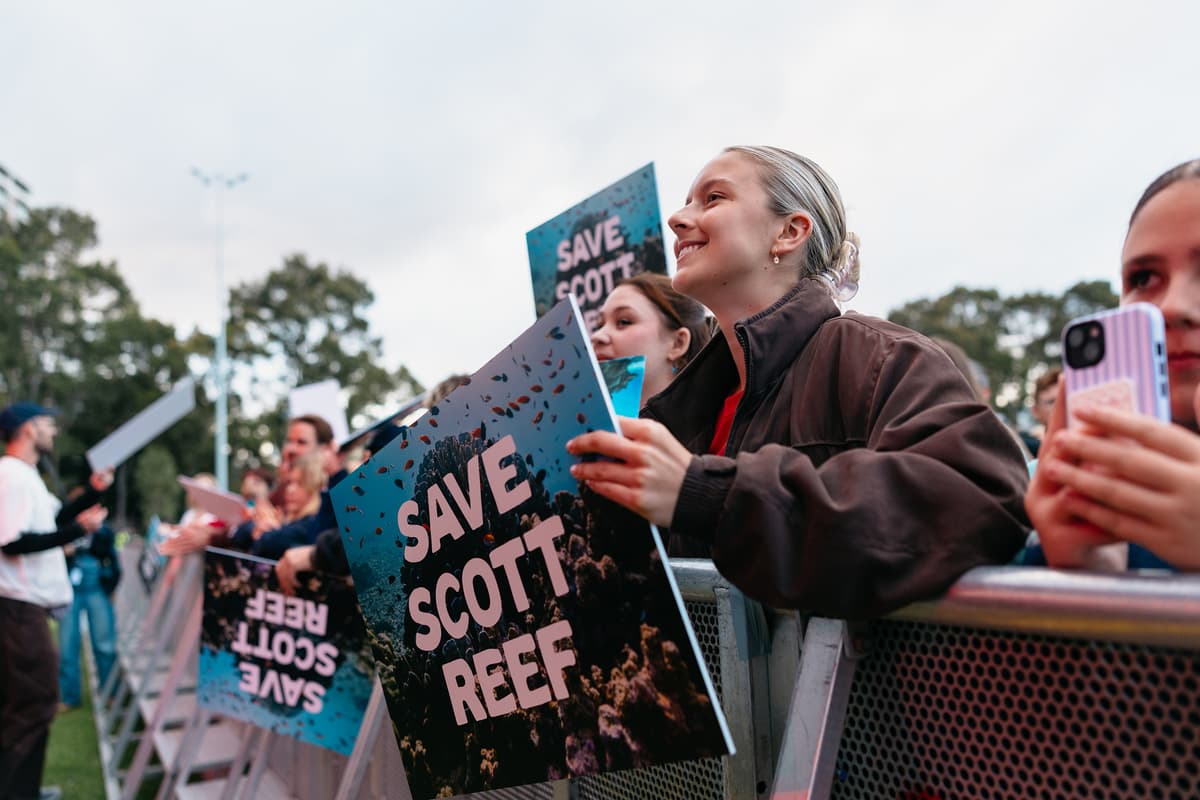
Photo: Scott Reef Rising festival (supplied)


Last week, as negotiators in Antalya argued into overtime over whether the words ‘fossil fuels’ could appear in a global climate agreement, 10,000 Western Australians gathered in Moort-ak Waadiny / Wellington Square and made their concerns crystal clear.
They came for Scott Reef Rising: a free festival of music, art and giant illuminated whales drifting over the crowd, built to bring a 15-million-year-old coral atoll 300 kilometres off the Kimberley coast into the heart of our city. They stayed to be counted.
Families, young people, surfers, grandparents, people who will never see Scott Reef with their own eyes, but understand exactly what is at stake if Woodside is allowed to drill up to 50 gas wells and 7 carbon and capture wells around it for its Browse project.
As well as concerns for the reef because of direct impacts from the Browse proposal, Scott Reef Rising also focused on the climate impacts of the project, which would endanger all coral reefs and cause devastation for communities around the world.
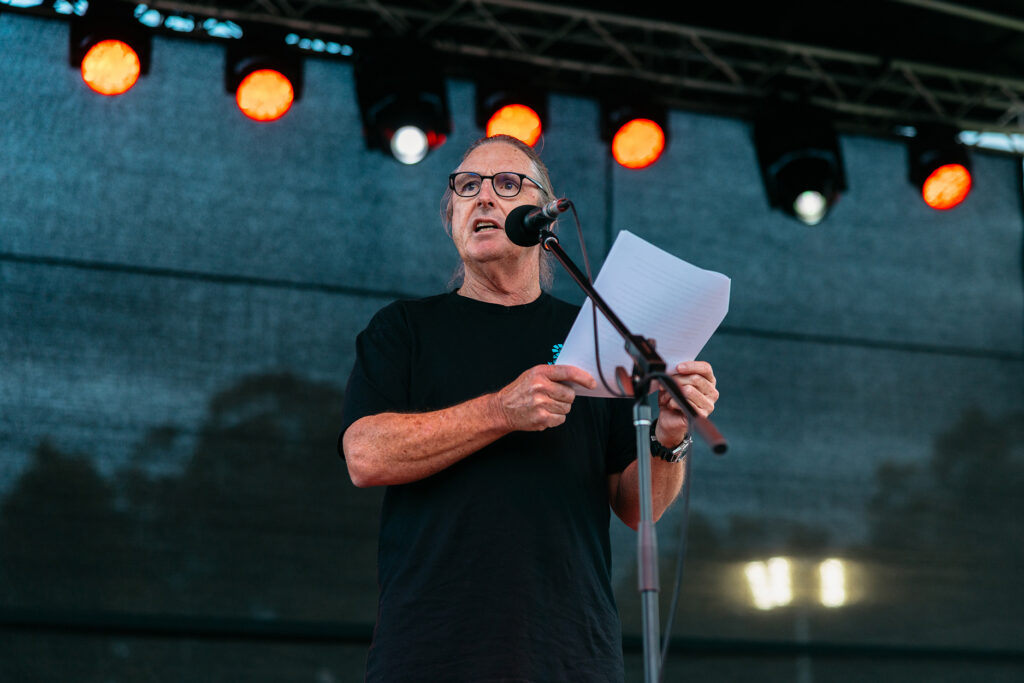
As iconic Australian author and Patron of the Australian Marine Conservation Society, Tim Winton told the crowd on Saturday night: “What’s the scariest thing about the climate emergency? To me it’s this: the people we’re relying on to fight for us and fight for our kids, have so little fight in them.”
By Sunday, the world had its answer from Türkiye. COP31 collapsed without a deal, the first time a climate summit has failed outright since Copenhagen in 2009. The final text, put forward by the Turkish presidency and Australia as President of Negotiations, contained a target to lift electricity to 35 per cent of global energy use by 2035. It did not contain a single reference to coal, oil or gas.
The European Union, UK, Panama, Marshall Islands, and Tuvalu refused to sign a climate agreement that pretended the cause of the climate crisis did not exist. They were right to.
This is the second year running that any mention of fossil fuels has been lobbied out of COP statements. In Belém last year, every mention of fossil fuels was stripped from the final decision. In Antalya, an early draft called for an immediate transition away from fossil fuels in energy systems, and that language was cut too. A handful of petrostates and heavy fossil fuel users have learned they can hold the whole process hostage, and our leaders keep letting them.
The contrast with Wellington Square could not be sharper.
Electrification is welcome, but it’s not enough.
To be fair to the federal government, pushing electrification onto the global agenda matters. Cleaner homes, electric transport, cheaper renewable power: Western Australians want all of it, and many are already doing it on their own rooftops and in their own driveways.
But electrification without a plan to move beyond fossil fuels is only half a transition. You cannot electrify the world’s kitchens while approving the gas fields that will keep cooking the planet. And you cannot ask other nations to take the hard road while Australia, one of the world’s largest fossil fuel exporters, keeps opening new frontiers for coal and gas.
Quality research, analysis, explainers and factchecks from experts you can trust.
That is what the crowd on Saturday understood. People were not only asking for heat pumps and solar panels, they were asking for a future that does not depend on an industry that drives the climate crisis, exposes us to every global price shock and supply disruption, and has captured far too much of our politics.
Even the Climate Change Minister has spoken about the fragility of fossil fuel supply chains. The logical conclusion is to stop building our future on them.
Nowhere is this more urgent than in Western Australia. Our state is the engine room of Australia’s gas exports, and the gas industry has spent decades persuading successive governments that its interests and ours are the same. They are not.
WA needs a genuine plan to wean itself off this industry: one with timelines, real support for workers and regional communities, a serious build-out of renewable energy and the industries it can power, and a clear commitment that the next major development in this state is not another giant gas field.
Saying yes to Browse would lock in decades more emissions and put one of the most extraordinary marine environments on the planet at risk, all for a project whose gas is almost entirely destined for export.
Western Australians have done this before. A little over a decade ago, community action helped end Woodside’s last attempt to develop Browse at James Price Point. People in the jarrah forest are standing up against bauxite mining in the places they love. Households across Perth and the regions have put solar on their roofs faster than governments planned.
Again and again, our communities have been ahead of our politicians.
That is the real lesson of this weekend. When the multilateral system stalls and leaders hedge, communities do not have the luxury of waiting. We can rise to the occasion, and we are. More than 10,000 people turned up on a Saturday night not because they were told to, but because they care about this place and about the kind of future their kids will inherit.
Premier Roger Cook and Environment Minister Murray Watt hold the future of Scott Reef in their hands. Prime Minister Anthony Albanese has just watched the global process Australia helped lead fall over, in large part because fossil fuels could not be named.
They have a choice. They can keep following an industry that has held climate action hostage for 30 years, or they can follow the people who filled Wellington Square: reject Browse, rule out new fossil fuel expansion, and give Western Australia a real plan for the future beyond gas.
The reef rose in Perth on Saturday night. Our leaders should rise to meet it.
Matt Roberts, Executive Director, Conservation Council of WA

