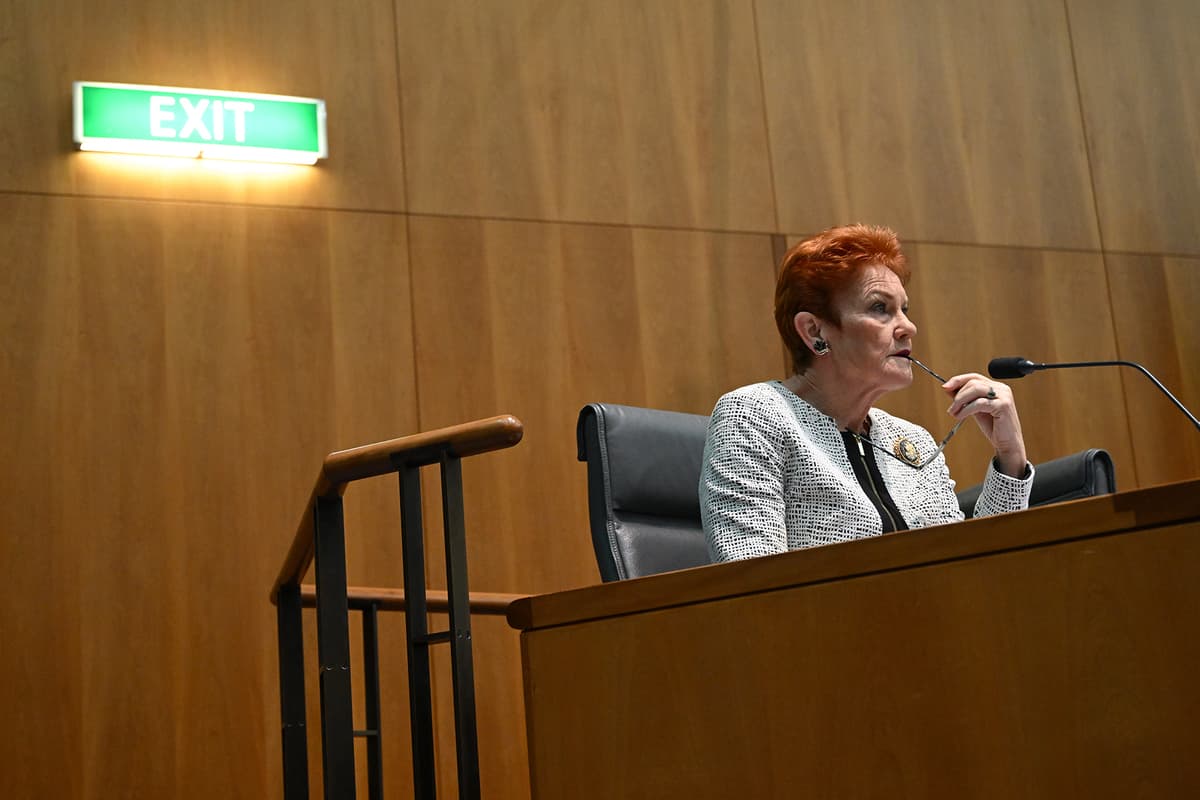
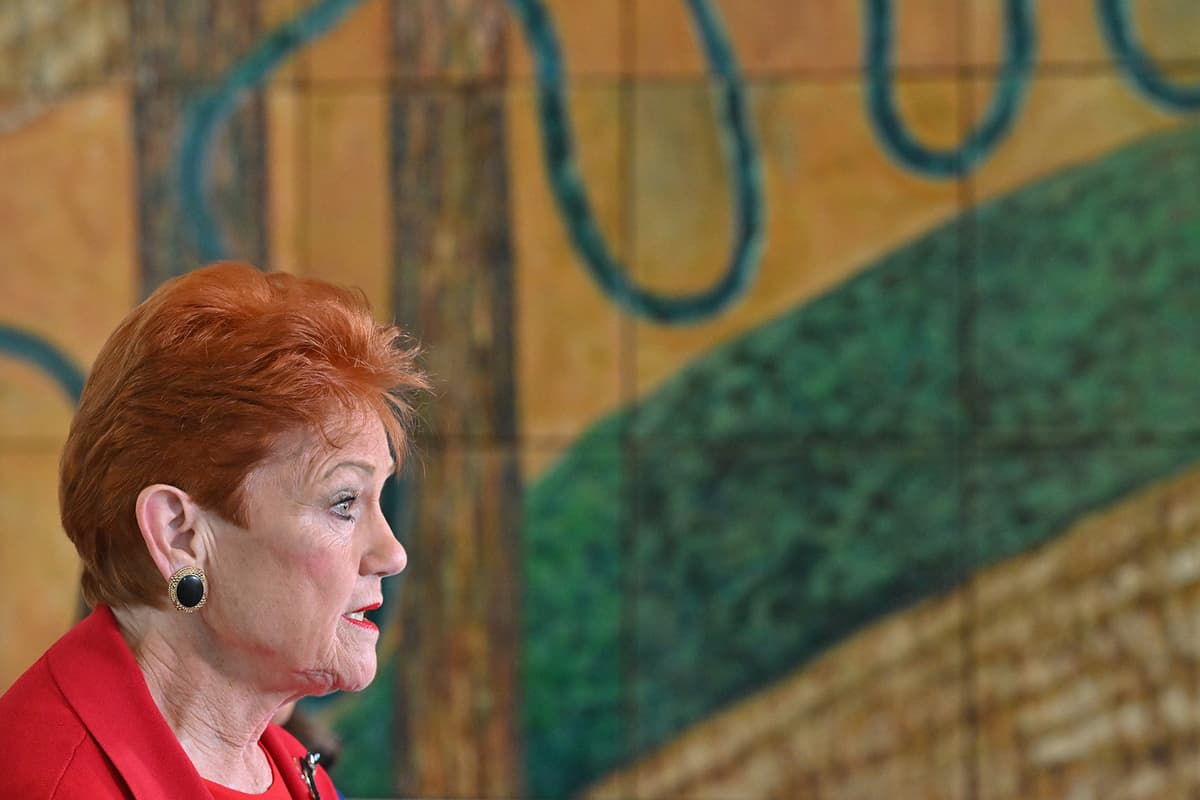
With One Nation recording a higher first-preference vote than Labor or Liberal in the latest RedBridge polling, Pauline Hanson has again been asked about her prime ministerial ambitions.
She told 3AW that she is considering running for a seat in the House of Representatives (the lower house), but even if she doesn’t:
“You can be prime minister from the Senate.”
That is true.
By convention, Prime Ministers come from the House of Representatives
The Constitution says nothing about the Prime Minister – even though it always assumed that Australia would have one. The role of Prime Minister (and their counterpart, the Opposition Leader) is decided by convention and law.
One convention is that the Prime Minister and Treasurer always come from the House of Representatives, the lower house in the Australian Parliament.
Pauline Hanson is a senator from the upper house.
But these conventions are less strict in other Parliaments. The United Kingdom’s upper house (the House of Lords) used to supply prime ministers, and state governments often have treasurers from their respective upper houses. In the 19th Century, premiers sometimes came from state upper houses too.
Australia once had a senator as Prime Minister – John Gorton, who won the leadership in 1968 after Harold Holt’s disappearance. However, Senator Gorton quickly quit the Senate and ran in a by-election for the House of Representatives – restoring conventional practice.
The House of Representatives chooses the Prime Minister
To become prime minister, you must be in the Parliament (or get elected very soon afterwards) and be appointed by the Governor-General. The second part is a formality, and the PM is almost always the leader of the party or coalition with the confidence (support) of most members of the House of Representatives.
Currently, the Labor Party has a large majority in the House with 94 of 150 seats. If the government lost its majority at the next election, then Labor, Liberals, Nationals, Greens, One Nation and independents might all be in negotiations. If any parliamentarian, including Pauline Hanson, could convince 76 members of the House to support their bid for prime minister, then they could become the next PM.
But unless One Nation was one of the larger parties (noting they currently only have two House seats), they would find it very hard to justify their party choosing the Prime Minister.
Get our newsletter
Quality research, analysis, explainers and factchecks from experts you can trust.
In practice, when the government has been in doubt in Australia, it has usually been because the Labor Party and the Liberal/National parties both fall a bit short of a majority. A handful of independents and minor party MPs then negotiate with each side to settle which party has majority support in the lower house.
It would be harder, but not impossible, to be Prime Minister from the Senate
A Prime Minister from the Senate may find day-to-day practical difficulties.
The media is traditionally more interested in the House than the Senate, especially during the House Question Time when the PM, among others, fields questions.
The government of the day rarely controls the Senate, but they usually control the House – so a Prime Minister from the House of Representatives is sheltered from the hard questions and procedural manoeuvres of a sceptical upper house.
And the politicians that the Prime Minister has to keep on side to stay in power are in the House.
Those three points would make life harder for a Prime Minister in the Senate.
That said, a senator as Prime Minister would draw more attention to the Senate, the house of review.
That would be a good thing. Because the government of the day usually controls the House, it is in the Senate that the most interesting legislating, policy work and questioning of government takes place. The media misses a trick by focusing on the “bear pit” drama and theatrics in the House instead of the Senate where what becomes law gets decided.
—
Pauline Hanson is right that, despite convention, a senator could become Prime Minister.
The barriers she faces are practical, and the biggest of all is that even on One Nation’s improved polling numbers, the party is a long way short of forming government. It is the will of voters, not tradition or constitutional convention, that represents the greatest obstacle to a Pauline Hanson prime ministership.
Verdict: True