Audited accounts show ANU is accumulating large surpluses. The claim of crisis is not supported by the evidence.
By Tegan George
Thu 2 Oct 2025 14.53 AEST
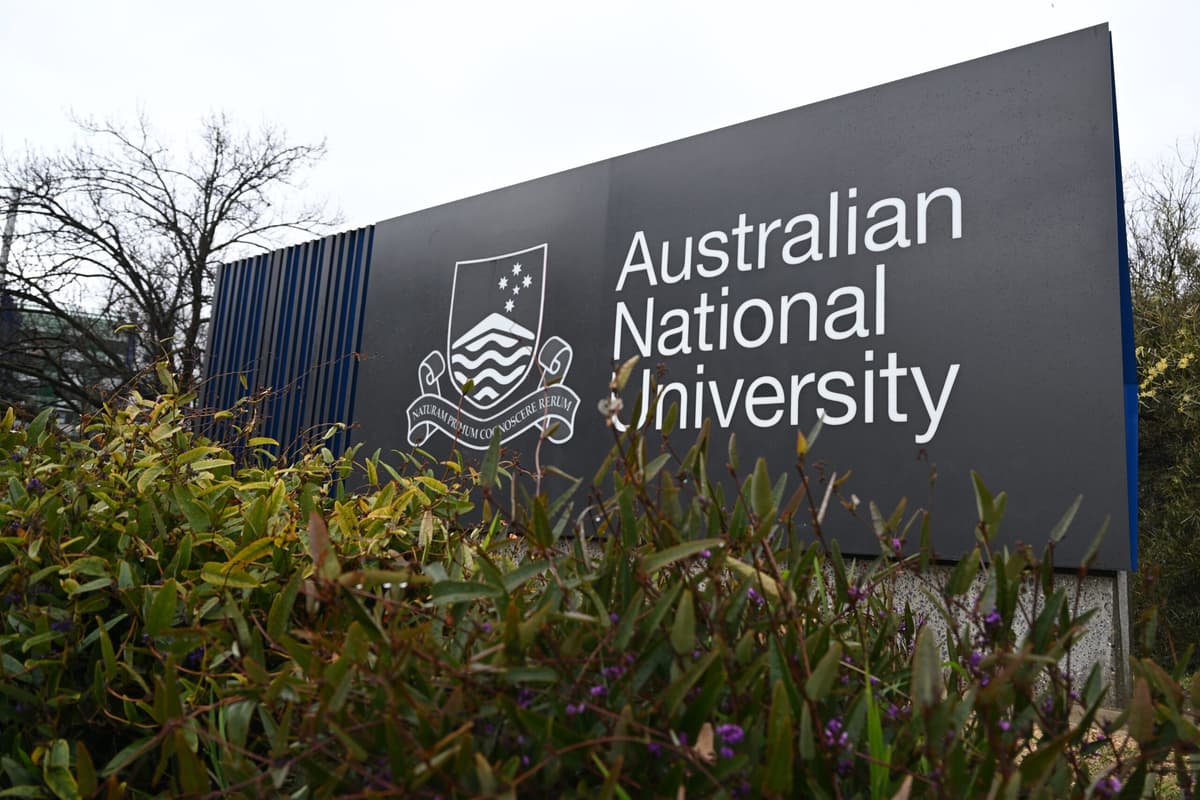
Photo: AAP Image/Lukas Coch


The Australian National University is under fresh scrutiny after new analysis accused its leadership of ‘cooking the books’ to justify sweeping job and course cuts.
ANU made headlines in October last year when it announced a major restructure to slash $250 million from its operational costs by 2026 – including $100 million in salary cost reductions.
In July this year, then Vice-Chancellor, Genevieve Bell reported “good progress”.
“There is no easy fix to address the challenges faced by ANU, but living outside our means is not a responsible financial position.
“Through the hard work of our community, we’re making good progress towards meeting our cost base reductions.”
However, research published by the Australia Institute has called ANU’s claims into question, with the university’s own audited financial statements showing it generated “a significant surplus” of $89 million last year.
“It is smaller than the $135 million surplus generated by ANU in 2023 but is still substantial,” said the report.
“To be clear, as a government owned, not-for-profit entity, the ANU is under no pressure to maximise its profits.”
ANU also has assets valued at $3.8 billion.
It’s a far cry from the financial woes touted by the institute’s leadership which reported an “underlying operating deficit” of $142.5 million in 2024.
“How can a large surplus coexist with a crisis-level deficit?” report authors David Richardson and Dr Richard Denniss asked. “The answer is that ANU’s leaders have cooked the books.”
They found the deficit figure is “not part of the audited financial statements” and was calculated by ANU by excluding more than $232 million in revenue from investments, donations and insurance payouts.
Advertisement

“If an organisation – as opposed to its auditors – chooses to ignore nearly one quarter of a billion in revenue then the organisation’s financial result will obviously appear one quarter of a billion dollars worse,” Dr Richard Denniss said.
“It shows any argument that the ANU is in an unhealthy financial position is flimsy at best.”
ANU’s leaders have blamed capped international student enrolments and rising expenses for the contentious restructuring and cost-cutting.
More than 200 workers have either taken redundancies or left since the overhaul began.
Staff were even asked to forego a pay rise in the early days, with then Vice-Chancellor Genevieve Bell, revealing she was cutting her own pay by 10 per cent.
Last year it came to light that she was the second highest paid vice-chancellor in Australia, taking home a $1.1 million pay packet.
“Knowing the true position of the ANU’s finances is critically important, for the taxpayers who own the ANU, for the management of the ANU, and for the students and staff and other interested members of the community,” said Dr Denniss.
ANU Chancellor Julie Bishop has refused to resign and has been critical of a senate committee inquiry into university governance.
“I reject absolutely the allegations that I am ‘hostile and arrogant’ to staff, that I have ‘godlike powers, unchecked’ and the more general allegations that, under my chairmanship of council meetings, there is a ‘culture of fear and intimidation…” Ms Bishop wrote in a 25 page response to the public inquiry.
The Australia Institute analysis calls for ANU leadership to “explain the exclusion of revenue that the auditors deemed necessary to include.”
“There are a number of major governance problems associated with the executive of any organisation relying on unaudited financial statements.
“Audited accounts show ANU is accumulating large surpluses. The claim of crisis is not supported by the evidence,” the report concluded.
ANU has not yet responded to the analysis.
Advertisement

