Advanced search
The Point - home
DonateSubscribe
HomeWhat's NewOpinionOff the ChartsExplainersFactcheckAbout Us
The Point — home
DonateSubscribe
The Point — home
Advanced search
  • Home
  • What's New
  • Opinion
  • Off the Charts
  • Explainers
  • Factcheck
  • About Us
DonateSubscribe
Subscribe
  • Home
  • What's New
  • Opinion
  • Off the Charts
  • Explainers
  • Factcheck
  • About Us
The Point - home
Privacy PolicySitemapComplaints & CorrectionsNewsletter

The Point recognises the ancestral connections and custodianship of Traditional Owners throughout Australia. We pay respect to Aboriginal and Torres Strait Islander cultures and to Elders past and present.

©2025–2026 The Point, an initiative of The Australia Institute

WHAT'S NEW

New research on proposed FOI laws show it would block access to even more documents

The proposed laws preventing public access to key government documents directly contradict a key Robodebt Royal Commission recommendation.

By staff writers

Wed 8 Oct 2025 10.53 AEDT

Democracy & Accountability
New research on proposed FOI laws show it would block access to even more documents

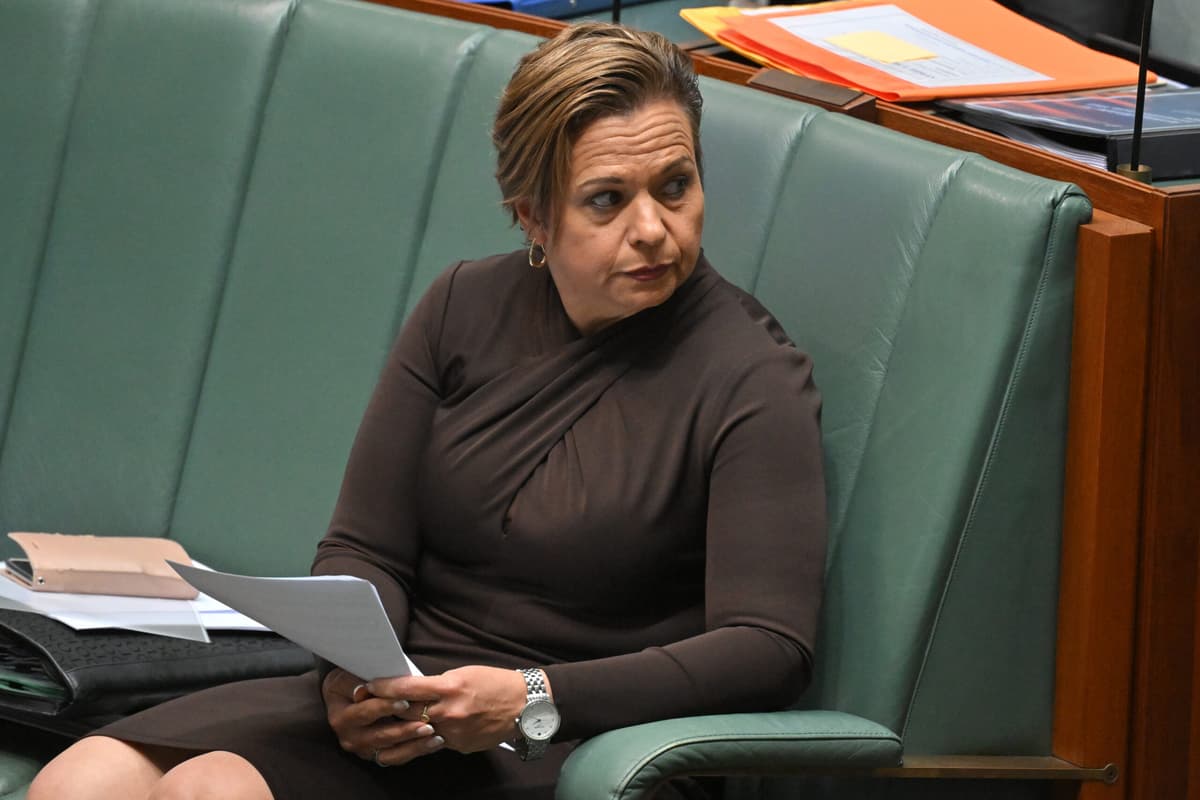
Photo: AAP Image/Mick Tsikas

Republish this article

This article is licensed under Creative Commons — Attribution-NoDerivatives 4.0 International (CC BY-ND 4.0).

Republishing guidelines

  • You must credit the author(s) and The Point.
  • You must link back to the original article.
  • You may not edit or modify the article content.
  • Images may be subject to separate copyright and are not included in this licence.

Proposed laws preventing public access to key government documents directly contradict a key Robodebt Royal Commission recommendation, according to new research.

The research, conducted as part of the Australia Institute’s Democracy & Accountability Program, found that while the Royal Commission recommended making cabinet documents easier to access, the Government’s proposed changes would block access to even more documents.

The report – The Price of Freedom– examined the difficulty investigating, exposing and, ultimately, ending the Robodebt scheme, because so many relevant documents were protected by the cabinet exemption under FOI laws.

The Robodebt scheme incorrectly and unfairly demanded urgent repayment of non-existent welfare debts from some of Australia’s poorest citizens.

It pushed many further into debt and was subsequently linked to multiple deaths.

“If cabinet documents had been public, the unlawful and cruel Robodebt scheme could have been exposed and prevented,” said Bill Browne, director of the Australia Institute’s Democracy & Accountability Program.

“For that reason, the Robodebt Royal Commission recommended making cabinet documents available under FOI.”

“Instead, the Albanese Government wants to make documents even harder to access, in defiance of the Royal Commission, increasing the risk the next Robodebt will happen in secret.”

Legal experts agree the proposed changes to FOI laws are a move in the wrong direction.

“The over-use of the cabinet document exemption and other problems with the FOI system are critical reasons why Robodebt was allowed to continue with impunity for so long,” said Maria O’Sullivan, Associate Professor at Deakin Law School.

“The proposed changes to the FOI Act will actually expand the cabinet exemption even further.”

The new research took a broad look at the nation’s FOI laws, beyond the protection of cabinet documents.

At the time the proposed amendments were introduced, Prime Minister Anthony Albanese and Attorney-General Michelle Rowland claimed the FOI scheme was being swamped with spam applications, making the system slow, expensive and inefficient.

But the research found that it was government inefficiency, not the number of requests, increasing wait times and costs.

Advertisement
It found:

  • Fewer FOI decisions are being made than in earlier years: 21,000 last year down from 34,000 in 2017.
  • Only 21% of 2023-24 FOI requests were granted in full compared to 81% in 2006-07 (the last year of the Howard Government).
  • In 2023-24 it took 51 hours, on average, to determine one FOI request, up from 13 hours in 2006-07.
  • If the Albanese Government achieved the Howard Government’s cost-per-FOI-request ratio, taxpayers would save $61 million per year.

The report also concluded that the proposed amendments to the Freedom of Information Act would make things worse, rather than better:

  • The fee for access would raise less than $500,000, against a scheme that cost $86 million last year.
  • The Robodebt Royal Commission recommended making cabinet documents subject to freedom of information requests.
  • The Government’s changes would instead make it even harder to access cabinet-related documents.
  • The power to refuse a request that would take more than 40 hours to process means the less efficient an agency is, the more it could keep secret.

“Last year, it took over 50 hours to decide a single FOI request, up from 13 hours in 2007,” said Bill Browne.

“In other words, the Albanese Government employs four public servants to do what only took one public servant under the Howard Government. If the Government is serious about improving productivity, it should start with how it runs the FOI system.

“The Albanese Government wants to charge the public for FOI requests, but the fees for a whole year’s worth of FOI requests wouldn’t cover the FOI regulator’s legal fees in a single court case. In the last year of the Howard Government, 27,500 FOI requests were granted in full – compared to just 4,500 granted in full last year.”

“Information is to democratic participation as water is to life. People often take water for granted, until it stops flowing,” said Rex Patrick, founder of the Whistleblower Justice Fund.

Advertisement

Related Articles

OPINION

Changes to Australian election laws have a major party skew

By Bill Browne

Recent and proposed changes to electoral laws at both the national and state levels risk perverse and unfair outcomes. Sometimes these are called “unintended consequences”, but that is too generous to politicians who are often fully aware of what they are doing.

Democracy & Accountability
Changes to Australian election laws have a major party skew

WHAT'S NEW

Minns Government to cap election poster sizes but stops short of six-sign limit

By Tegan George

The NSW Government has committed to restricting the size of election posters but stopped short of committing to a proposed six-sign limit within 100 metres of polling booths ahead of the March 2027 state election.

Democracy & Accountability
Minns Government to cap election poster sizes but stops short of six-sign limit

OPINION

‘Very, very stupid debate’: How we’re being played for mugs

By Amy Remeikis

It’s probably best for most people’s mental health that they are not forced to consider the hypocritical and ever-shifting grasping positions of Australian politics. For the most part, politics has the power to do good. Also for the most part, the way politics in Australia is played is very, very stupid.

Democracy & Accountability
‘Very, very stupid debate’: How we’re being played for mugs

WHAT'S NEW

‘Business as usual is not an option’: Phil Haines calls for kinder politics

By Tegan George

Phil Haines wants the alleged attack on his wife, independent MP Helen Haines, to mean something, urging Australia’s political leaders to turn tragedy into a catalyst for change.

Democracy & Accountability
‘Business as usual is not an option’: Phil Haines calls for kinder politics