Advanced search
The Point - home
DonateSubscribe
HomeWhat's NewOpinionOff the ChartsExplainersFactcheckAbout Us
The Point — home
DonateSubscribe
The Point — home
Advanced search
  • Home
  • What's New
  • Opinion
  • Off the Charts
  • Explainers
  • Factcheck
  • About Us
DonateSubscribe
Subscribe
  • Home
  • What's New
  • Opinion
  • Off the Charts
  • Explainers
  • Factcheck
  • About Us
The Point - home
Privacy PolicySitemapComplaints & CorrectionsNewsletter

The Point recognises the ancestral connections and custodianship of Traditional Owners throughout Australia. We pay respect to Aboriginal and Torres Strait Islander cultures and to Elders past and present.

©2025–2026 The Point, an initiative of The Australia Institute

WHAT'S NEW

Australia Last? Australia’s Resources Minister puts Japan ahead of Australians on gas and electricity prices

Despite our enormous energy reserves, Australian households are paying higher prices for electricity than Japanese consumers according to new analysis released today by the Australia Institute.

By Mark Ogge

Tue 4 Nov 2025 13.21 AEDT
EconomyClimate
Australia Last? Australia’s Resources Minister puts Japan ahead of Australians on gas and electricity prices

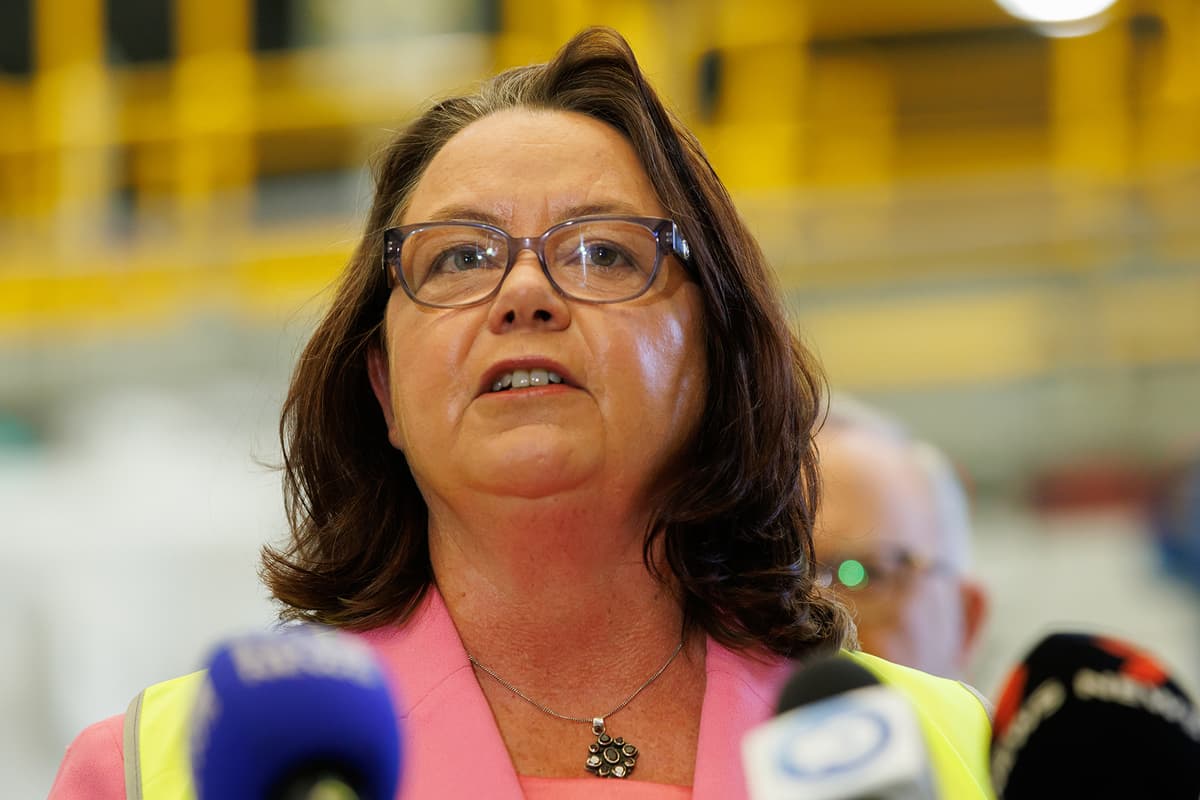
Photo: AAP Image/Richard Wainwright

Republish this article

This article is licensed under Creative Commons — Attribution-NoDerivatives 4.0 International (CC BY-ND 4.0).

Republishing guidelines

  • You must credit the author(s) and The Point.
  • You must link back to the original article.
  • You may not edit or modify the article content.
  • Images may be subject to separate copyright and are not included in this licence.

The new analysis by the Australia Institute, Australia Last: The failure of Australian gas policy reveals that in the past five years, Australian governments have allowed export gas volumes equivalent to 20 years worth of Australian domestic usage.

“While it’s hard to believe our governments could have messed things up this badly, the fact is people living in the countries we export our gas to are getting cheaper electricity than we are,” said Dr Richard Denniss, co-chief executive of the Australia Institute.

“For example, Australian consumers are already paying higher prices for electricity than households in Japan. Indeed, if the average Australian household could access the same electricity prices available in Tokyo, then they could save close to $550 a year.

But rather than enquire into who caused this debacle and commit to fixing it, the Australian Minister for Resources, Madeleine King is actually reassuring the Japanese that she is determined to keep things the way they are.

In 2024 she declared: “LNG produced off the coast of Western Australia and shipped to … [Japan, China, South Korea and India] … ensures they can power their cities; their homes and their industry.”

Dr Denniss warns, “so, while Australians are warned of a ‘shortage of gas’ and told that we have no choice but to convert our farmlands into industrial fracking gas fields, the Minister for Australian resources is reassuring foreign countries that we have boundless gas to share.”

“Australians are the victims of the most outrageous doublespeak when it comes to gas. In the last 10 years the wholesale price of gas has tripled, our electricity prices have surged and whole industries have been warned of gas shortages unless new gas projects are approved. And at the same time the Minister who is supposed to be managing our natural resources on our behalf is bragging to our export customers about how much gas we are giving them,” said Dr Denniss

In the same speech Minister King declared:

“Australia is Japan’s single largest provider of energy. It is estimated our LNG and coal exports support around eight hours of power generation a day in Japan.

“So that means that we, a country with a population of 25 million, provides vast energy resources for a country of 125 million people. Those figures of themselves demonstrate the responsibility Australia has to ensure that this energy security is maintained, not only for Japan, but for our other important regional neighbours.”

Dr Denniss’ reply? “Australia doesn’t have a shortage of gas. It has a shortage of Ministers that are brave enough to put Australia first. It’s time Australia stopped approving more gas exports until Australians had cheap energy and Australia and our exports customers were on track to meet their climate commitments.”


 

Related Articles

WHAT'S NEW

New research reveals Australians are putting in $300 worth of unpaid overtime every fortnight

By Tegan George

New research from the Centre for Future Work reveals the average employee is putting in almost three and a quarter hours of unpaid overtime each week, equivalent to 4.4 full-time working weeks a year. Across the country, its report estimates the value of unpaid overtime at $97.93 billion annually.

Economy
New research reveals Australians are putting in $300 worth of unpaid overtime every fortnight

OPINION

Australia’s gender pay gap falls below 20% for the first time

By Gemma Killen

Australia's gender pay gap has fallen to a record low. This year, the pay gap is 19.7%, which means that for every dollar men earn, women earn just over 80 cents. Over a year, this adds up to an average difference of $27,467.

Society & InequalityEconomy
Australia’s gender pay gap falls below 20% for the first time

OPINION

The real action on fossil fuels is in the community, not COP31

By Louise Morris

While negotiators at COP31 spent the first week avoiding two words, a court in Oslo said them out loud. On Friday 13, Norway’s Supreme Court, sitting as a Grand Chamber, ruled that government approvals for three North Sea oil and gas fields were invalid.

Climate
The real action on fossil fuels is in the community, not COP31

OPINION

Bowen’s draft puts “fossil fuel transition” on the page. Who will keep it there?

By Louise Morris

The COP31 Presidency released the first draft of its cover decision on Monday night, Australia time. It runs to 18 pages and 144 paragraphs. A Presidency note says it is “not intended to reflect consensus”, and that it’s a divergent shopping list of priorities. Much of it will not survive, but it is worth noting for signs of ambition.

Climate
Bowen’s draft puts “fossil fuel transition” on the page. Who will keep it there?