Advanced search
The Point - home
DonateSubscribe
HomeWhat's NewOpinionOff the ChartsExplainersFactcheckAbout Us
The Point — home
DonateSubscribe
The Point — home
Advanced search
  • Home
  • What's New
  • Opinion
  • Off the Charts
  • Explainers
  • Factcheck
  • About Us
DonateSubscribe
Subscribe
  • Home
  • What's New
  • Opinion
  • Off the Charts
  • Explainers
  • Factcheck
  • About Us
The Point - home
Privacy PolicySitemapComplaints & CorrectionsNewsletter

The Point recognises the ancestral connections and custodianship of Traditional Owners throughout Australia. We pay respect to Aboriginal and Torres Strait Islander cultures and to Elders past and present.

©2025–2026 The Point, an initiative of The Australia Institute

WHAT'S NEW

Public trust in universities eroded as Australians see profit, not education, as their priority

New research reveals Australians think universities are too expensive and not doing their job

By staff writers

Wed 5 Nov 2025 06.30 AEDT

Society & InequalityEducation
Public trust in universities eroded as Australians see profit, not education, as their priority

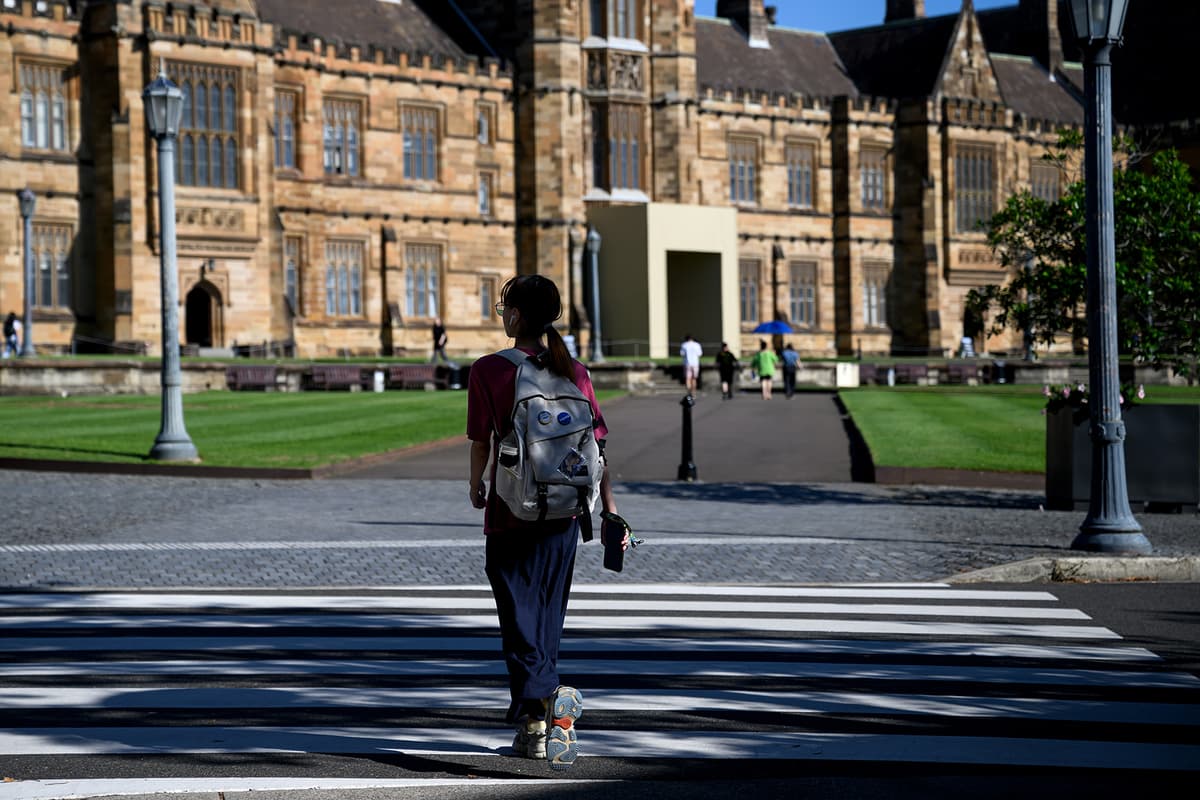
Photo: AAP Image/Bianca De Marchi

Republish this article

This article is licensed under Creative Commons — Attribution-NoDerivatives 4.0 International (CC BY-ND 4.0).

Republishing guidelines

  • You must credit the author(s) and The Point.
  • You must link back to the original article.
  • You may not edit or modify the article content.
  • Images may be subject to separate copyright and are not included in this licence.

New research has revealed that Australians, regardless of who they vote for, think most university degrees are too expensive, with only 3% of Australians agreeing that making a profit should be a primary purpose of universities.

However, more than half believe that it currently is a primary purpose.

The research also found fewer than half of Australians believe educating students is currently a primary purpose of universities, despite 80 per cent thinking it should be.

“University fees are totally out of step with community expectations. Despite only one in 20 Australians believing degrees should cost more than $10,000 a year, highly popular degrees such as arts, commerce, and law now cost about $17,000 per year,” said Jack Thrower, senior economist at the Australia Institute.

“High university fees are leading to mounting student debts, which are taking ever longer to pay off.”

A raft of scandals has plagued the higher education sector in recent years, from wage theft and conflicts of interest to excessive spending on marketing, travel, and consultants.

That is despite Australian Vice-Chancellors being among the highest-paid in the world.

“The university sector’s rolling scandals and ongoing governance crisis are causing it to lose the trust of the general public. Over half of Australians think that making a profit is a primary purpose for universities,” Mr Thrower said.

“To regain public trust, the sector needs to fix its governance, such as by making sure universities are overseen by those with the most at stake in their future: students and staff.”

Co-chief executive of the Australia Institute, Dr Richard Denniss, has highlighted how not only is Australia charging students tens of thousands of dollars for their degrees, some universities are faking up financial crises to justify cutting back on the quality of their offerings.

“The Australian National University has been telling its students and staff that it has no choice but to cut spending on a wide range of subjects and services but their own audited accounts make clear the university is rolling in it,” Dr Denniss said.

He also pointed out that students are being charged high amounts to attend university, while the same governments that gives tens of billions of dollars worth of Australian gas away for free.

“HECS repayments contribute more to the Commonwealth Budget than the Petroleum Resource Rent tax,” Dr Denniss said.


Related Articles

WHAT'S NEW

Calls grow for Queensland Government to overturn puberty blocker ban following new medical advice

By Tegan George

The Queensland Government is facing renewed pressure to overturn its restrictions on puberty blockers for young transgender people, following new advice from Australia’s peak medical research body supporting their use in certain circumstances.

Society & InequalityHealth
Calls grow for Queensland Government to overturn puberty blocker ban following new medical advice

EXPLAINER

Why is the federal government subsidising AI slop?

By Skye Predavec

A low-traffic website filled with AI-generated “news” is unremarkable. These kinds of websites now litter the internet, after all. But the Northern Beaches Buzz does stand out from the others in one important respect – it’s being subsidised by the Commonwealth Government.  

Society & Inequality
Why is the federal government subsidising AI slop?

OPINION

It’s not the size of your NOM that matters, it’s what you do with it that counts

By Morgan Harrington

As part of the ongoing political jockeying over the Net Overseas Migration (NOM) number, the Albanese Government has backed down on a plan to reduce the number of working-holiday makers allowed to come to Australia. But has it missed a chance for Australia to improve ties with the Pacific?

Society & Inequality
It’s not the size of your NOM that matters, it’s what you do with it that counts

OPINION

Australia’s gender pay gap falls below 20% for the first time

By Gemma Killen

Australia's gender pay gap has fallen to a record low. This year, the pay gap is 19.7%, which means that for every dollar men earn, women earn just over 80 cents. Over a year, this adds up to an average difference of $27,467.

Society & InequalityEconomy
Australia’s gender pay gap falls below 20% for the first time