Australian universities are facing calls for greater scrutiny and to implement standardised reporting on their financials results as more institutions cry poor while continuing to bank large surpluses.
By Tegan George
Sun 9 Nov 2025 23.27 AEDT
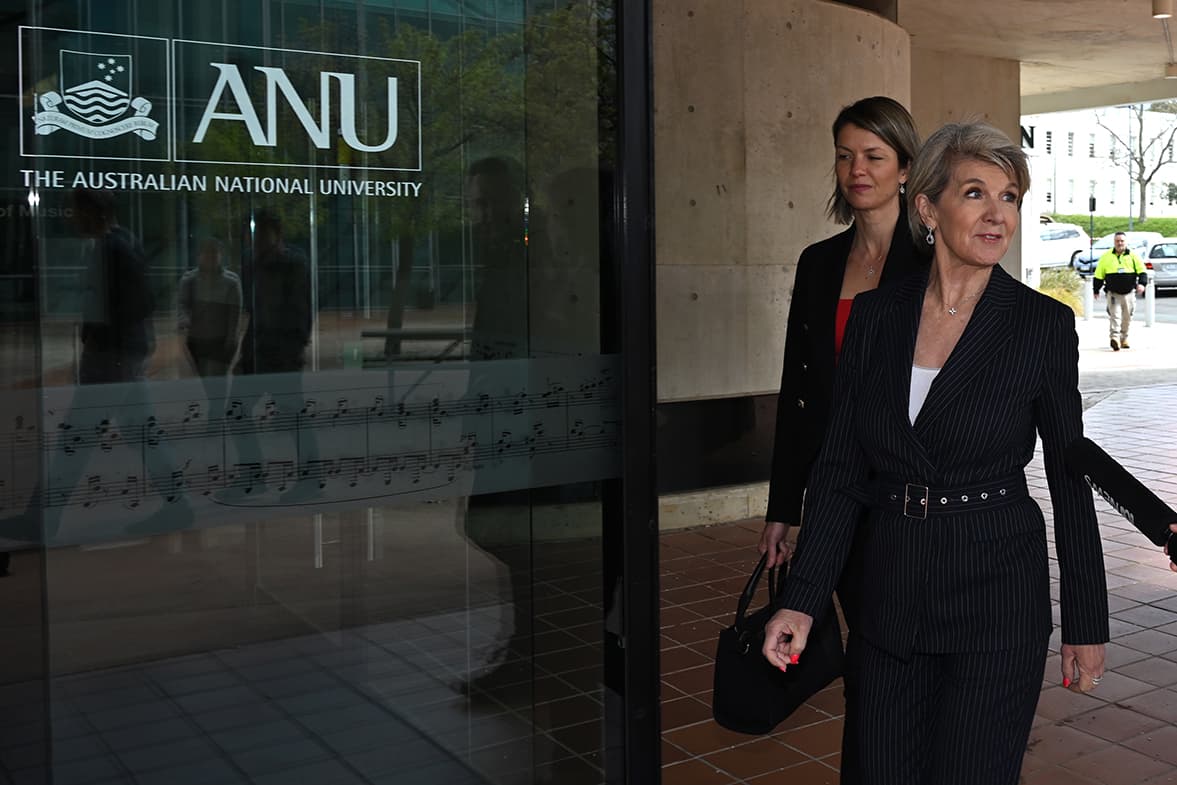
Photo: AAP Image/Lukas Coch


Australian universities are facing calls for greater scrutiny and to implement standardised reporting on their financials results as more institutions cry poor while continuing to bank large surpluses.
“30 years of neoliberalism’s broken them, it’s just a mess,” said Dr Richard Denniss, co-chief executive of the Australia Institute.
The Australian National University (ANU) made headlines last month when its audited financial statements showed it made $226 million in profit in two years; the same time it was slashing jobs and courses to save $250 million in operating cuts by next year because it had been “living outside our means.”
Speaking on the Australia Institute’s Follow The Money podcast, Dr Denniss said the country’s system is broken, blaming decades of policy pushing for universities to act as businesses.
“The universities are sitting in this, I would argue, very weakly governed valley. Not governed like a private sector enterprise. Not really governed and managed like a public sector enterprise.
“The worst of all worlds.”
While universities are state-owned, they receive federal funding which means they avoid answering to shareholders or parliament.
“Really, I would argue Australian universities have become unaccountable to anyone but themselves, but they are still relying on our cash.
“They are getting a lot of public money,” explained Dr Denniss. “They’re paying their Vice Chancellors up to $1.5 million a year. They’re sitting on multi-billion dollars of accumulated surpluses.”
The Australia Institute Deputy Director and podcast host, Ebony Bennett, pointed out, “Many of them [universities] have morphed into these kind-of billion-dollar institutions.”
Dr Denniss agreed. “They’re obsessed with the business-like part of their organisation”.
The University of Newcastle and Western Sydney University are currently facing legal action in the Supreme Court for allegedly “misleading” students by publicising degrees were not accredited.
Dr Dennis said the overall lack of accountability in the system has led to “… bad governance, really high-paid vice chancellors, declining public revenues, and students and staff that are taking it in the neck.”
Analysis by the Australia Institute found ANU reported an “underlying operating deficit” of $142.5 million in 2024 however its own audited financial statements showed it generated “a significant surplus” of $89 million.
“I think it’s outrageous that the leader of any organisation would encourage people to put the audited accounts aside and then provide so little explanation for their what they call their preferred indicator.
“What’s all the more outrageous is that this is happening at multiple universities around the country.”
Australia’s top eight universities claimed last year they were reliant on international student fees as Canberra considered proposed caps on international enrolments.
“No one’s going to want to fix a place where the VC is getting paid three times the Prime Minister’s salary while saying, “Don’t you know I’m broke?” You don’t sound broke, mate,” said Dr Denniss.
Australia Institute research has found more than half (54%) of Australians believe that the current primary purpose of universities is to make a profit, despite just 3% believing that should be the primary purpose of universities.
It also revealed three-quarters of Australians think degrees should not cost more than $10,000 a year.
“Something like an arts degree can cost $17,000 a year,” pointed out Dr Denniss.
Dr Dennis is advocating for standardised accounting and transparency in the way universities collect and present data.
“If we want the individual universities to have agency and autonomy, we should be able to easily compare them. They will fight this tooth and nail,” he said.
“Nobody who’s paying attention thinks that education quality is improving, student experience is improving, that academics have got more time to invest in students or in research.”

