Crossbenchers are ramping up pressure on the Albanese Government to come clean on planned changes to the National Disability Insurance Scheme (NDIS), amid revelations Labor quietly established a “razor gang” to rein in costs.
By Tegan George
Sat 11 Apr 2026 10.37 AEST
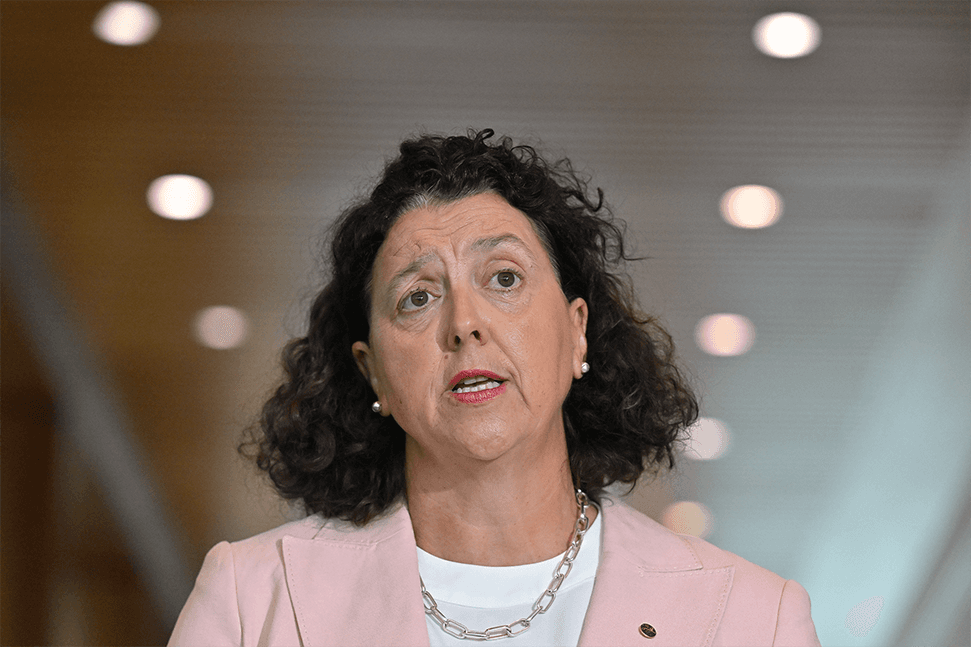
Photo: AAP Image/Mick Tsikas


Crossbenchers are ramping up pressure on the Albanese Government to come clean on planned changes to the National Disability Insurance Scheme (NDIS), amid revelations Labor quietly established a “razor gang” to rein in costs.
According to the Guardian, an NDIS Sustainability Taskforce was established in January following a meeting between Prime Minister Anthony Albanese, Health Minister Mark Butler and state premiers.
It was reportedly instructed to advise on cost-cutting options for the $52 billion program ahead of the May budget.
“Disability and complex needs are not budget line items,” said Independent Member for Warringah, Zali Steggall.
“Every cut to the NDIS affects someone’s life – whether it’s a child learning to speak, a young adult finding independence or a family barely holding on in an impossibly difficult situation.”
The Greens have accused the government of “using disabled people as a scapegoat” for balancing the budget.
“Labor’s razor gang isn’t worried about blowouts for AUKUS submarines or tax handouts for property investors – they’ve got their knives out for the NDIS instead,” said Greens NDIS spokesperson Senator Jordon Steele-John.
The Albanese government is aiming to curtail NDIS spending growth to 5-6 per cent in the 2026-27 budget, down from roughly 10 per cent last year.
Speaking at a recent healthcare summit, Minister Butler raised concerns the scheme has “got way out of control”.
However, research director at the Australia Institute, Rod Campbell, questioned why the government never referred to the “exploding costs of tax breaks for BHP and Gina Rinehart”.
“Subsidies handed out by Australian federal and state governments are large, and they’re growing faster than the supposedly “exploding” costs of social services,” he said.
The Australia Institute estimates that subsidies, concessions and tax breaks to major fossil fuel users and producers increased by 9.6 per cent in 2025-26.
Meanwhile, the NDIS grew by 7.6 per cent.
Mr Campbell said, “It’s time to call BS on the idea that we can’t afford to look after each other, while governments simultaneously hand out billions to foreign-owned mining companies.”
Independent Member for Kooyong, Dr Monique Ryan, argued the government’s handling of the reforms is already causing harm.
“The current process is cloaked in secrecy,” she said.
“There is already real distress in the community because of a growing pattern of sudden and significant reductions of NDIS plans introduced without adequate explanation, particularly for children in the foundational supports pathway.”
Dr Ryan is among several Independent MPs who are warning that reducing access or funding before alternatives are in place risks leaving vulnerable Australians without support.
“While protecting the integrity of the NDIS is vital for its ongoing sustainability, the Government is at risk of throwing the baby out with the bathwater,” said Independent Member for Curtin, Kate Chaney.
“Foundational supports must be operational before children are transitioned off the NDIS to avoid our most vulnerable bearing the brunt of inadequate planning and implementation.”
Earlier this year, the Albanese government delayed the rollout of the $2 billion Thriving Kids program by three months, pushing its start date back to 1 October 2026.
The initiative will provide services for autistic children and children with developmental delays, aged eight and under, who have low to moderate support needs.
“Thriving Kids is not yet fully designed, and it’s already been delayed once. State and territory implementation plans remain incomplete and opaque. Vulnerable children can’t be transitioned out of a working scheme into one that does not yet exist,” said Dr Ryan.
Independent Member for Bradfield, Nicolette Boele, said administrative failures are already taking a toll on families.
“You can’t cut your way to efficiency when the system itself is the problem,” she said.
“Every week, local families contact my office because an administrative error has disrupted their support and left them scrambling.
“If we want to have a serious conversation about the sustainability of the NDIS, we need to be clear that the pressure isn’t just coming from demand – it’s coming from the system’s own shortcomings.
Senator Jordon Steele-John argued there are far better ways for the government to raise revenue, including introducing a wealth tax or a 25 per cent levy on gas exports.
He accused the government of believing “that disabled people and our families will be an easier target than corporations or the super wealthy”.
“They’re wrong,” he warned.
“Disabled people are used to fighting for their basic rights. They won’t stop now.”
Advertisement