One of the world’s most vulnerable nations to climate change has urged Australia to reassess its reliance on fossil fuels and impose a 25 per cent tax on gas exports. Vanuatu’s Minister for Climate Change Adaptation, Ralph Regenvanu, told SBS that Australia should be using the global energy crisis as a catalyst to ramp up its shift to clean energy.
By Tegan George
Mon 20 Apr 2026 09.30 AEST
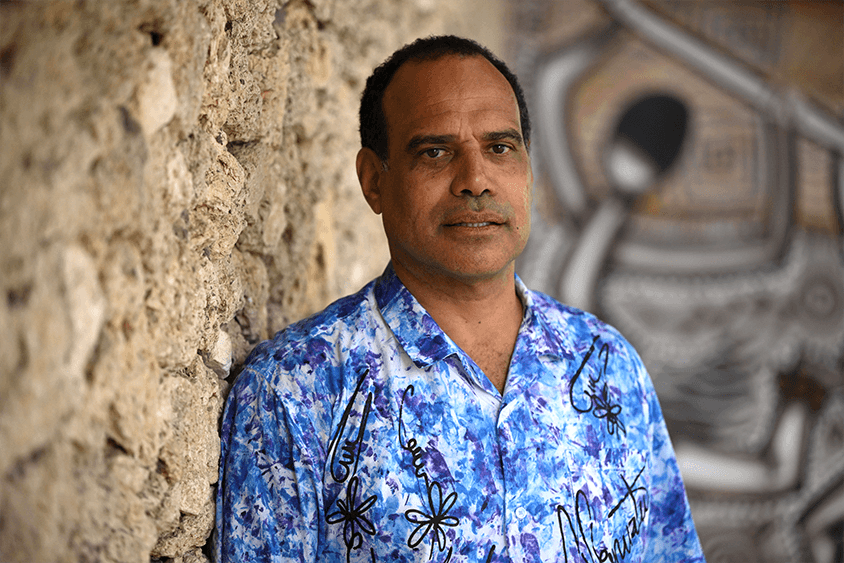
Photo: AAP Image/Joel Carrett


One of the world’s most vulnerable nations to climate change has urged Australia to reassess its reliance on fossil fuels and impose a 25 per cent tax on gas exports.
Vanuatu’s Minister for Climate Change Adaptation, Ralph Regenvanu, told SBS that Australia should be using the global energy crisis as a catalyst to ramp up its shift to clean energy.
“Australia has a great opportunity to transition to renewable energy as it is already doing in the domestic market and to speed that up,” he said.
His remarks coincided with Prime Minister Anthony Albanese’s visit to Singapore, Brunei and Malaysia to secure extra fuel and fertiliser supplies.
“Australia is to think hard about where its future lies in terms of fossil fuel use,” said Minister Regenvanu.
“To go looking for even more fossil fuels from outside, I don’t think it’s the right approach.”
He’s thrown his support behind the Australian Council of Trade Union’s proposed 25 per cent tax on gas exports, which will be the focus of a Senate inquiry this week.
According to the Financial Review, Anthony Albanese has moved to reassure industry that existing gas contracts would not be affected by any decision to impose a new levy.
“We are concerned about Australia continuing to supply LNG [liquefied natural gas] to the Asian economies,” Minister Regenvanu said.
“There’s a need to rein this in in alignment with international law. There’s a need to phase out these exports as well.”
Pacific leaders met in Vanuatu last week to agree on a unified position ahead of the first global conference on transitioning away from oil, coal and gas later in the year.
“For Pacific Islands, leading on climate has never been a choice; it has been a matter of survival for us,” said Joseph Sikulu, Pacific Champion for the Fossil Fuel Treaty.
They called on their “big brother”, Australia, to act as a genuine partner in phasing out fossil fuels, warning it is a “matter of survival” for island communities.
“The Pacific did not create the fossil fuel crisis, yet we are paying the highest price for it,” said Minister Regenvanu.
He told SBS political correspondent Rayane Tamer that Vanuatu has not yet needed fuel assistance but would look to China if necessary.
“Yes, we are definitely going to reach out to China as well. I don’t think anyone has anything to be concerned about Vanuatu doing what it does,” he said.
“As a sovereign state, we are a non-aligned country. We will never host any foreign military bases. We will never abide by any foreign interference in our infrastructure.”
Fiji and Tuvalu will host special events ahead of COP31 – the 2026 UN Climate Change Conference in Turkey – to highlight their mounting challenges.
Advertisement