Who spent big in Canberra’s last election – and how proposed changes would hurt newcomers
Could big spending explain the success of the independents at the ACT election? New data from the ACT Electoral Commission shows this isn't the case.
An unlikely alliance of crossbench MPs and senators in federal parliament have accused the Albanese government of mounting an attack on Australia’s freedom of information (FOI) regime, after bureaucrats escalated an AUKUS transparency dispute to the Federal Court.
Mon 6 Jul 2026 09.37 AEST
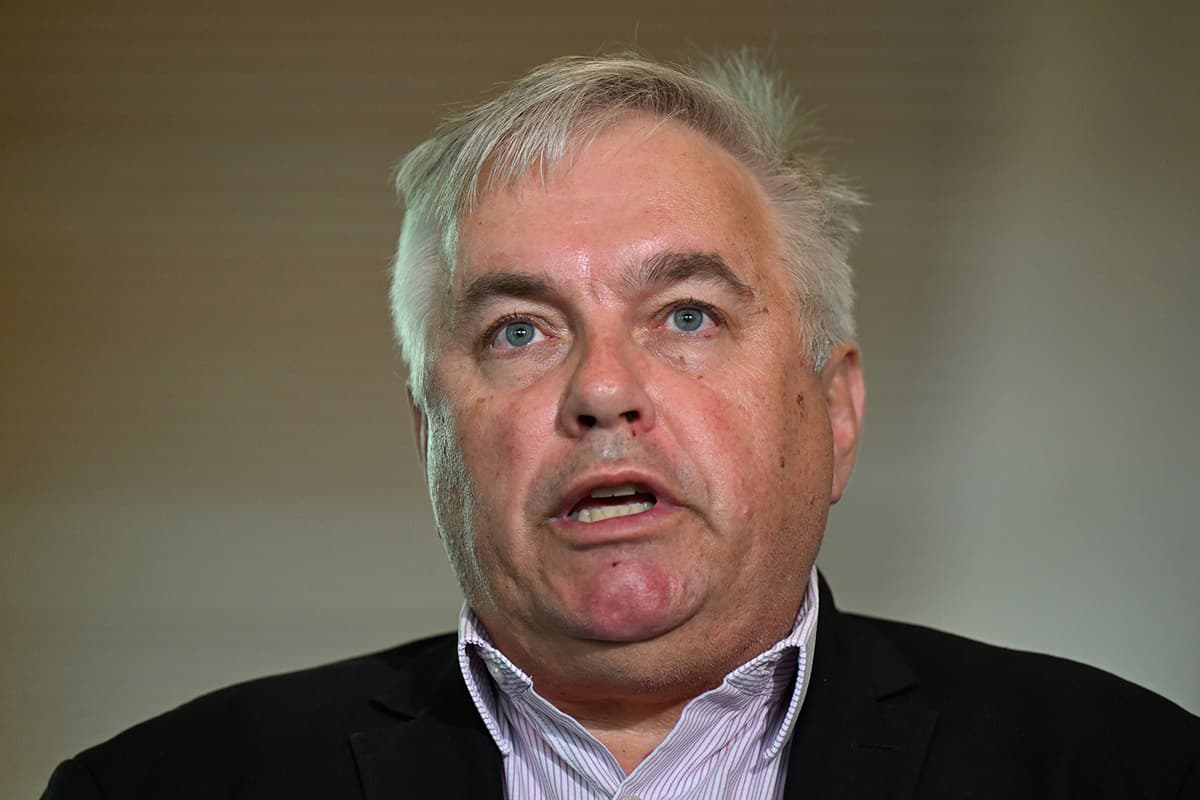
Photo: AAP Image/Lukas Coch
An unlikely alliance of crossbench MPs and senators in federal parliament have accused the Albanese government of mounting an attack on Australia’s freedom of information (FOI) regime, after bureaucrats escalated an AUKUS transparency dispute to the Federal Court.
Rex Patrick, a transparency campaigner and a former SA senator, is seeking details about how a site to store AUKUS nuclear waste would be selected.
He won an appeal under FOI rules in May, but the Department of Industry, Science and Resources is now seeking to have the decision overturned in the Federal Court.
Acting secretary Julia Pickworth has also sought an order requiring Mr Patrick to pay the Commonwealth’s legal costs if he is unsuccessful — a bill that could amount to $150,000 or more.
“This latest threat is nothing more than a backdoor way to undermine Australia’s already broken FOI system and ensure the government can continue to choose secrecy over accountability,” said Mr Patrick.
“Any government committed to open democracy doesn’t price people out of participation in democracy or scrutiny of government.”
Jacqui Lambie, David Pocock, Lidia Thorpe, Pauline Hanson and David Shoebridge are among 18 independent and minor-party politicians calling on Attorney General Michelle Rowland to urgently intervene.
“They’re using the threat of legal costs directed at the individuals that use FOI to cut its use,” said Senator Lambie.
“I think that is a waste of taxpayer money, but to do that and try to scare people away from seeking access to information they’re entitled to see under the FOI laws is disgusting.”
She argued Australians had a right to know which sites were being considered to store AUKUS nuclear waste.
“I will always call out bad behaviour and cover-ups, and I think this is a bit of both,” she said.
Senator Lambie said it was the Albanese government’s “second assault on FOI”, referring to Labor’s contentious proposed FOI reforms that were effectively abandoned in March 2026 after it became clear the bill would struggle to pass the Senate.
“Would the Secretary of the Department or the Attorney-General do this if the costs were coming out of their bank account? I don’t think so.”
Nine civil society organisations, including the Human Rights Law Centre, the Whistleblower Justice Fund and the Australia Institute, have also written to Ms Rowland, warning that “the chilling effect is direct and foreseeable”.
They argued the prospect of crippling legal costs threatens the fundamental purpose of the country’s FOI laws — enabling public scrutiny of government — by discouraging ordinary Australians from pursuing access to information.
“Not because they are wrong. Not because their case lacks merit. But because no ordinary person can afford to go head-to-head with the Commonwealth in the Federal Court,” their letter stated.
“The FOI Act states clearly that access to government information should be provided at the lowest reasonable cost. The costs exposure now facing Mr Patrick is neither low nor reasonable.”
The Auditor-General’s most recent report, released in May 2026, found that across three government departments, almost 80 per cent of FOI requests were either partially or fully denied and that decision-making was “not consistently transparent, accountable and pro-disclosure”.
When applicants challenged decisions, 54 per cent resulted in further information being released.
“It’s not just incompetence that explains why FOI is badly mismanaged and government departments routinely breach their legal obligations,” said Bill Browne, director of the Australia Institute’s Democracy and Accountability program, at the time.
“It is a deliberate attempt to starve the public of information they are entitled to, to escape accountability.”
The criticism comes despite Anthony Albanese making transparency a central theme of his 2022 federal election campaign, repeatedly promising to lead a government that would be more open and accountable than Scott Morrison’s “cult of secrecy”.
“As Opposition Leader, Albanese said the ‘delays, obstacles, costs and exemptions’ in our FOI system made it easier to hide information from the public,” said Mr Patrick.
“He was right, but when you consider the outright attack that the Albanese Government is now making on FOI, those appear to be nothing more than weasel words from another political party that talks a big game on integrity in opposition but now leads a government with a worse legacy of secrecy than Scott Morrison.”
Advertisement
Could big spending explain the success of the independents at the ACT election? New data from the ACT Electoral Commission shows this isn't the case.
The Australian Electoral Commission (AEC) has been urged to rethink plans that could shut or merge about one third of its divisional offices, with a union warning the loss of local expertise could disrupt future elections.